The Situation
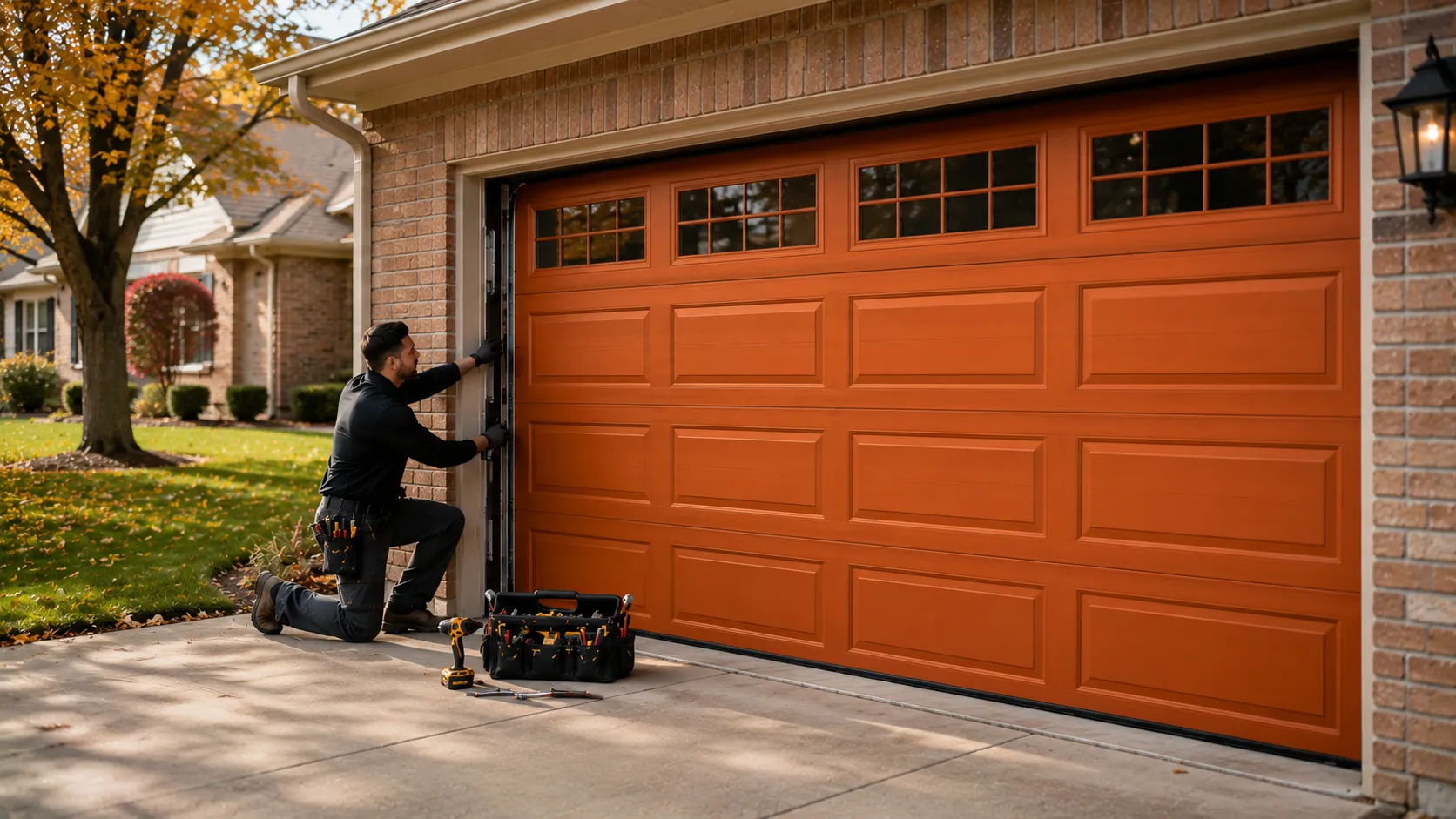
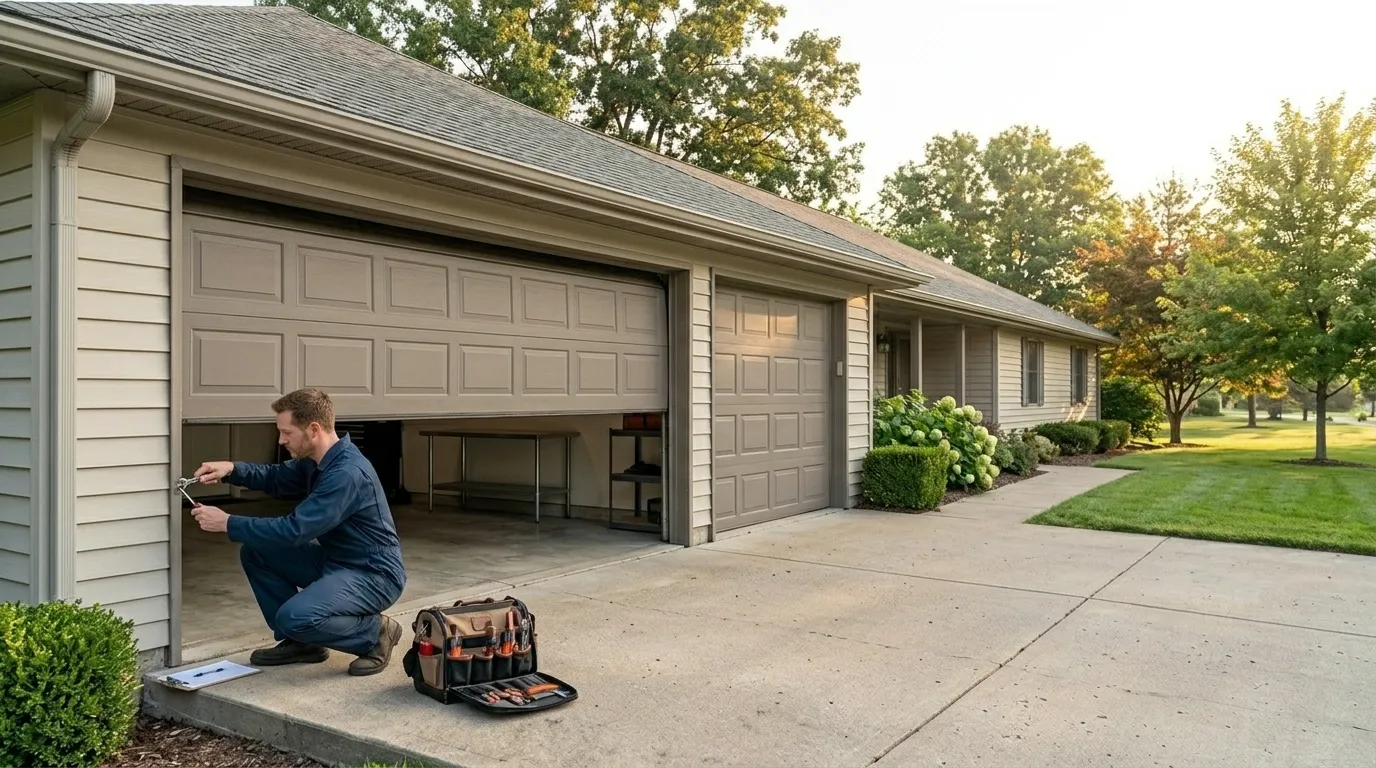
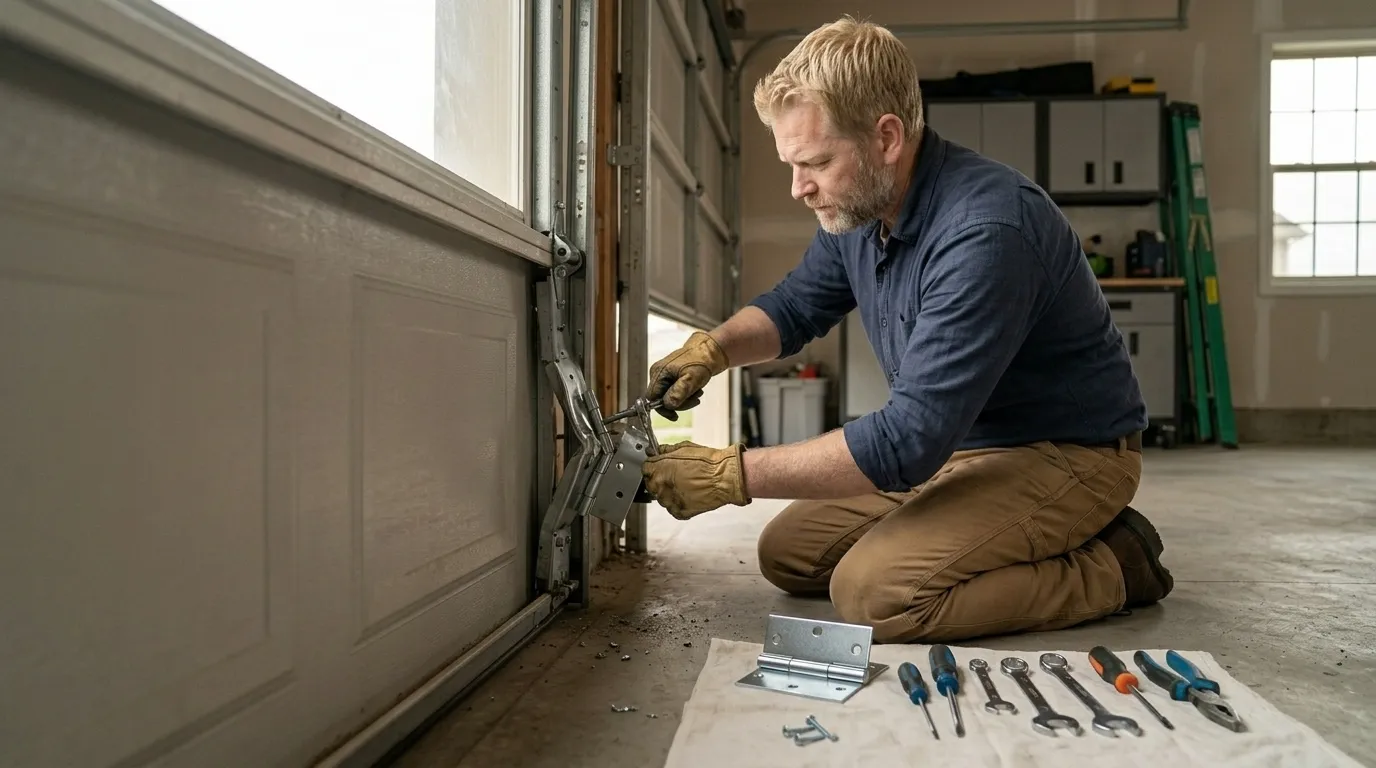
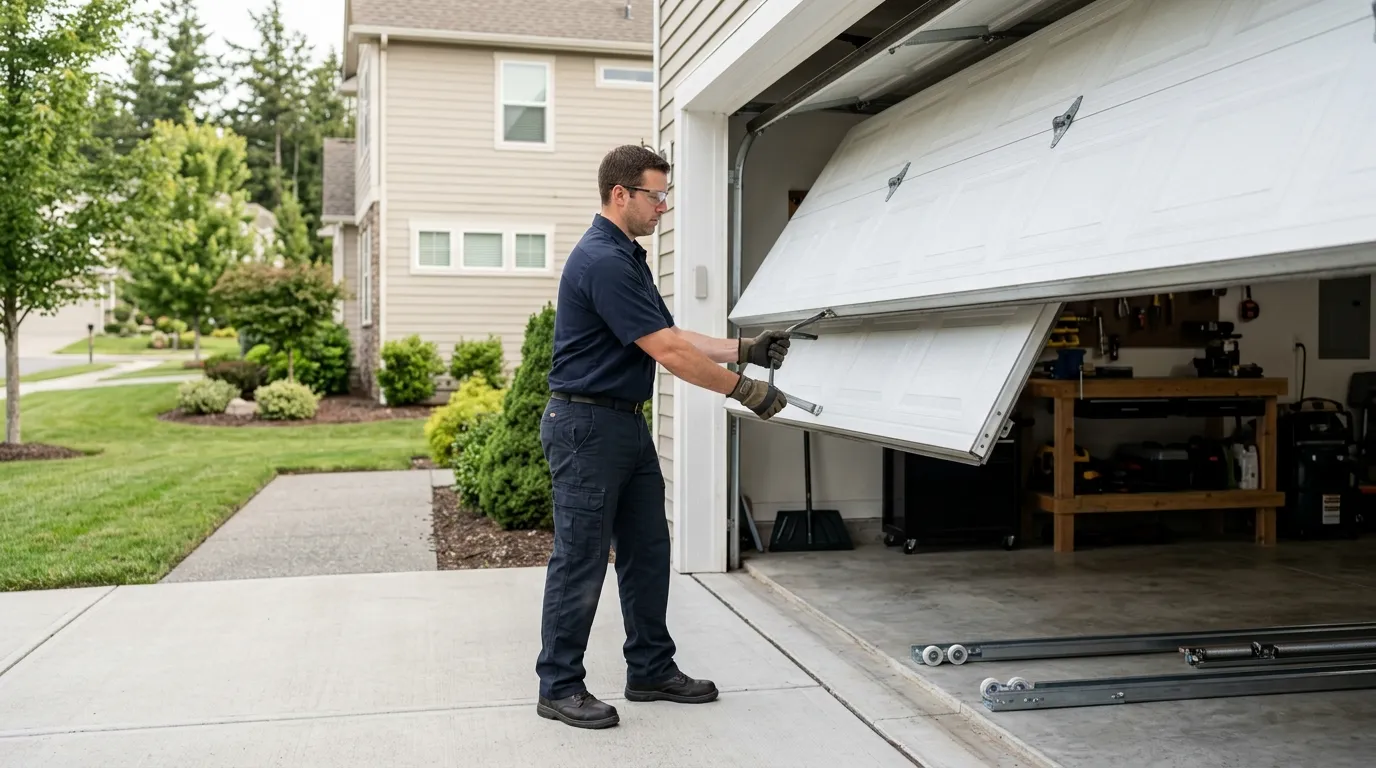
Walk through most of Parma and you're looking at housing built between 1938 and 2004, with the median year sitting at 1966. That means a lot of the garage doors on this side of town were hung on original steel track, bolted into jamb framing that's had over half a century to move. Wood shrinks, foundations settle a fraction of an inch, and the track that was plumb the day it went up isn't plumb anymore. A door doesn't need a dramatic event to jump its track - it just needs one bracket that's crept a sixteenth of an inch out of alignment over fifty years, and a roller that finally hits the edge wrong instead of riding the channel. Once that happens, the door binds, chatters, or comes off the rail on one side while the other side keeps moving, which is what actually bends the track and turns a five-minute adjustment into a full section replacement. The age of the house tells you more about why the track failed than anything the homeowner did that morning.
The Seasonal Bit
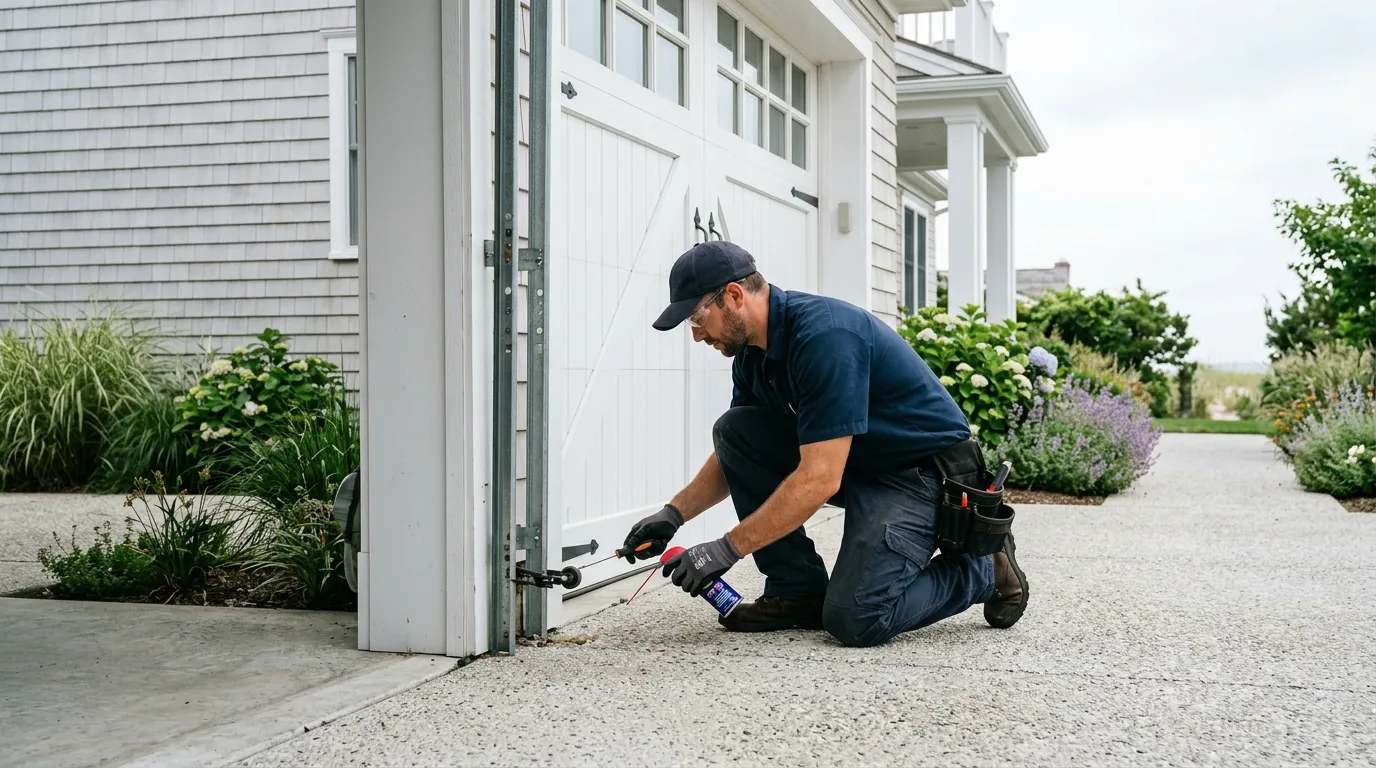
Parma sits in a climate band the federal data marks as cold and severe, and that matters for track alignment in a way most people don't expect. Steel track contracts in the cold. A gap that's invisible in July - a track bracket a hair loose, a roller with a little extra play - closes up tight when temperatures drop and the metal shrinks. That's why so many track calls here land in the coldest stretch of winter: the slack that let the door run rough all summer disappears, the roller jams against the rail, and something that was merely noisy becomes something that's stuck or bent. It isn't that cold weather breaks a garage door. It's that cold weather removes the tolerance that was hiding a problem that was already there. A door that's been drifting out of alignment since spring will usually tell you about it for the first time in January.
What Local Conditions Do
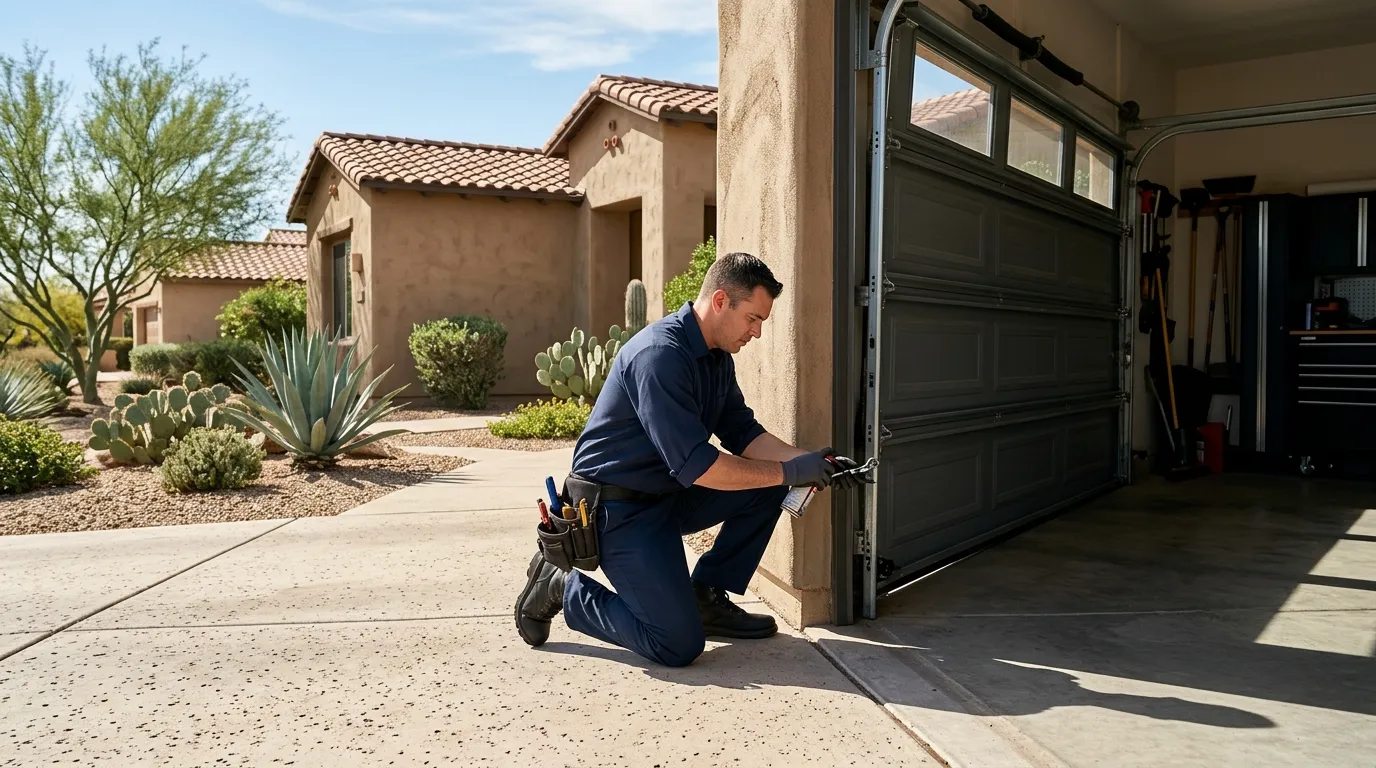
Put the housing age and the climate together and you get the pattern we actually see on the truck. Original 1960s and 70s track, common across the 67 named areas that make up this kind of stock, was set with hardware sized for a lighter door than a lot of homes run today. Add fifty-plus years of slab settling, a cold winter that shrinks the metal and finds every loose bracket, and you get a track that's been quietly drifting for years before it finally lets a roller jump the rail. The same failure shows up close together - Parma Heights, Seven Hills, Brooklyn Heights, and the rest of the postwar ring around Parma were built in the same stretch, so it's not unusual to see the identical bent-track call two streets over. It's not bad luck. It's the same house, built the same year, aging the same way.