24/7 Emergency Service Open 7 days · 7am–8pm Serving Parma, OH & nearby
(216) 359-8164
Parma, OH

What We Check First on a Parma Garage Door Call

In Parma, most garage doors date to the 1960s-70s building boom. Here's what a technician checks first before touching springs, tracks, or the opener.

What We Check First on a Parma Garage Door Call

The Situation

Parma's housing stock runs from 1938 up through 2004, with the median build year landing around 1966. That one number changes the whole call before a technician even opens a toolbox. A door on a house built in the mid-60s is running original hardware sizing more often than not - torsion springs wound for a heavier or lighter door than what's actually hanging on the track today, brackets that have been painted over a dozen times, and track that was leveled to a slab that has since settled. The first thing checked is never the opener. It's the spring winding cone and the drum, because on a house this age the spring is the part most likely to have been swapped once already by someone who guessed at the wire gauge instead of measuring it. Second is the track mounting - on 1960s construction the vertical track is often lag-bolted straight into jamb framing that's shifted a half-inch over sixty years, which throws the whole roller path out of line before the door even reaches the horizontal run. None of this shows up as an obvious symptom. It shows up as a door that binds two inches from the top, every time, and an owner who thinks the opener is failing when the opener is fine.

The Seasonal Bit

This is a cold-climate service area, and cold here isn't mild. Steel contracts, grease stiffens, and a spring that was wound correctly in July can bind in January because the coil spacing tightens as the metal shrinks. So the second check, right after the spring, is how the door behaves cold versus how it behaved on the service call in warmer months - if there's a record of it. A technician checks the bottom seal next, because on a slab built before code required a thermal break, the seal is doing all the work of keeping meltwater and road salt spray out of the track channel. Salt corrodes galvanized track faster than plain rust does, and on an older house that track has usually never been swapped. The opener's force settings get checked too, because cold-stiffened springs make the opener strain harder to lift the door, and a unit set correctly in summer will read as underpowered in a severe winter and start slamming down instead of lowering evenly. That's a safety issue, not a convenience one, and it's the reason force settings get rechecked every cold season rather than set once and left alone.

What Most People Get Wrong

The most common mistake is assuming the opener is the problem when the door is the problem. On houses built in the 1960s and 70s - which is most of the stock in this part of Parma - the opener is very often not the original unit. It's been replaced once, sometimes twice, while the springs, track, and hinges are still the originals or close to it. That mismatch means an owner buys a new opener to fix a door that's actually dragging on worn rollers or a bent track, spends the money, and the door still struggles. A technician checks the door's mechanical parts moving freely by hand, with the opener disconnected, before ever touching the opener itself. If the door doesn't lift smoothly by hand, no opener fixes that. The second thing people get wrong is ignoring a slow, gradual drift in how the door closes - assuming it's just old age. On a house with settled framing, that drift is usually the track pulling out of alignment a little more each winter as the ground freezes and thaws under the foundation. Left alone, it turns a five-minute track adjustment into a full track replacement, and that's a repair that costs a lot more once the roller has worn a groove into misaligned track.

What Local Conditions Do

Severe cold does specific, checkable things to a door, and that's what the last part of a visit covers. Lubricant that's the wrong weight for winter gums up and slows the rollers, so grease type and where it's been applied gets checked, not just whether it's there. Weatherstripping on doors installed decades ago was rarely rated for the swing this area sees between a mild fall day and a hard freeze, and it cracks at the corners first - that's checked by hand, not by eye, because a hairline crack doesn't show until you flex it. Cable and pulley systems on older houses get checked for ice buildup in the pulley housing, which is a Parma-specific failure mode tied to meltwater running down the track and refreezing overnight. None of this is exotic work. It's the same handful of checks, in the same order, because the housing age and the winters here create the same handful of failure points on most calls. One honest limit: if a spring or track has already corroded through, a technician isn't going to patch it to get through one more winter - that's a straight replacement call, not a repair, because a partial fix on rusted-through hardware fails again within a season.

How it works

From “it’s stuck” to “it’s fixed”

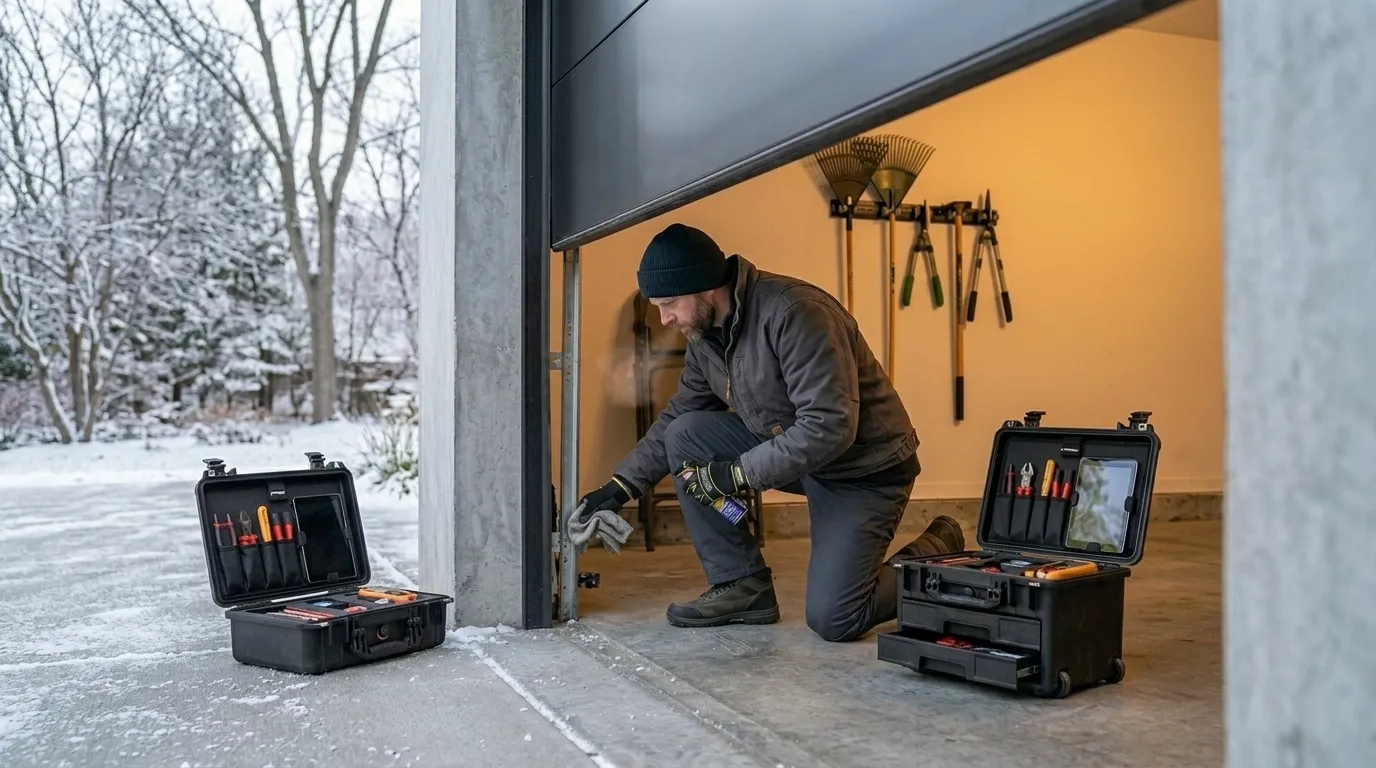
Tell us what’s wrong - Parma garage door service

Tell us what’s wrong

Describe the symptom - won’t open, loud bang, opener runs but the door won’t move.

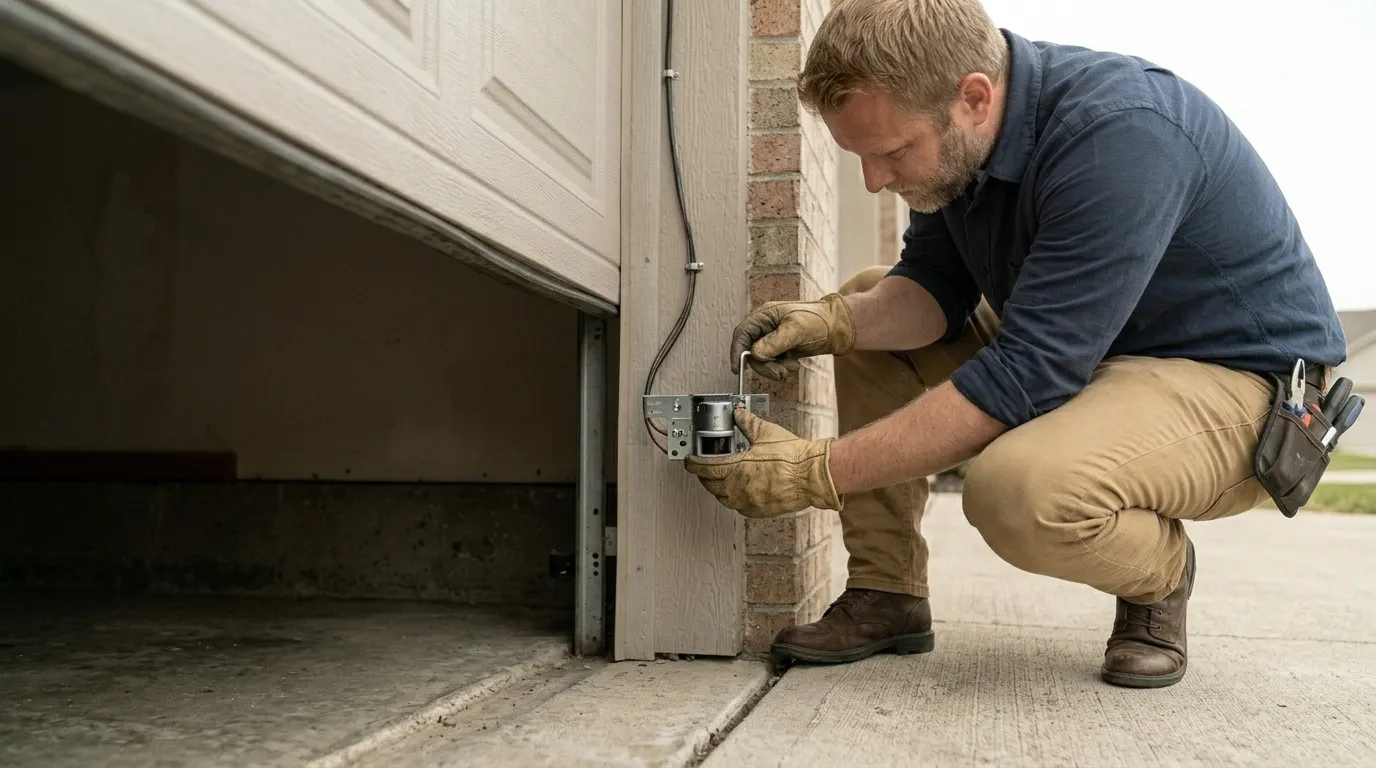
On-site diagnosis - Parma garage door service

On-site diagnosis

A technician tests the door under power and by hand and finds what actually failed.

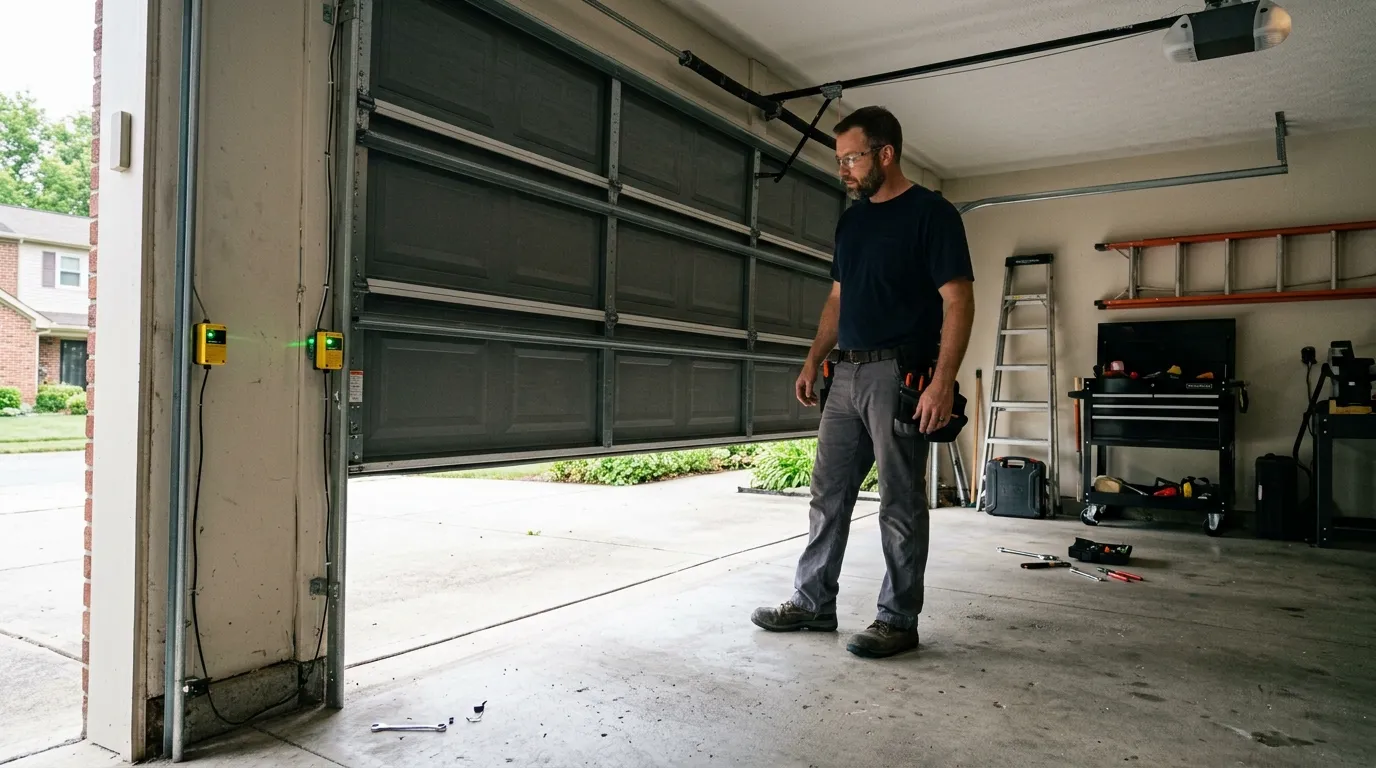
Clear, up-front plan - Parma garage door service

Clear, up-front plan

You get the fix that’s needed and what drives the cost - before any work starts.

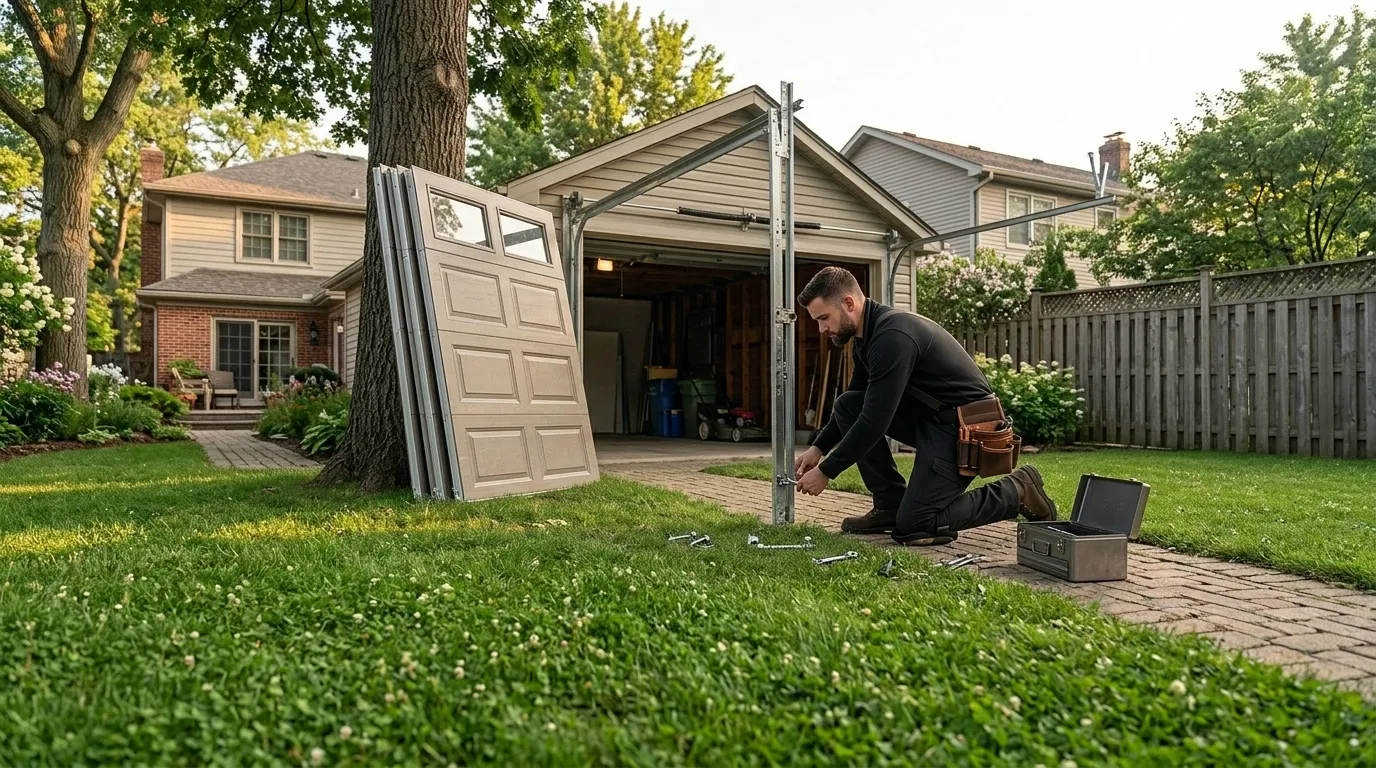
Repaired & tested - Parma garage door service

Repaired & tested

The repair is done, the door is set true and tested, and the work area left clean.

Serving Parma, OH - tell us what your door’s doing and we’ll take it from there.

70areas covered
How we work

What to expect

Diagnosis firstEvery visit starts by finding what actually failed - not a pre-written parts list.
The right part for the doorSprings and openers matched to the door’s weight and age, so the fix holds up.
Straight answersWhen a repair makes more sense than a replacement - or the reverse - you hear it plainly.
Clean, careful workTension released safely, hardware set true, the door tested under power before we leave.
Questions

Frequently asked

Straight answers about garage door repair in Parma. Still unsure? Ask us directly.

Why does my garage door stick every winter but not the rest of the year?

On a lot of Parma houses built in the 1960s and 70s, the spring and track were sized decades ago and the metal contracts in severe cold. That tightens spring coil spacing and stiffens old grease, so a door that runs fine in summer binds when the temperature drops. It's a seasonal symptom of aging hardware, not a new problem.

Is it my opener or my door?

Disconnect the opener and lift the door by hand. If it's heavy, uneven, or drags anywhere in the track, that's the door - springs, rollers, or alignment - not the opener. On houses this age, the opener has often been replaced already while the original door hardware hasn't, so it's the more likely source of a real problem.

How often should the track be checked on an older house?

On homes built before the 2000s, foundation settling and freeze-thaw cycles gradually shift track alignment. A yearly check catches it while it's a quick adjustment. Left a few winters, a misaligned track wears a groove into the rollers and turns into a full track replacement instead.

Ready to get your garage door sorted?

Tell us what it’s doing and where you are in Parma - we’ll take it from there.

4Services offered
70Areas covered
Diagnosisfirst, then the fix
Request a QuoteCall