24/7 Emergency Service Open 7 days · 7am–8pm Serving Parma, OH & nearby
(216) 359-8164
Parma, OH

Why Parma's Older Garage Doors Struggle With Cold and Draughts

Parma homes built mostly in the 1960s and 70s face cold-season draughts through old weather seals and worn tracks. See what actually needs fixing here.

Why Parma's Older Garage Doors Struggle With Cold and Draughts

The Situation

Walk down almost any street in Parma and you're looking at houses built mostly between 1938 and 2004, with the median landing around 1966. That's a specific window: garages built before manufacturers dropped door insulation to the code minimums we see now. A lot of these openings still carry the original steel jamb, and the weatherstripping around them was never meant to last sixty years. When a seal that old finally gives out, it doesn't just let in a draught - it lets in whatever the winter is doing outside, which in this part of Ohio is a lot. We see the same pattern across the wider service area too: the 67 named communities we work in, from Parma Heights out to Broadview Heights and Berea, share that same 1960s-70s build era. The hardware ages the same way street to street, which means the fixes we make in Parma are usually the same fixes needed a couple miles over. One honest note: we can't tell you the exact age of your door just from the house. The build year of the house doesn't always match the door - plenty of these openings have had at least one replacement door installed since, sometimes more than one.

The Seasonal Bit

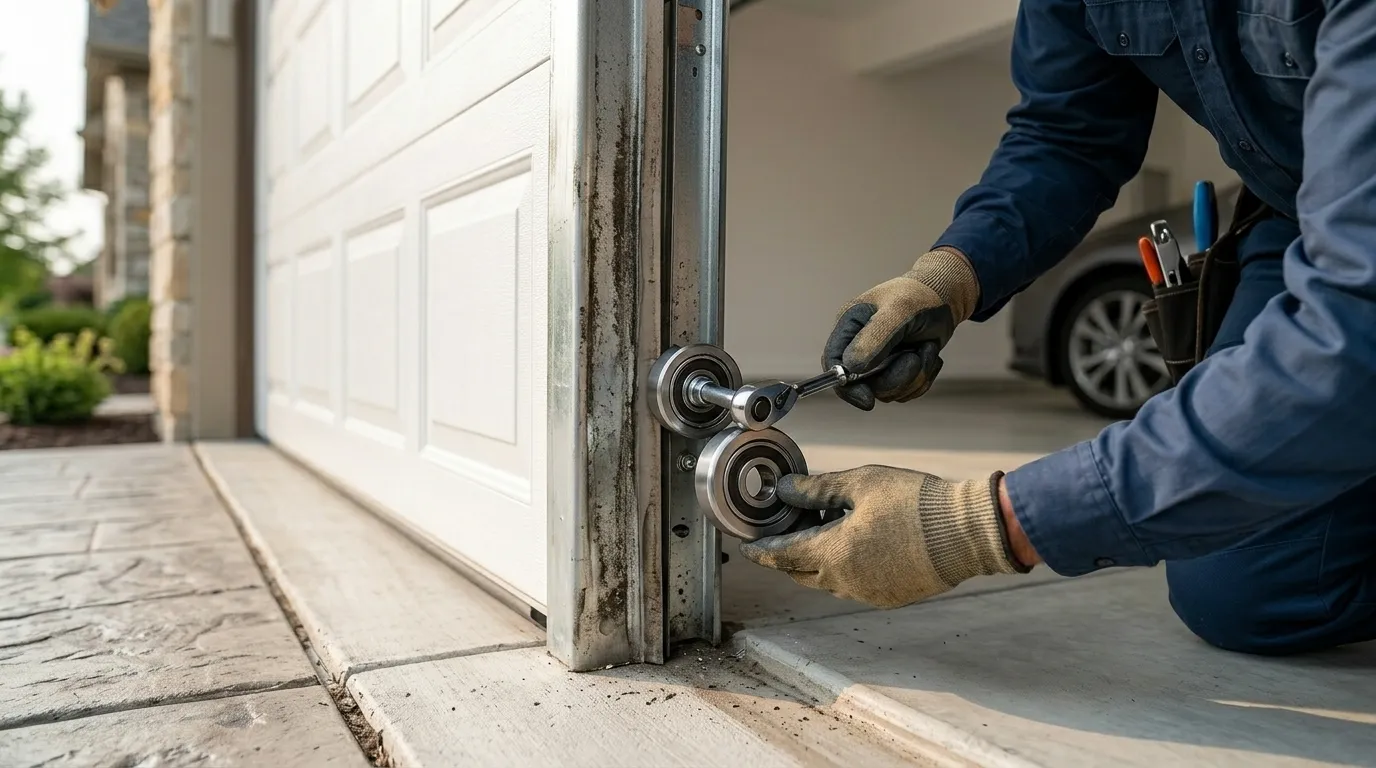
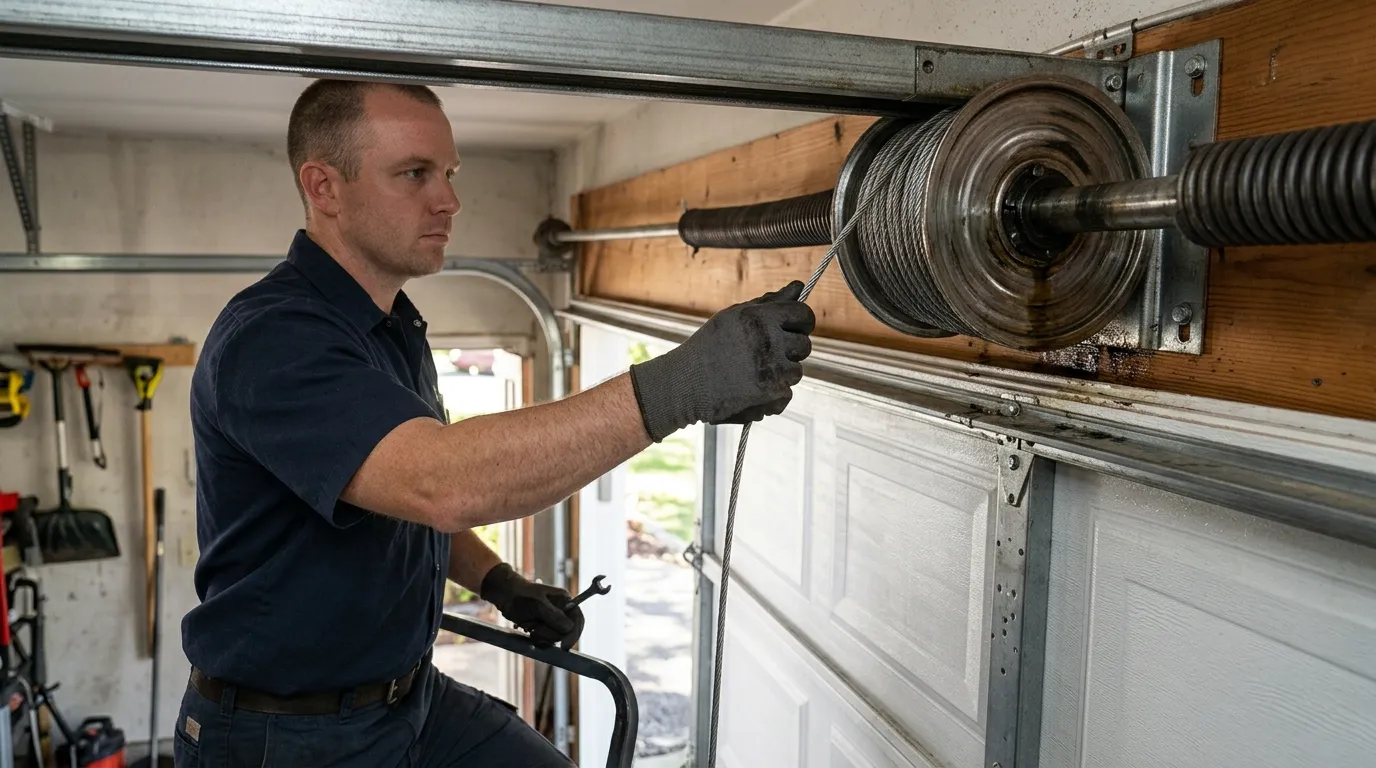
Parma sits in a climate band federal data marks as cold and severe, and that matters more for a garage door than most people think. Steel contracts in the cold. On a door built to 1960s-70s tolerances, that contraction opens gaps at the bottom seal and around the panel joints that weren't there in July. Torsion springs lose a little tension too as the metal cools, which is why a door that closed fine on a mild fall afternoon can start binding on the first hard freeze. Nylon rollers, especially ones original to a house from that build era, get brittle in sustained cold and start chipping at the edges instead of turning smooth in the track. None of this is dramatic on its own. It shows up as a door that's noisier, a bottom seal that's flattened and letting a cold line of air across the slab, or a track that needs a shove to get moving on the coldest mornings. It's not a sign the door is failing outright - it's a sign the door is doing exactly what a fifty-year-old steel assembly does in a severe cold climate. The fix is usually a seal, a set of rollers, or a spring adjustment, not a full replacement.

What Most People Get Wrong

The common mistake we see is treating a cold draught as an insulation problem when it's almost always a seal and threshold problem. Adding a foam panel kit to the inside of an old door doesn't fix a bottom seal that's compressed flat or a threshold gap that's opened up as the slab settled - both common on houses from the 1938-2004 range that make up most of this area. The other mistake is waiting until spring to deal with a winter problem. A cracked seal in January keeps letting cold air and moisture in for months before anyone gets around to it, and that moisture around a steel jamb in a cold-climate house causes more damage than the draught itself. We also see people replace a whole opener because the door is struggling in the cold, when the actual issue is a spring that's lost tension from the temperature drop - a five-minute adjustment, not a new motor. If your door is original to a house built anywhere close to that median 1966 mark, the parts wearing out are almost always the seal, the rollers, or the spring - not the opener, and not the whole door.

What Local Conditions Do

Put the two things together - housing mostly from 1938 to 2004 and a climate band marked cold and severe - and you get a fairly predictable set of jobs across this service area. Bottom seals that harden and crack rather than staying pliable. Steel panels that pull slightly at the seams as they contract, which shows as a thin line of daylight at the corner instead of anywhere in the middle. Torsion springs, especially the original ones on doors from the 1960s-70s wave of construction, losing enough tension in a hard freeze that the opener starts working harder than it should. None of this is unique to one street - we see it whether the call comes from Parma itself or from two miles over in Parma Heights, three miles out in Seven Hills, or the older sections of Brooklyn and Brooklyn Heights nearby, since the build eras track closely across this part of the county. What changes house to house is how much of it has already been addressed. A door with a seal replaced in the last few years handles a cold snap fine. A door with the original 1970s seal usually doesn't.

How it works

From “it’s stuck” to “it’s fixed”

Tell us what’s wrong - Parma garage door service

Tell us what’s wrong

Describe the symptom - won’t open, loud bang, opener runs but the door won’t move.

On-site diagnosis - Parma garage door service

On-site diagnosis

A technician tests the door under power and by hand and finds what actually failed.

Clear, up-front plan - Parma garage door service

Clear, up-front plan

You get the fix that’s needed and what drives the cost - before any work starts.

Repaired & tested - Parma garage door service

Repaired & tested

The repair is done, the door is set true and tested, and the work area left clean.

Serving Parma, OH - tell us what your door’s doing and we’ll take it from there.

70areas covered
How we work

What to expect

Diagnosis firstEvery visit starts by finding what actually failed - not a pre-written parts list.
The right part for the doorSprings and openers matched to the door’s weight and age, so the fix holds up.
Straight answersWhen a repair makes more sense than a replacement - or the reverse - you hear it plainly.
Clean, careful workTension released safely, hardware set true, the door tested under power before we leave.
Questions

Frequently asked

Straight answers about garage door repair in Parma. Still unsure? Ask us directly.

Why does my garage door feel stiff on cold mornings?

Steel contracts and torsion springs lose a bit of tension as the temperature drops, which is normal in a cold-severe climate like this one. On a door with original 1960s-70s hardware, that shows up as extra resistance or noise on the coldest mornings. It's usually a spring adjustment or roller swap, not a sign the opener or door is failing.

My house was built in the 60s - does that matter for my garage door?

It can. A lot of Parma's housing stock runs from 1938 to 2004 with a median around 1966, and doors from that era often still have original weatherstripping and hardware never designed to last this long. That said, plenty of these houses have had a door replaced at some point, so age of house isn't a guarantee of age of door.

Is a draught under my garage door an insulation issue?

Usually not. Most cold-air draughts we find on older Parma-area doors come from a flattened bottom seal or a threshold gap, not from a lack of panel insulation. Adding foam insulation to the inside of the panel won't fix a seal that's compressed or cracked - that part needs replacing directly.

Do you work outside Parma itself?

Yes, our service area covers Parma and the surrounding communities including Parma Heights, Seven Hills, Brooklyn, Brooklyn Heights, Independence, and other nearby towns that share a similar 1960s-70s housing stock and the same cold-severe winter conditions.

Ready to get your garage door sorted?

Tell us what it’s doing and where you are in Parma - we’ll take it from there.

4Services offered
70Areas covered
Diagnosisfirst, then the fix
Request a QuoteCall