24/7 Emergency Service Open 7 days · 7am–8pm Serving Parma, OH & nearby
(216) 359-8164
Parma, OH

What That Sound in Your Parma Garage Door Is Actually Telling You

Most Parma houses date to the 1960s and 70s original hardware. Here's what grinding, popping, or slapping sounds mean before cold weather makes it worse.

What That Sound in Your Parma Garage Door Is Actually Telling You

The Situation

Parma housing runs from 1938 to 2004, with the median build year sitting at 1966. That number matters more than it sounds like it should. A door installed when a house went up in the mid-60s is running on steel roller tracks, a single torsion spring, and hinges that nobody has manufactured in the same spec for years. Across the wider service area, the story repeats itself in 67 named neighborhoods and suburbs, most of them built out in that same 1960s-to-70s wave. That means when your door starts making a sound it didn't used to make, the cause is rarely mysterious. It's original hardware doing what forty-plus-year-old steel does under repeated stress: work-harden, wear thin, or lose the tolerance it had when it left the factory. A new door in a 2004-built house and an original door in a 1962-built house can make the exact same noise for completely different reasons, and the fix isn't the same either. Age of the house tells you a lot about what's likely wearing out before you even open the panel.

The Seasonal Bit

Parma sits in a climate band classified as cold and severe, and that changes what a noise means depending on the month. Steel contracts in the cold. A torsion spring wound to spec in July sits a little tighter in January, and a track that was true in summer can bind just enough at the low temperatures to make a door grind instead of glide. Grease designed for room temperature thickens up too, so a roller that spun quiet in September can start to squeal or chatter once the mercury drops. This isn't a one-time event, it's a seasonal pattern: the same door, the same hardware, sounding different at 20 degrees than it does at 70. If a door starts popping only in cold weather and goes quiet again in spring, that's a strong sign the issue is tolerance and lubrication, not a part that's actually failed. If the noise doesn't go away when it warms up, that's the one to stop ignoring.

What Most People Get Wrong

The most common mistake is treating every noise as a lubrication problem. Spraying WD-40 on a squealing roller can quiet it down for a week, which convinces people the job is done. WD-40 is a solvent, not a lubricant, and it strips out what grease is left in a bearing rather than replacing it. On original 1960s and 70s hardware that's already past its expected service life, that short-term quiet can mask a roller or hinge that's actually cracking, not just dry. The second mistake is assuming a noise means the whole door needs replacing. That's not always true, and we won't tell a customer to replace a door when a spring, roller set, or track adjustment solves it. We also won't pretend every repair is quick: some original hardware from this era uses spring and track dimensions that aren't the current standard size, and matching parts can take longer to source than a same-day fix. That's a real limitation, not an excuse, and it's worth knowing before you assume any noise is a same-afternoon job.

What Local Conditions Do

Cold-severe winters do specific, repeatable things to a garage door system, and Parma gets the full range of them across a heating season. Repeated freeze-thaw cycles work on the fasteners holding brackets to jambs that were framed in the 1960s, loosening what was once snug. Road salt tracked in on tires and boots reaches the bottom section of the track and the bottom rollers faster than anywhere else on the door, and corrosion there produces a scraping or gritty sound distinct from a dry-bearing squeal. Temperature swings between a heated garage and an unheated one, common in houses built to the standards of that era rather than current code, mean the door itself expands and contracts at a different rate than the track it rides in. That mismatch is what produces the popping sound a lot of owners hear specifically in the first cold snap of the year and again in the first thaw. None of this is unique to one street or one subdivision here, but it is tied directly to a housing stock this old sitting in a climate this cold. That combination is the whole reason a noise here means something specific, not a generic warning.
How it works

From “it’s stuck” to “it’s fixed”

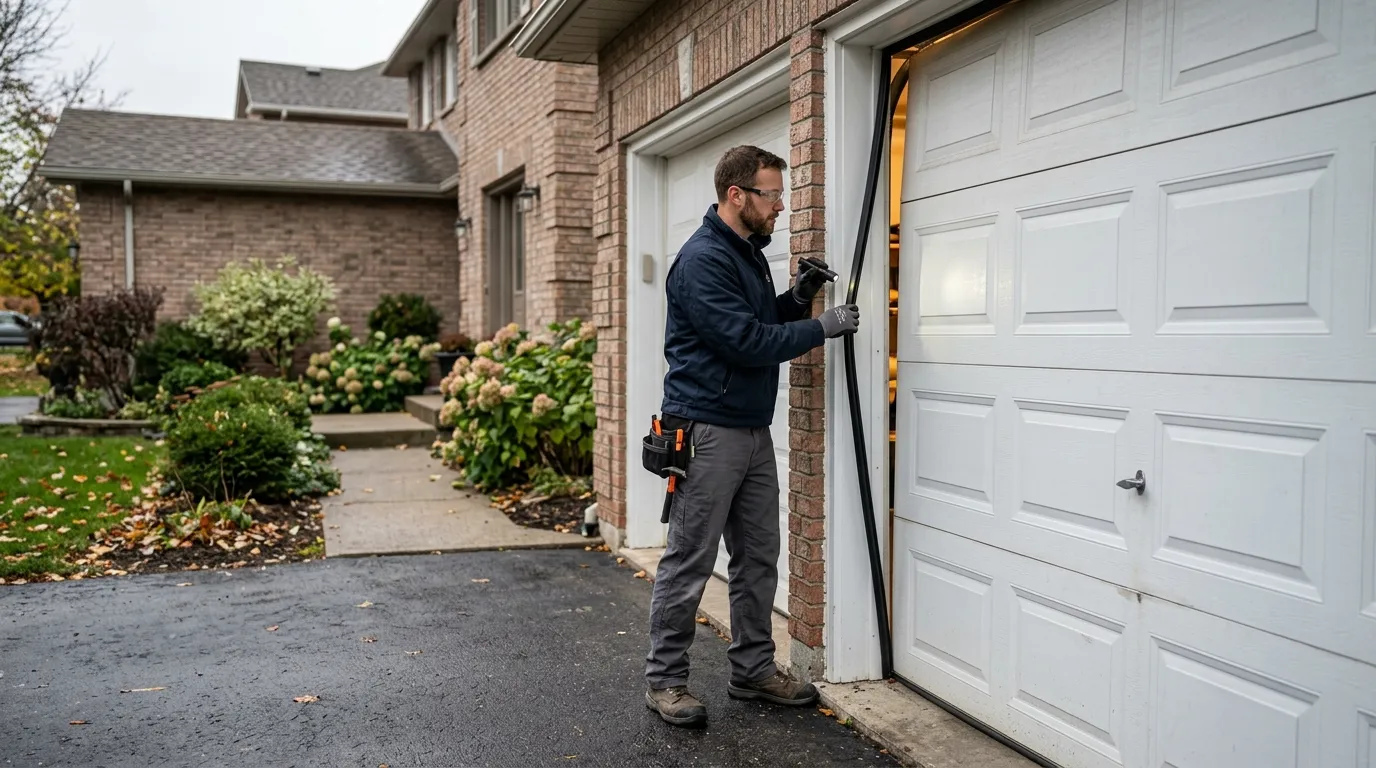
Tell us what’s wrong - Parma garage door service

Tell us what’s wrong

Describe the symptom - won’t open, loud bang, opener runs but the door won’t move.

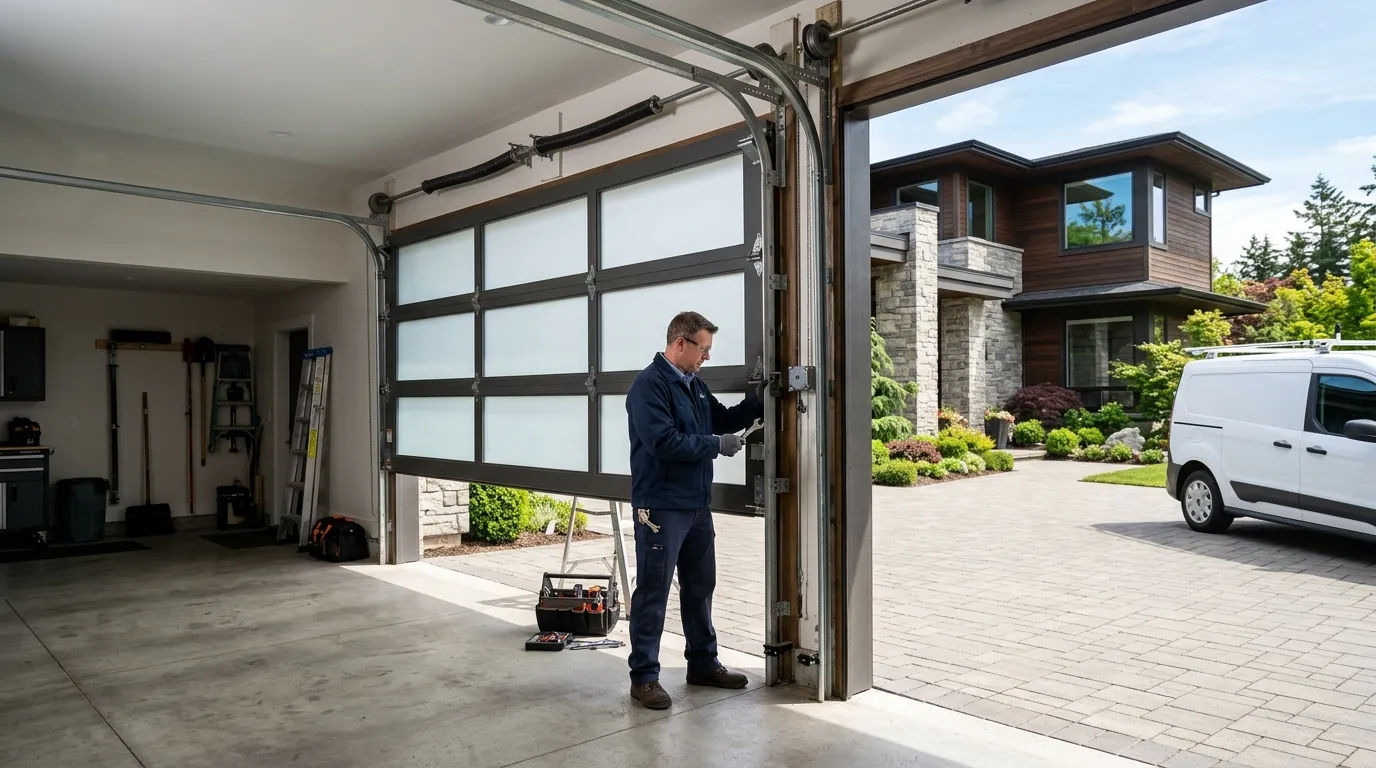
On-site diagnosis - Parma garage door service

On-site diagnosis

A technician tests the door under power and by hand and finds what actually failed.

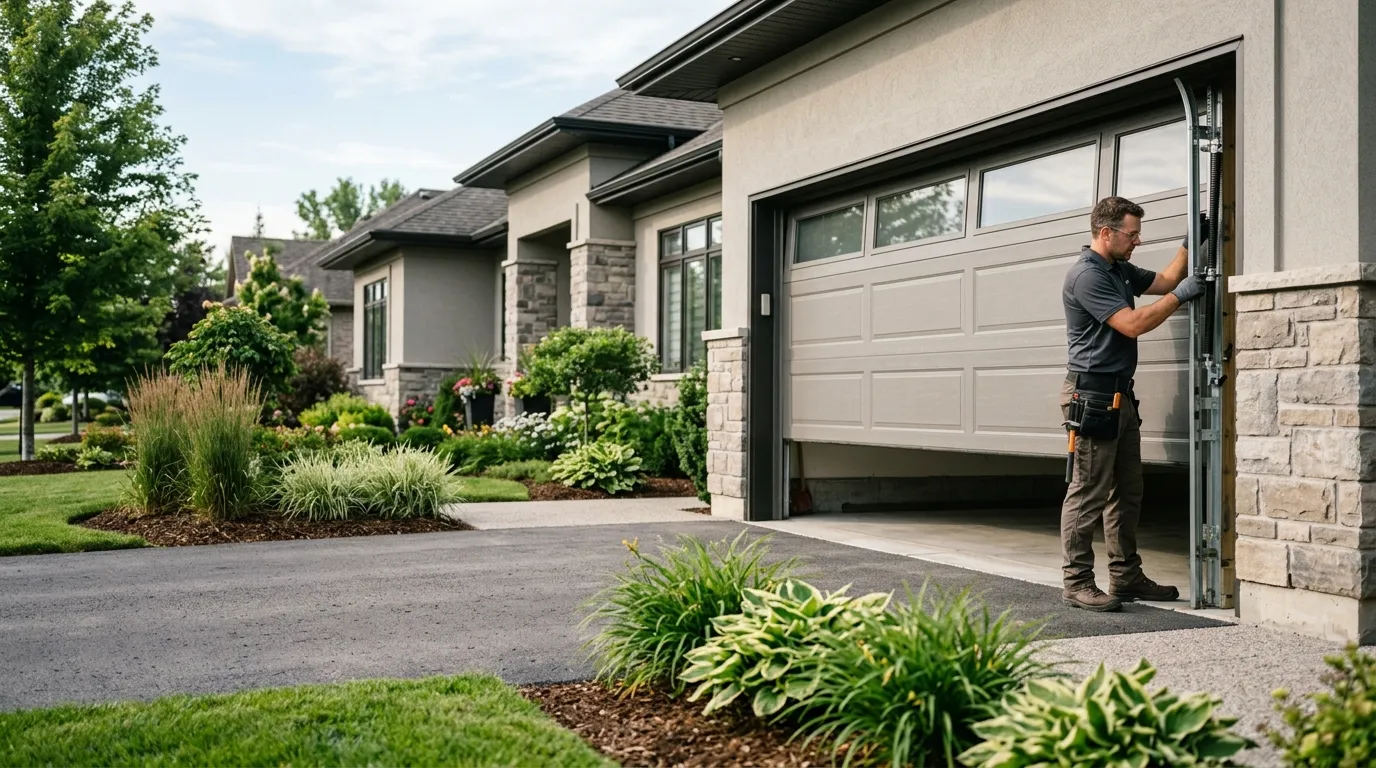
Clear, up-front plan - Parma garage door service

Clear, up-front plan

You get the fix that’s needed and what drives the cost - before any work starts.

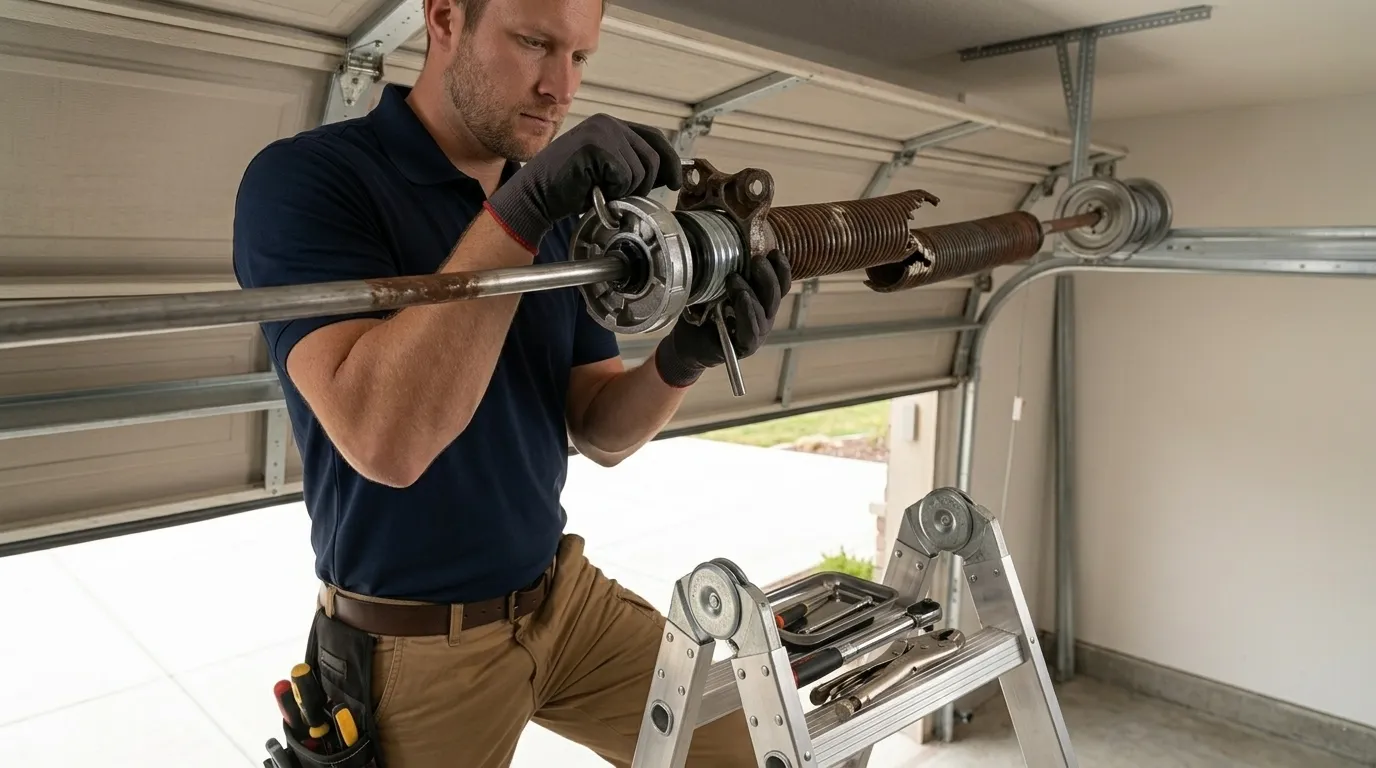
Repaired & tested - Parma garage door service

Repaired & tested

The repair is done, the door is set true and tested, and the work area left clean.

Serving Parma, OH - tell us what your door’s doing and we’ll take it from there.

70areas covered
How we work

What to expect

Diagnosis firstEvery visit starts by finding what actually failed - not a pre-written parts list.
The right part for the doorSprings and openers matched to the door’s weight and age, so the fix holds up.
Straight answersWhen a repair makes more sense than a replacement - or the reverse - you hear it plainly.
Clean, careful workTension released safely, hardware set true, the door tested under power before we leave.
Questions

Frequently asked

Straight answers about garage door repair in Parma. Still unsure? Ask us directly.

My garage door only squeals when it's cold out. Is that serious?

Not necessarily. Cold thickens bearing grease and shrinks steel tracks slightly, so a roller or hinge that's quiet in summer can squeal in winter. If the noise disappears once it warms up, it's usually a lubrication and tolerance issue. If it persists year-round, that points to actual wear, not just temperature.

Is a popping sound when the door opens dangerous?

It can mean a spring under uneven tension or a bracket that's worked loose, both of which show up more in houses with original 1960s hardware. It's not something to leave alone, but it's also not automatically a spring about to snap. Worth a look before it gets worse.

Do you always recommend replacing the whole door when it's noisy?

No. Most noise complaints on original hardware from this era come down to a spring, a roller set, or a track adjustment. We only recommend full replacement when the door itself, not just the moving parts, is what's failed.

Why does my door sound different in the garage than it did last winter?

Repeated freeze-thaw cycles and years of road salt reaching the bottom track and rollers change how the hardware moves over time. A door that sounded fine two winters ago can develop a new sound as corrosion or loosened fasteners accumulate.

Ready to get your garage door sorted?

Tell us what it’s doing and where you are in Parma - we’ll take it from there.

4Services offered
70Areas covered
Diagnosisfirst, then the fix
Request a QuoteCall