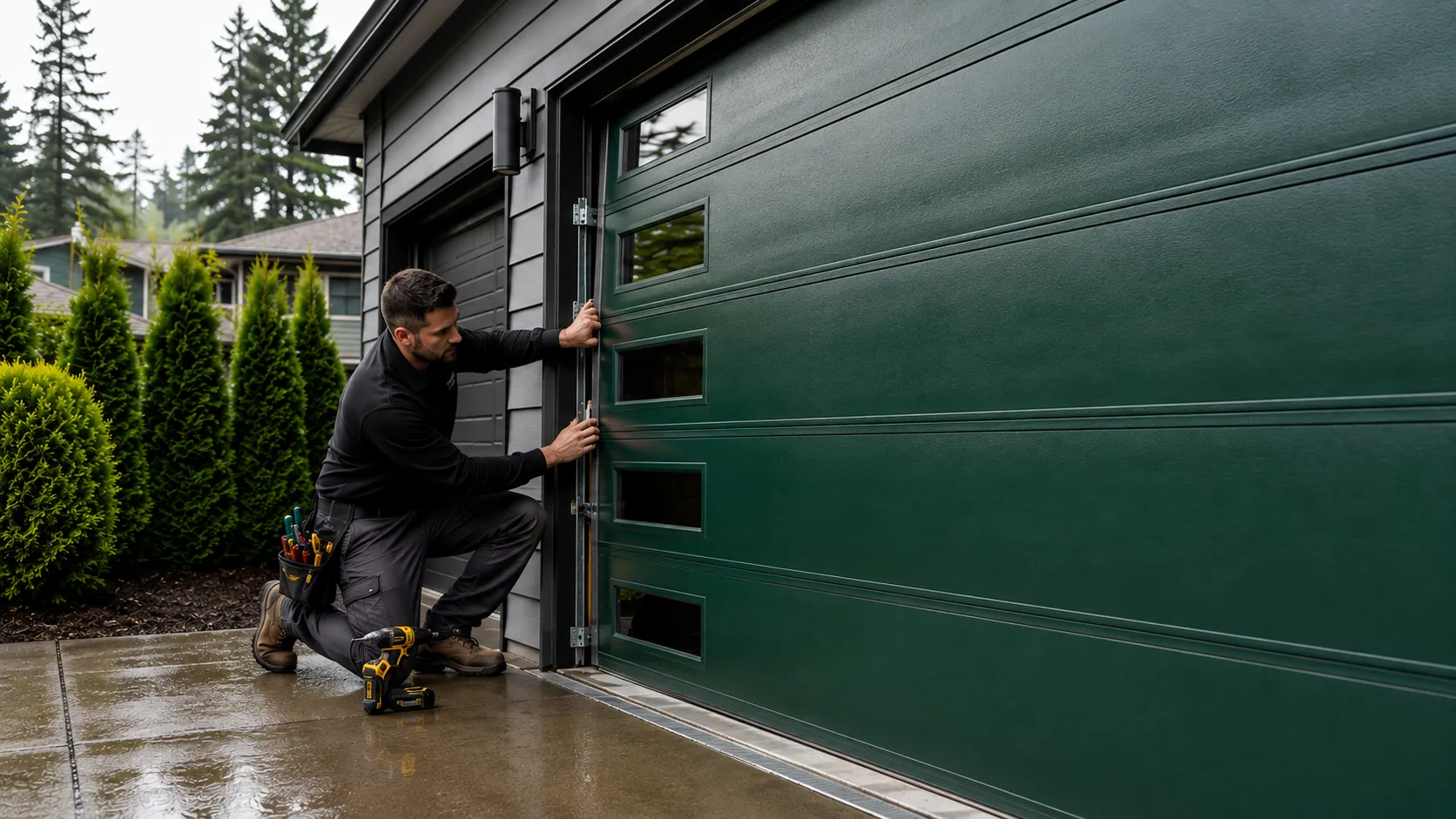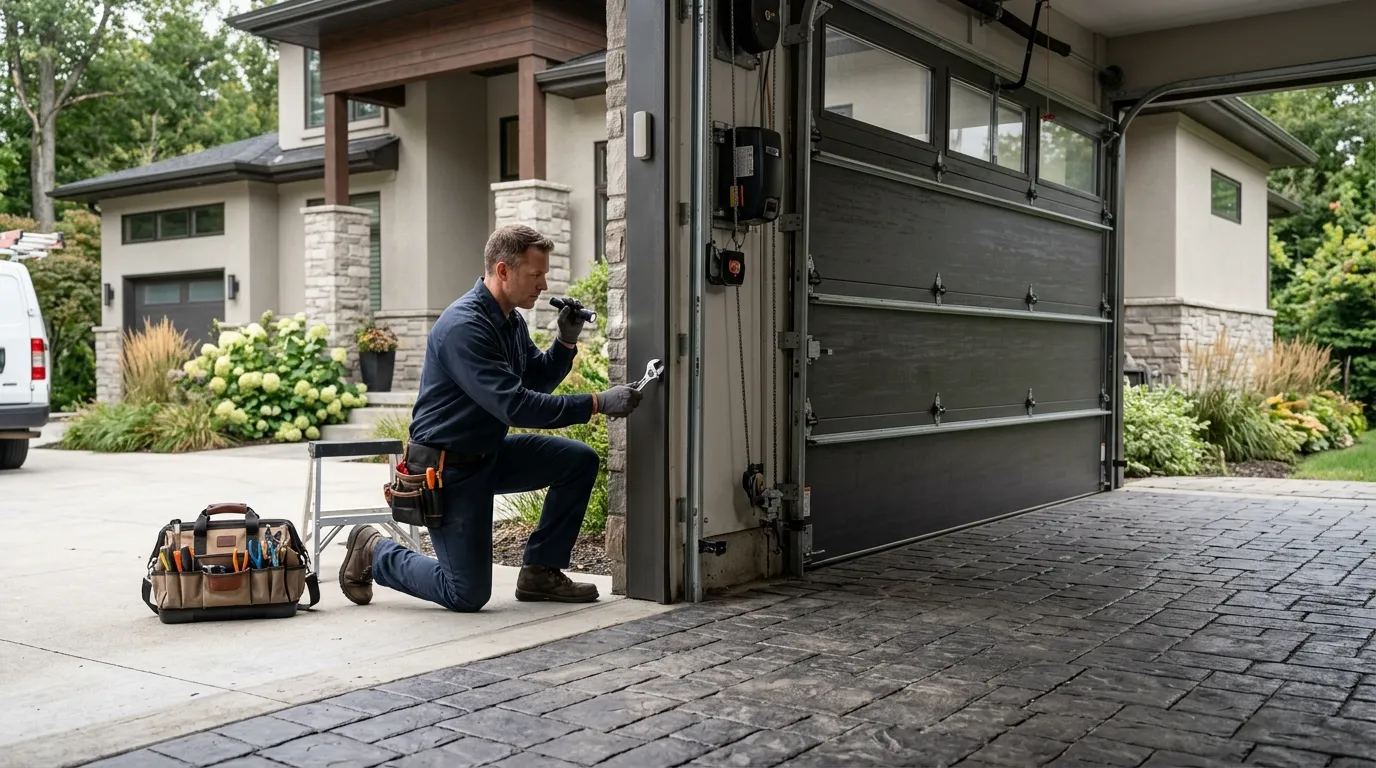

Getting It Booked In
We don't keep a truck parked in Seven Hills. We run the job out of Parma, and Seven Hills sits about 3 miles from our shop, one of the shortest runs on the list of 34 towns we cover from there. That distance matters less for scheduling than it does for parts - if your spring or opener part isn't on the truck already, it's a quick trip back to get it, not a half-day round trip across the county.
When you call, we ask what the door is doing (won't open, opens crooked, makes a grinding noise on the way up) and how old the house is. In Seven Hills that second question usually gets the same answer: built somewhere close to 1966. That tells us a lot before we even see the door - what kind of spring setup to expect, whether the track is going to be the narrower older gauge, and whether the opener bolted to it is a later replacement on original hardware. We book based on that conversation, not a generic slot.
Where This Job Goes Sideways
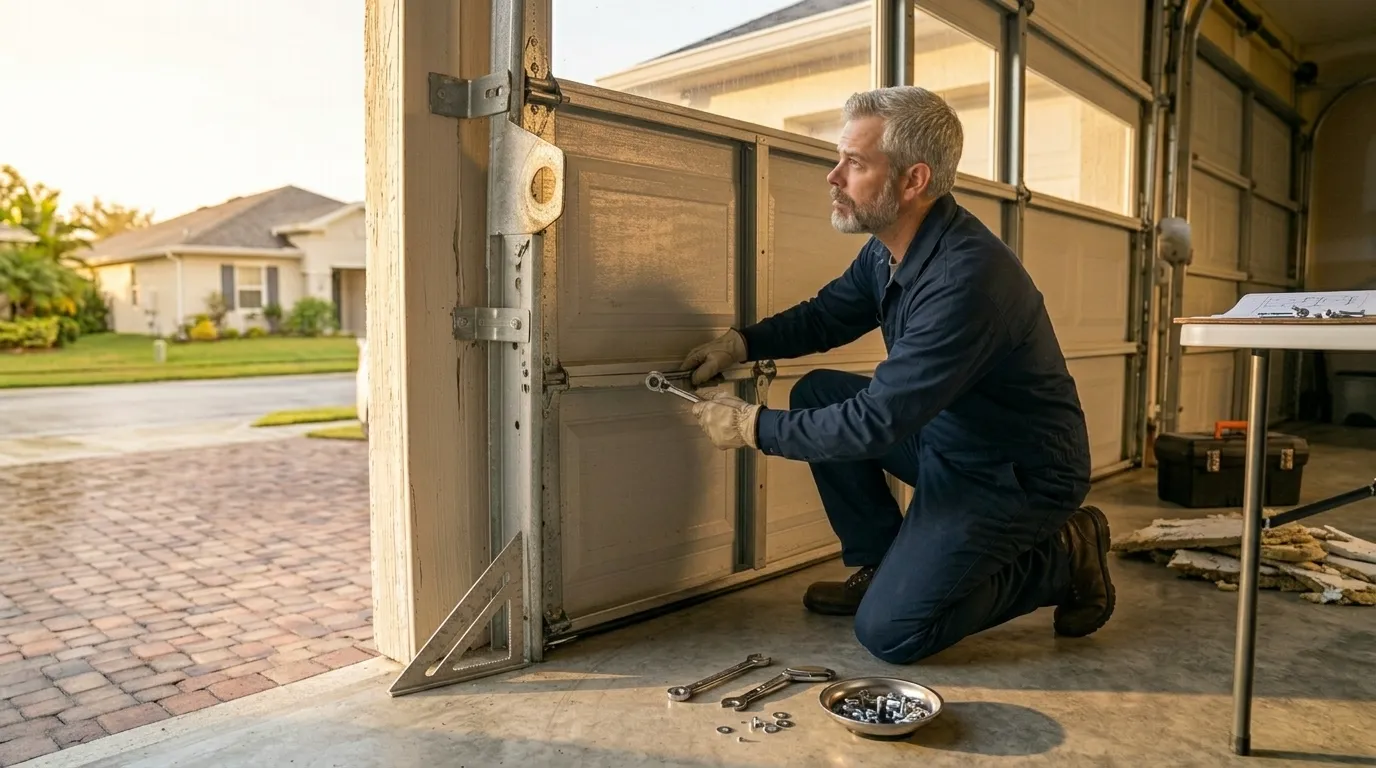
The failure we see most in Seven Hills isn't the door itself - it's the torsion spring setup underneath it. Houses here cluster tight around that 1966 build year, squarely inside the 1960s-70s wave that runs across most of the named areas in this service territory. That means a lot of the original side-mounted torsion hardware is still in these garages, sometimes with a newer opener bolted on top of it like a patch.
What goes sideways is homeowners treating the opener as the problem when the spring is the real one. A tired spring makes the opener strain, which burns out the motor, which gets replaced - and the door comes back broken again in a year because nobody touched the spring. We see that sequence repeat block after block in Seven Hills, because the houses aged into spring failure at roughly the same time.
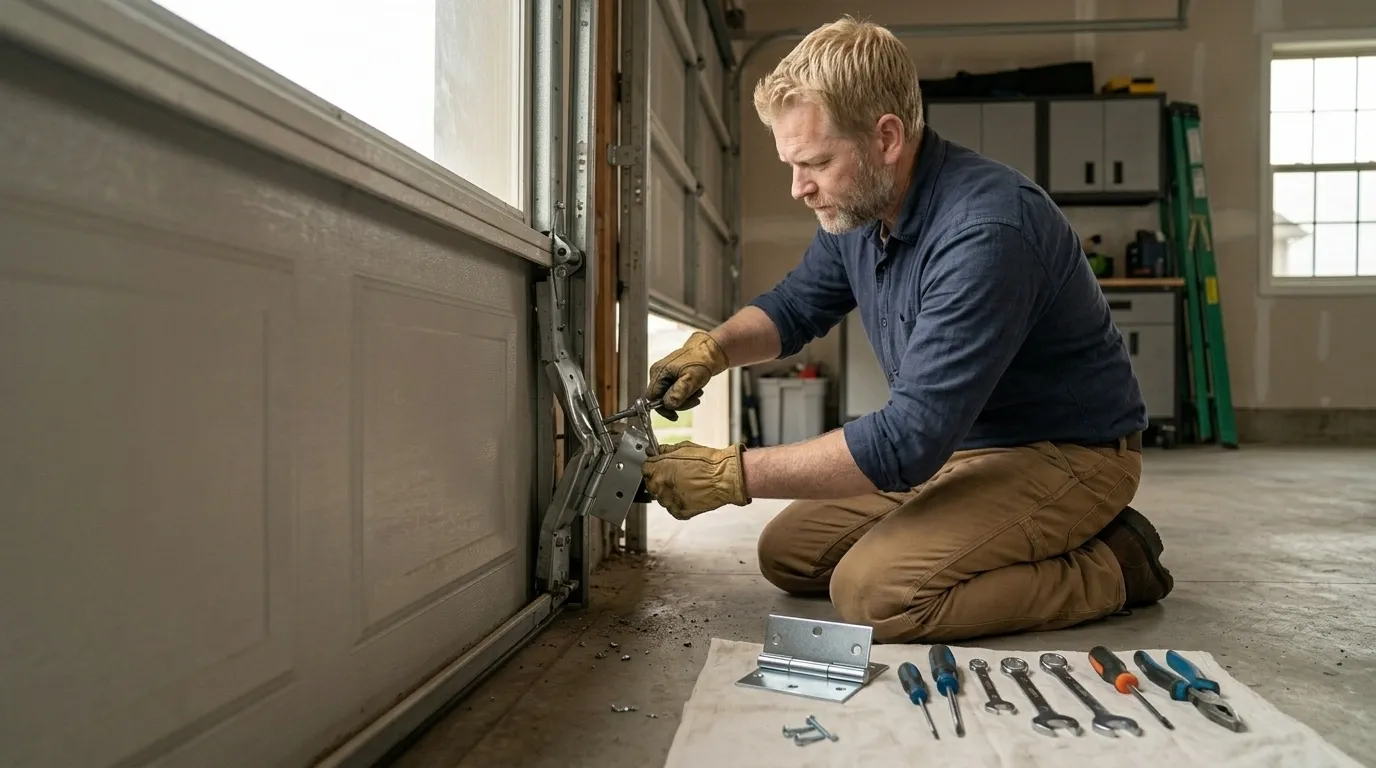
The honest limit here: if the track or the panel is also original and bent from decades of that strain, sometimes replacing the whole door is the better call than chasing parts for hardware that isn't made anymore. We'll tell you which one it is before we quote anything.
Why It Happens Here
Two things stack on top of each other in Seven Hills. First, the housing age - most of it went up right around 1966, in that same postwar-into-70s wave that shows up across the 67 named areas in this part of the county. Doors and openers from that era used hardware that manufacturers don't stock anymore, so when a part fails, it's often a full spring or track swap rather than a single bolt.
Second, the climate. This is a severe cold band, and steel doors from the 60s and 70s weren't built with the insulation or the weatherstripping that newer doors have. Cold makes steel contract, which stiffens springs and tightens tolerances on tracks that were already worn. We see spring failures spike here in the coldest stretches of winter for exactly that reason - the metal's working harder than it was designed to.
Put those two together and you get a town where the failure pattern is consistent: aging torsion hardware meeting a climate that's tough on steel and springs both.
Doing It Yourself
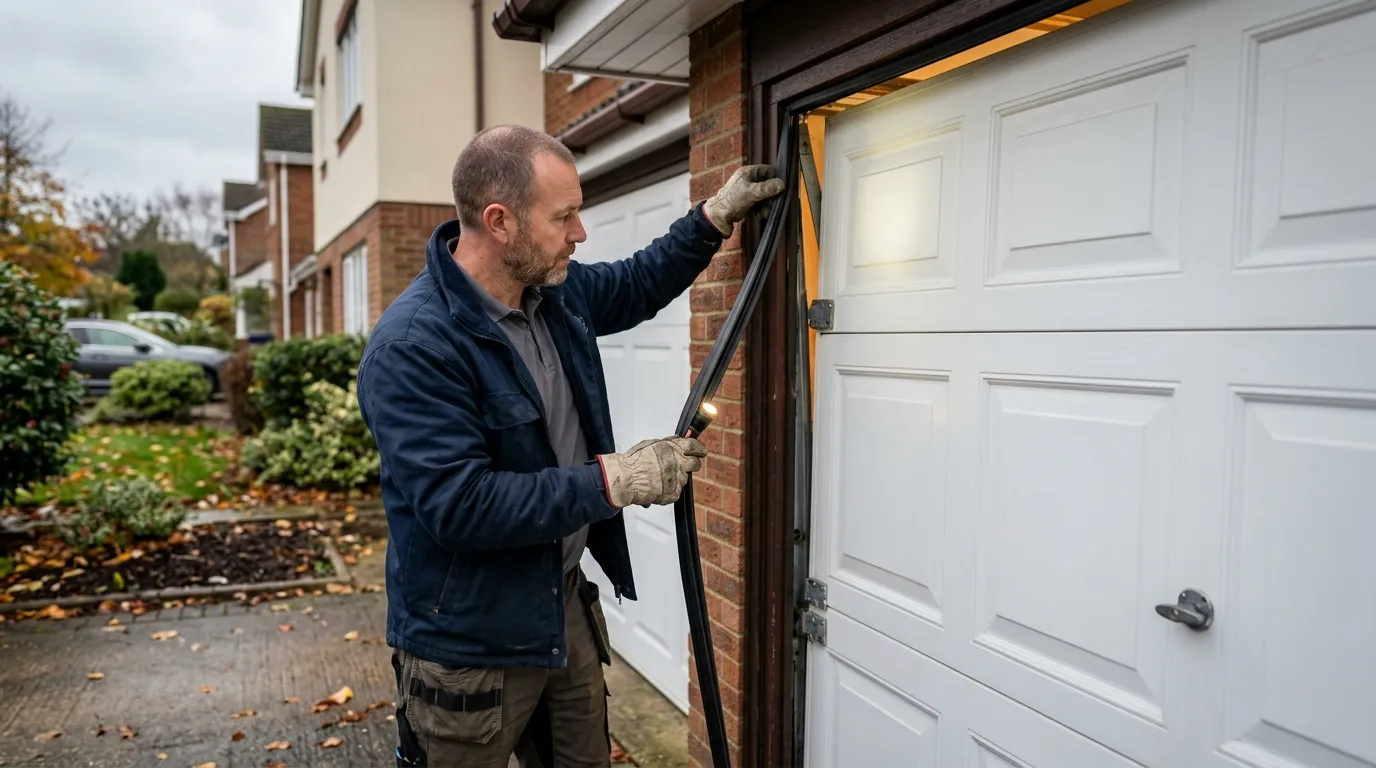
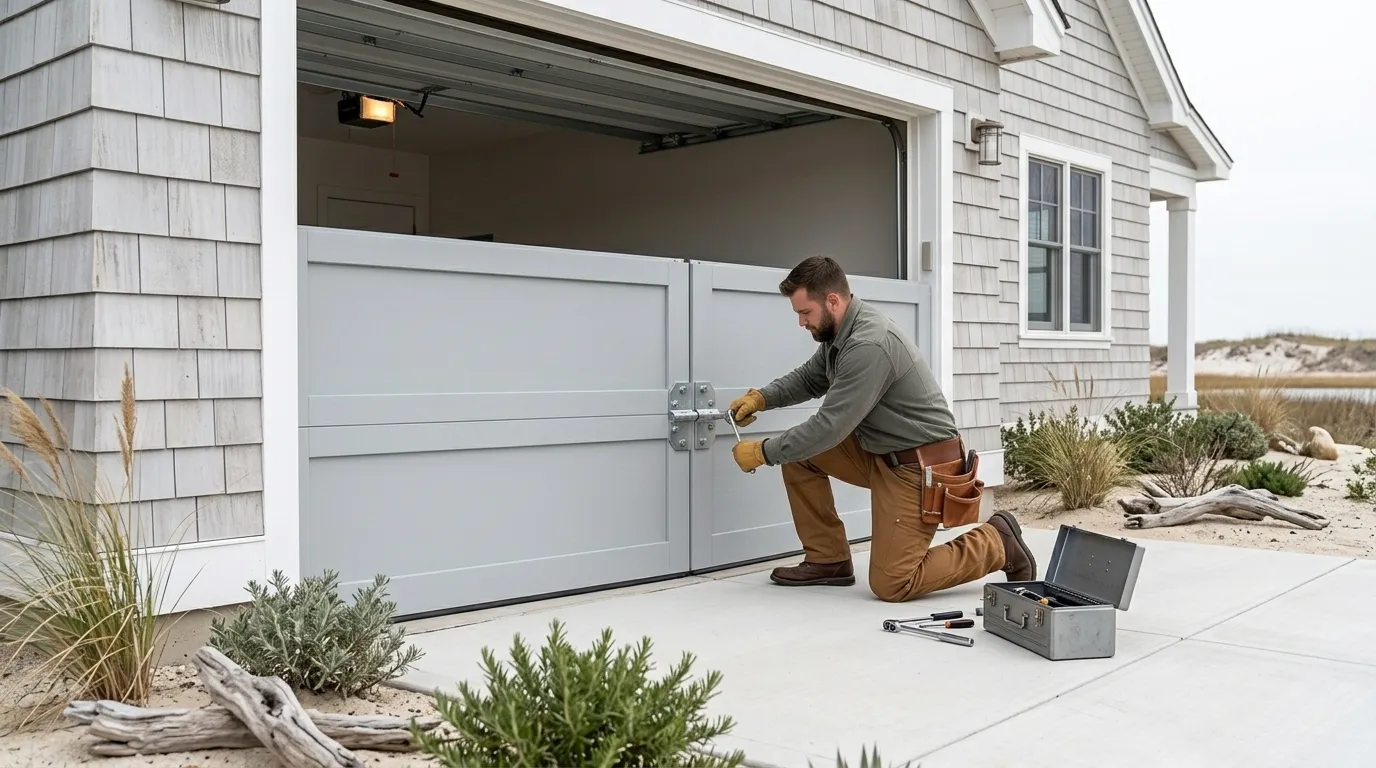
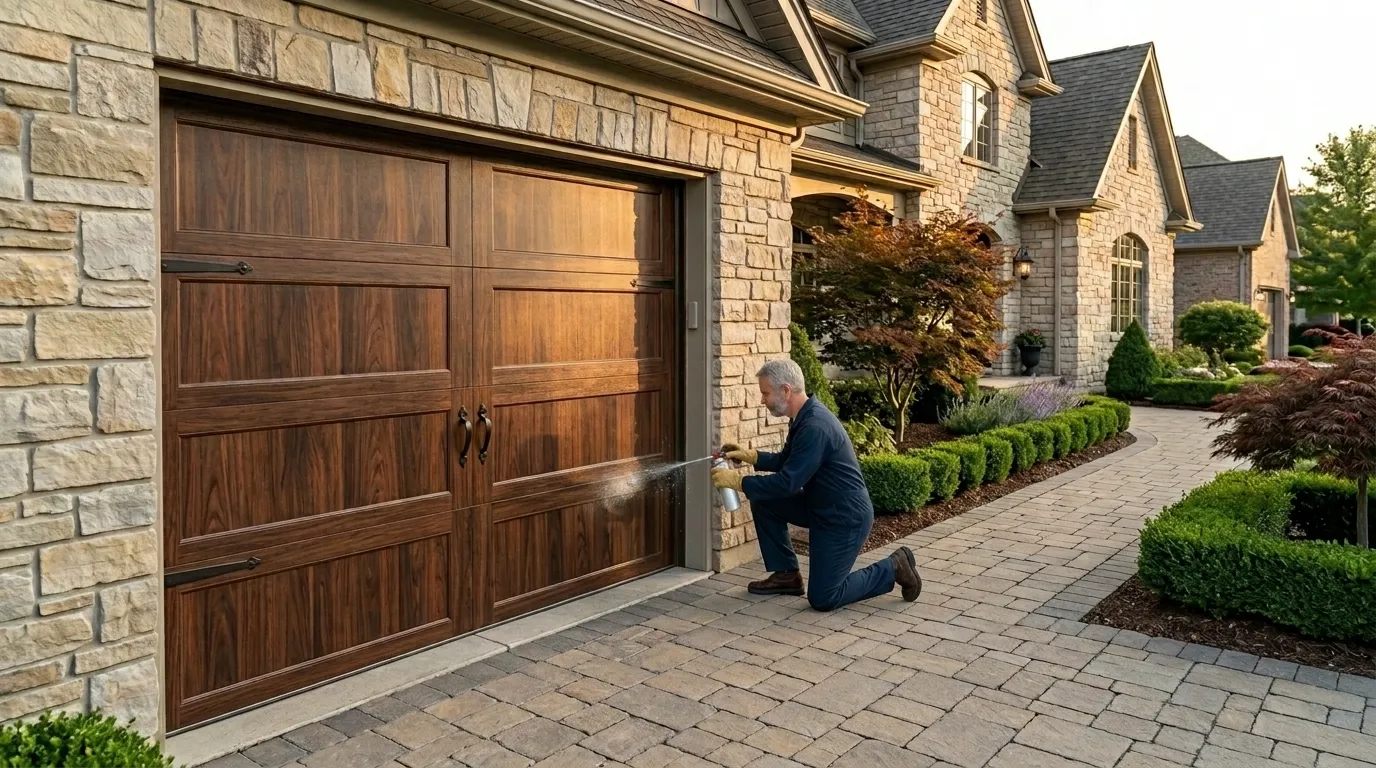
There's real DIY territory here and there's a line you shouldn't cross. Lubricating rollers and hinges, checking that the weatherstripping along the bottom panel isn't cracked from the cold, and clearing track debris are all fine to do yourself and worth doing every season, especially given how hard this climate is on rubber seals.
The line is the torsion spring. It's under enough tension to break a bone or worse if it lets go while you're working on it, and on a house from the 1960s-70s wave, that spring has likely been holding that tension for decades already. We don't recommend touching it, and we say that knowing it costs us nothing to tell you to call instead - it's just true.
If the door is sticking or dropping unevenly, that's a cable or spring symptom, not a lubrication one. Don't force it with the opener repeatedly; that's how a motor burns out on top of the original problem.