How It Shows Up
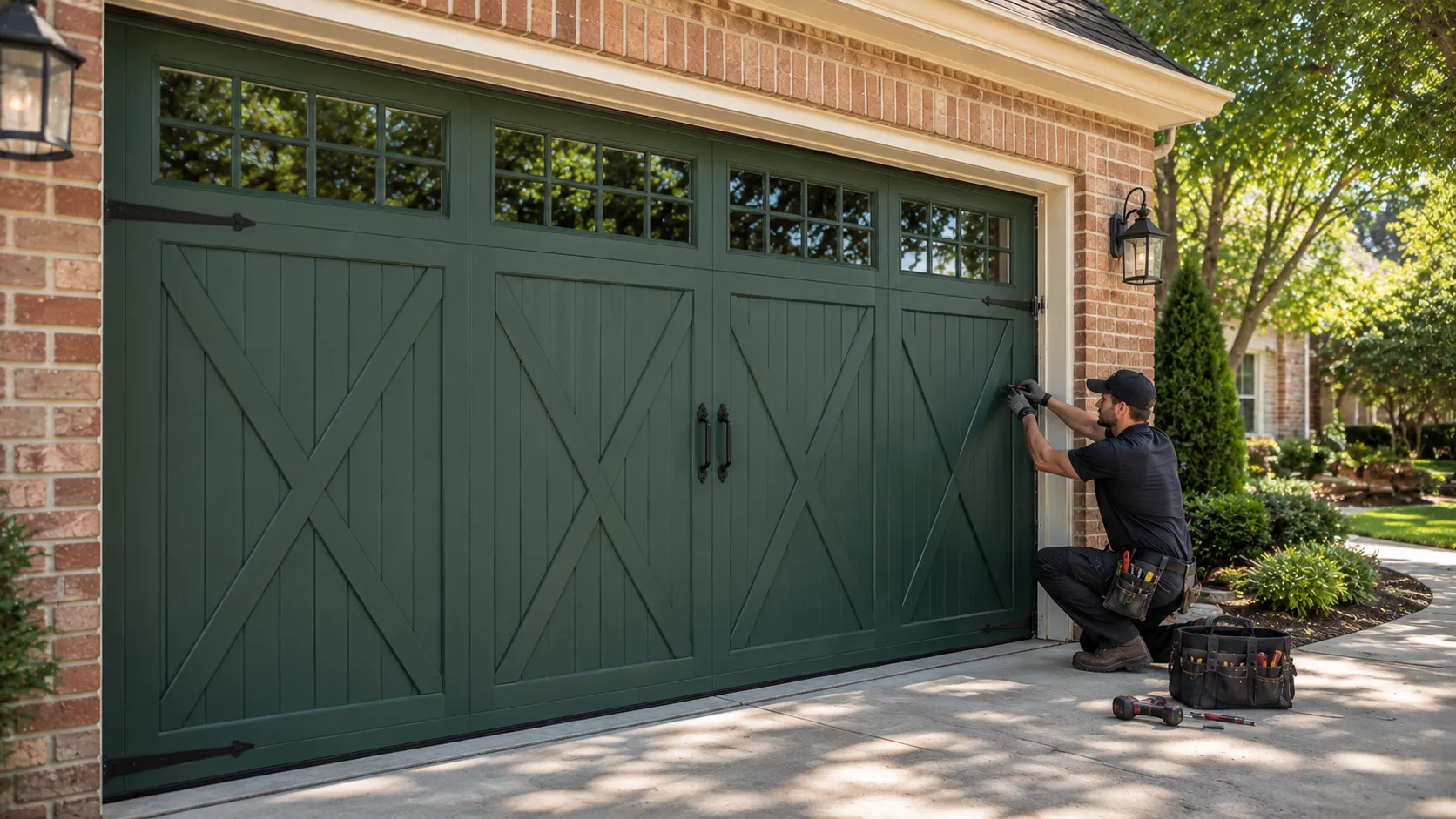
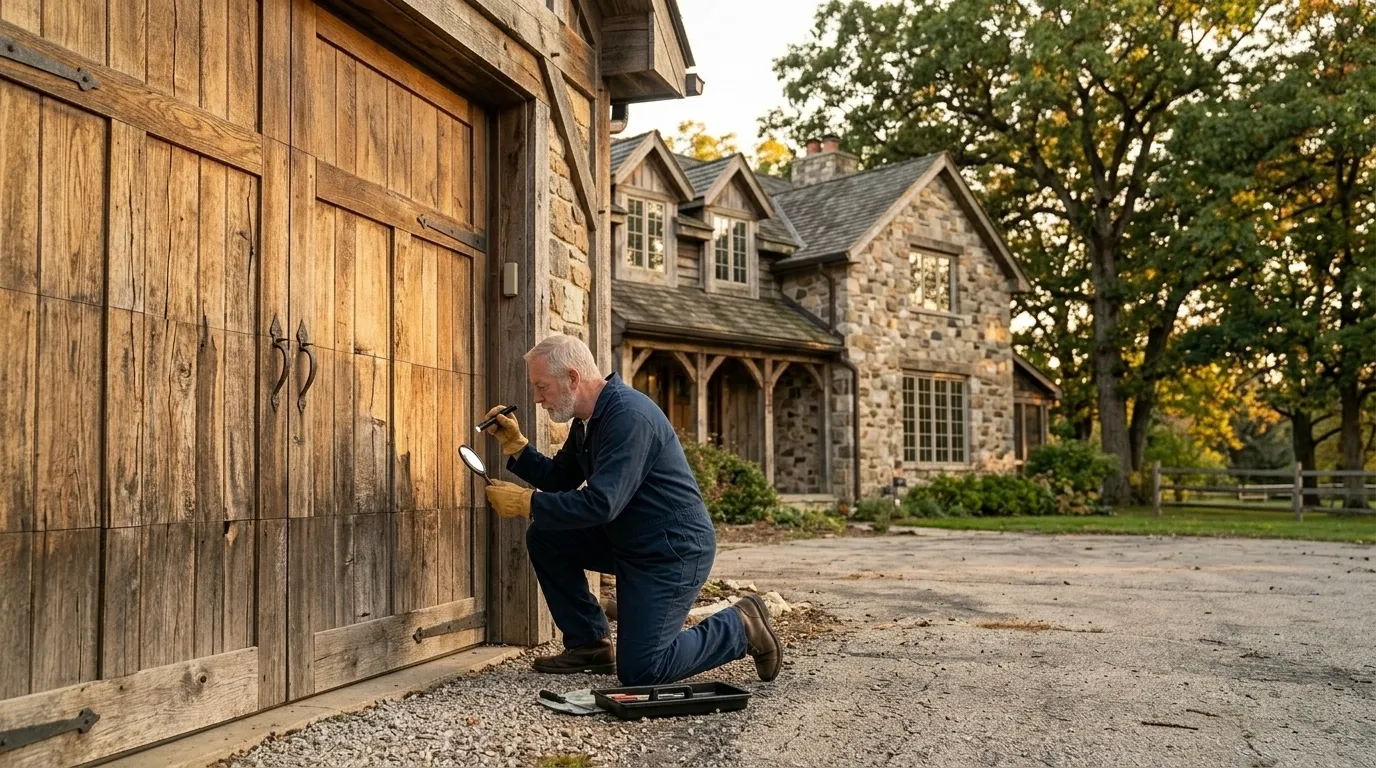
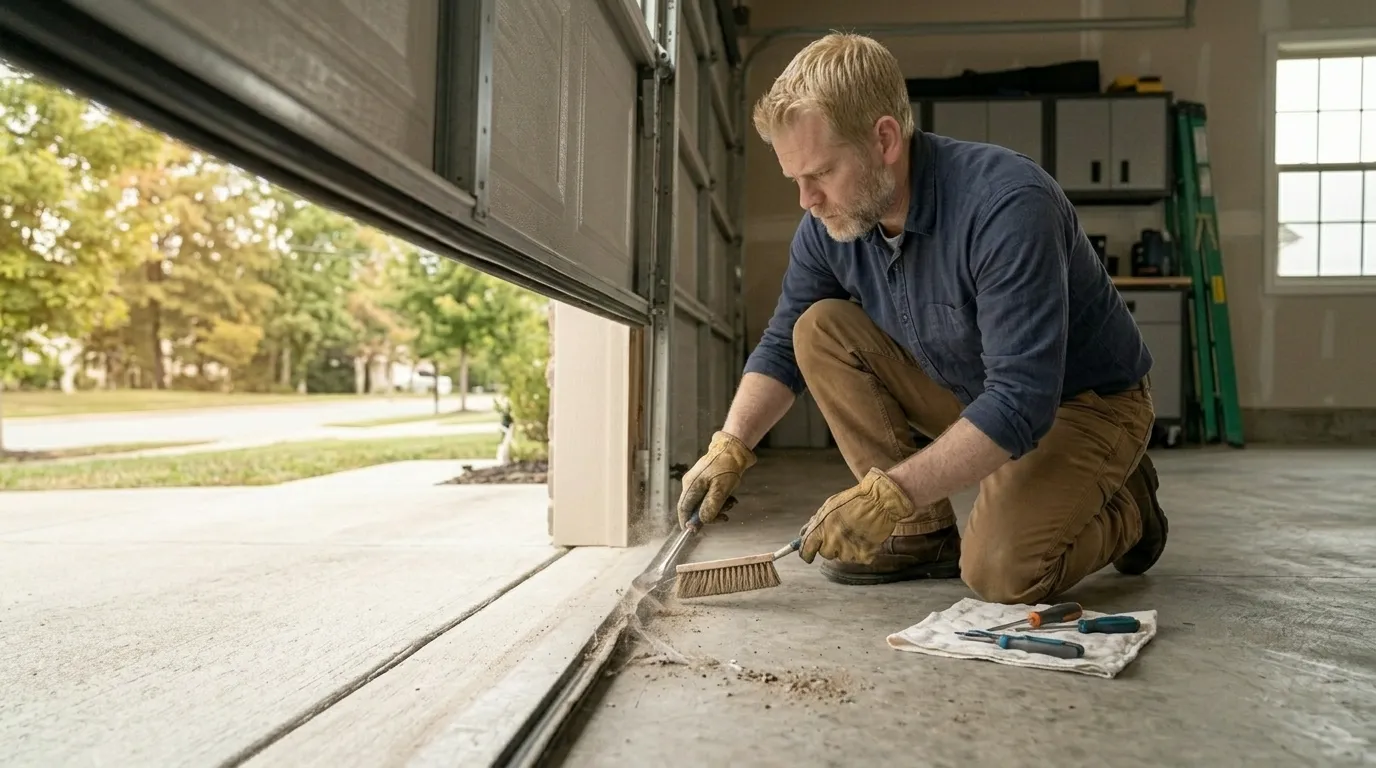
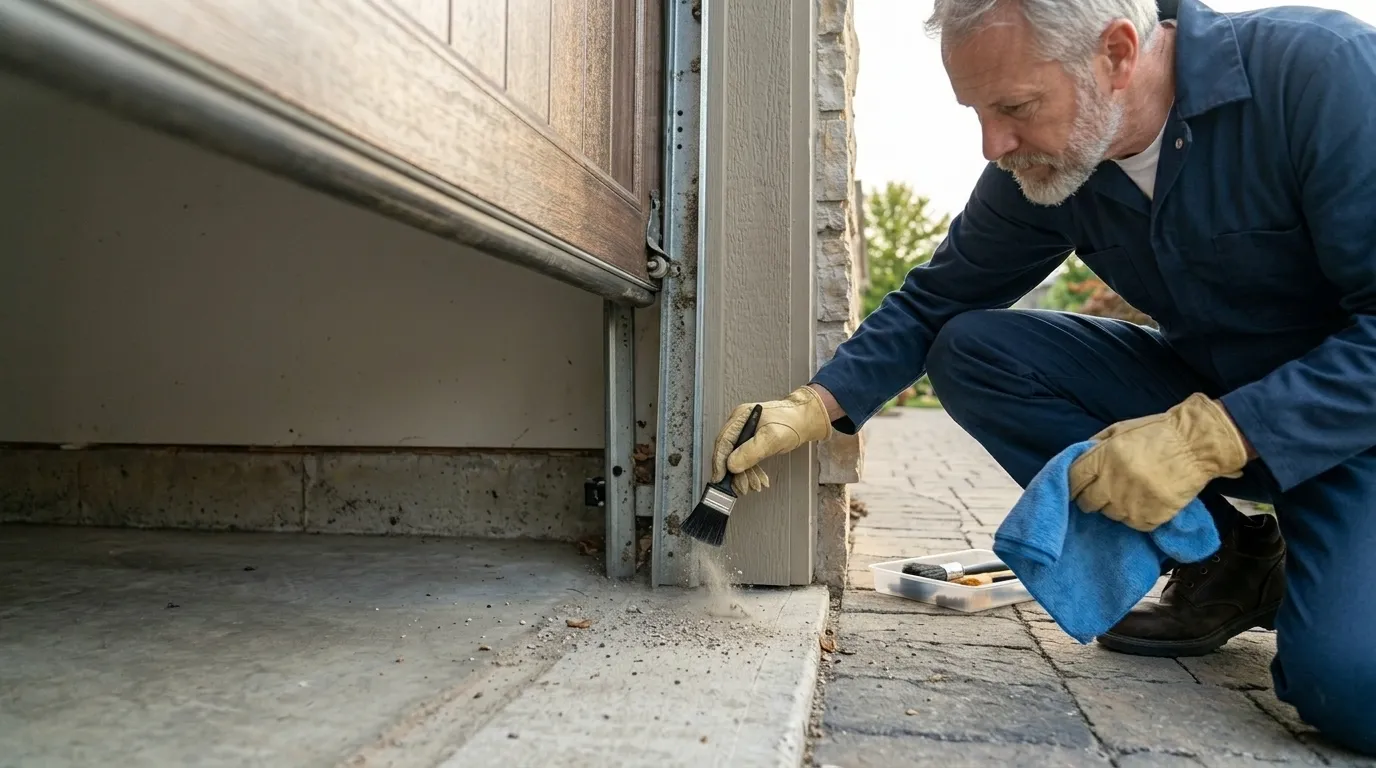
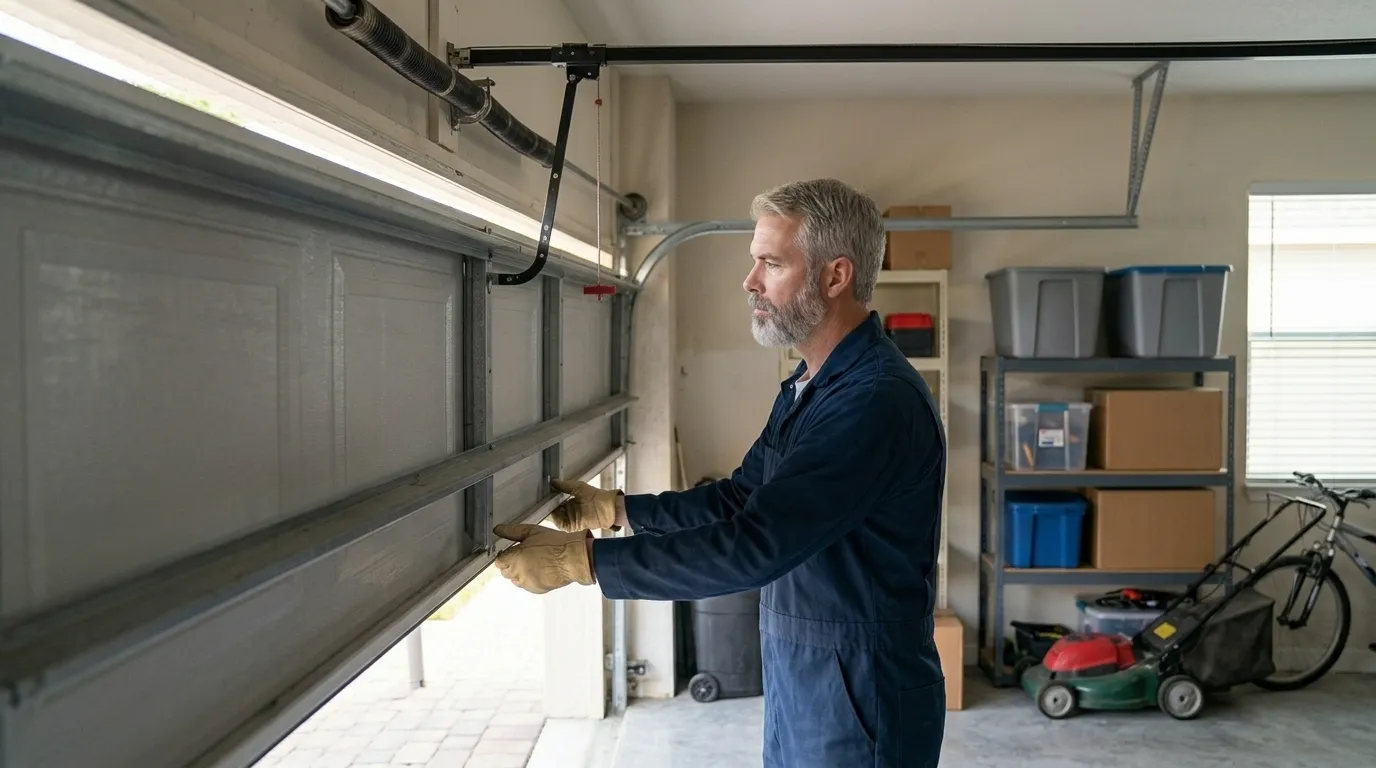
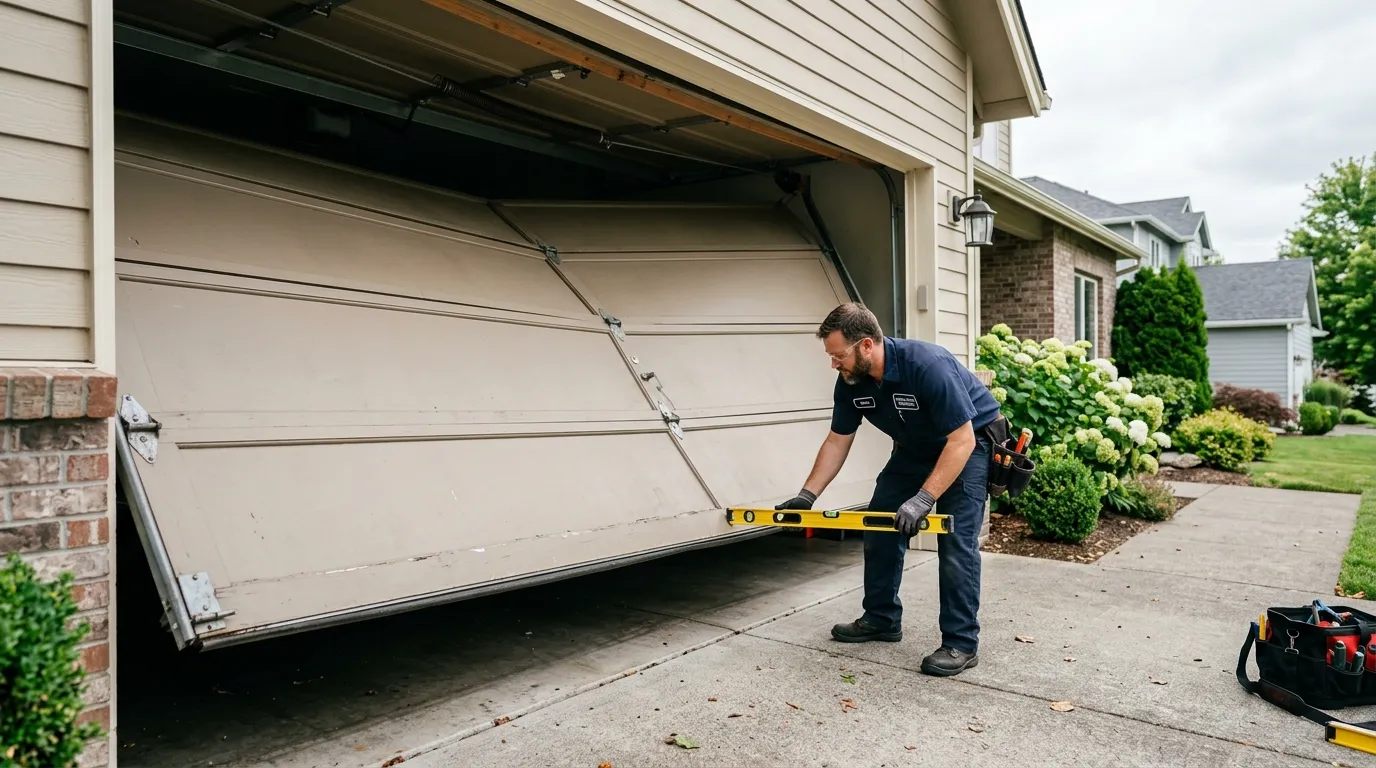
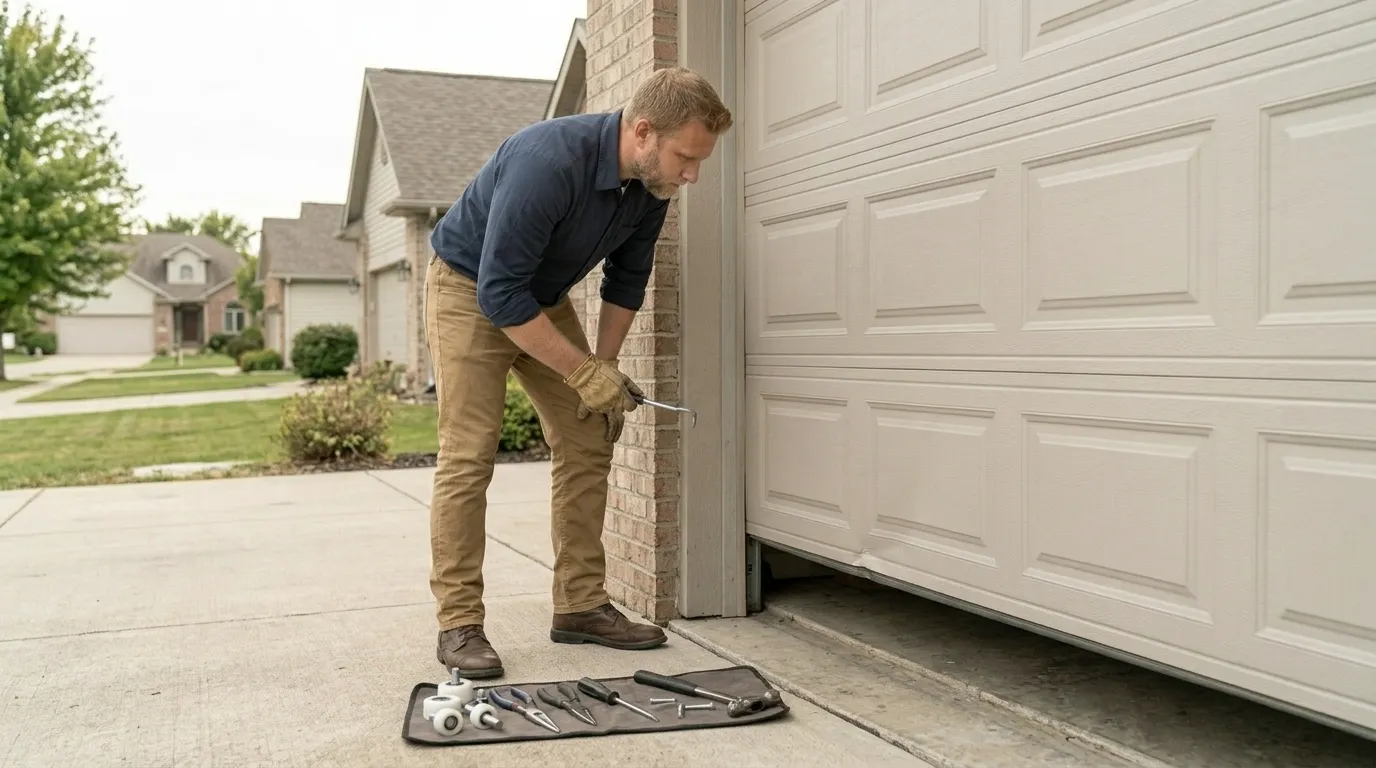
You back the car out and hear a scrape, or you notice a horizontal dent low on the door that wasn't there last winter. Sometimes it's a crack running along a seam, or a section that's bowed enough that the door doesn't sit flush against the weatherstrip anymore. On steel doors, rust starts at the bottom panel first, where road salt splashes up and sits against the metal all winter. On a double door, one bad panel can throw the whole thing out of alignment, so the opener strains and the rollers start binding in the track. None of this happens because someone hit the door with a car - most of the panel replacements we do start as a dent or a rust spot that widened over a couple of seasons until the section stopped holding its shape. By the time a homeowner calls, the door usually still opens, it just doesn't look right or seal right anymore. Catching it at the dent stage, before the panel actually buckles, is the difference between swapping one section and having to replace the whole door because the track geometry has gone out of true.
Why It Happens Here
Housing in this part of the county went up mostly between 1938 and 2004, with the median build year landing around 1966, and the bulk of that stock is 1960s and '70s construction. Garage doors from that era were steel, single-skin or lightly insulated, sized to openings that builders standardized differently than manufacturers do now. That's the first problem: original panel profiles and section heights from a 1966 door often don't match anything currently stocked, so a damaged section can mean a full-door swap instead of a one-panel fix. The second problem is climate. This area sits in a cold, severe winter band, and steel expands and contracts hard across freeze-thaw cycles. A small dent that wouldn't matter in a mild climate becomes a stress point that cracks wider every time the metal contracts overnight. Add road salt tracked into the garage all winter, and the bottom panel on an older steel door is fighting rust from the inside of the garage as much as weather from outside. Put a decades-old panel profile together with a hard freeze-thaw climate, and panel failure isn't random - it's what happens to this specific housing stock on this specific weather cycle.
What Is on the Truck
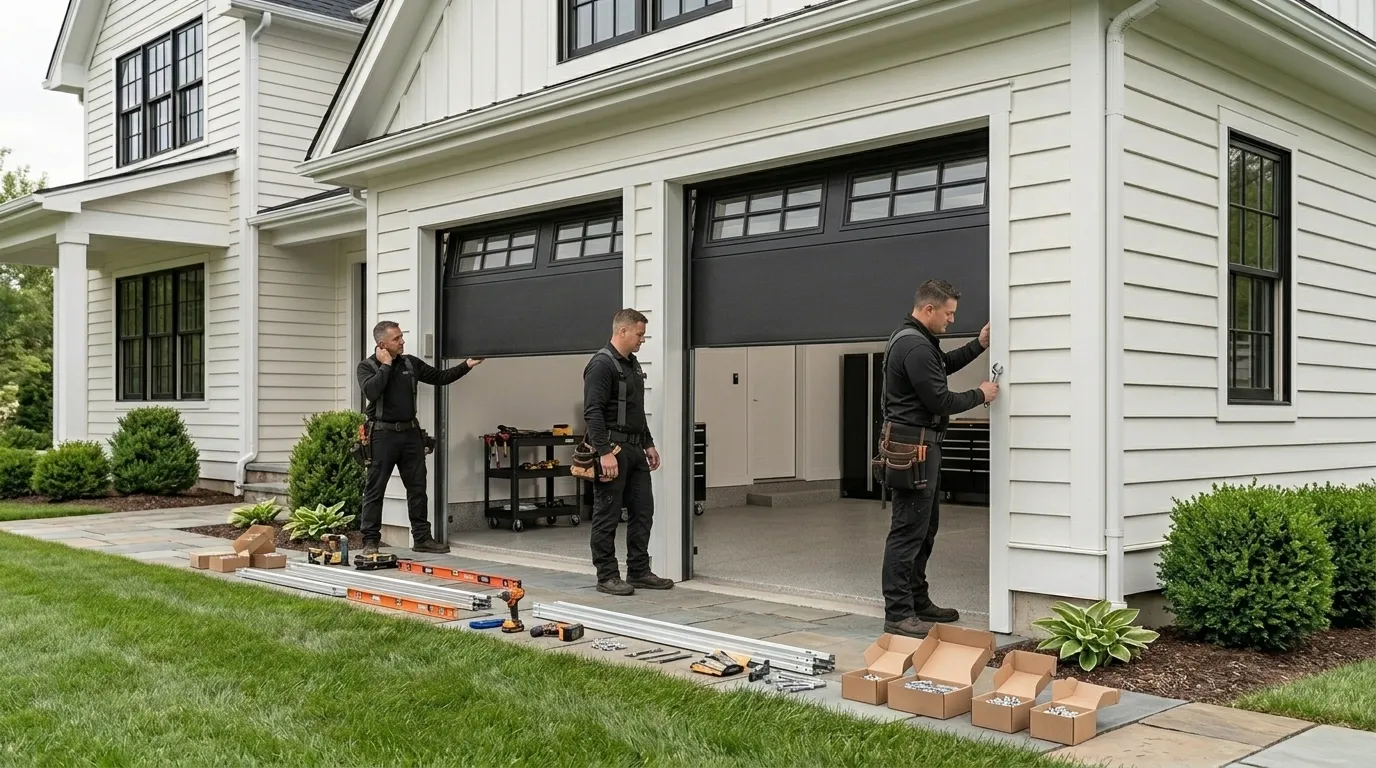
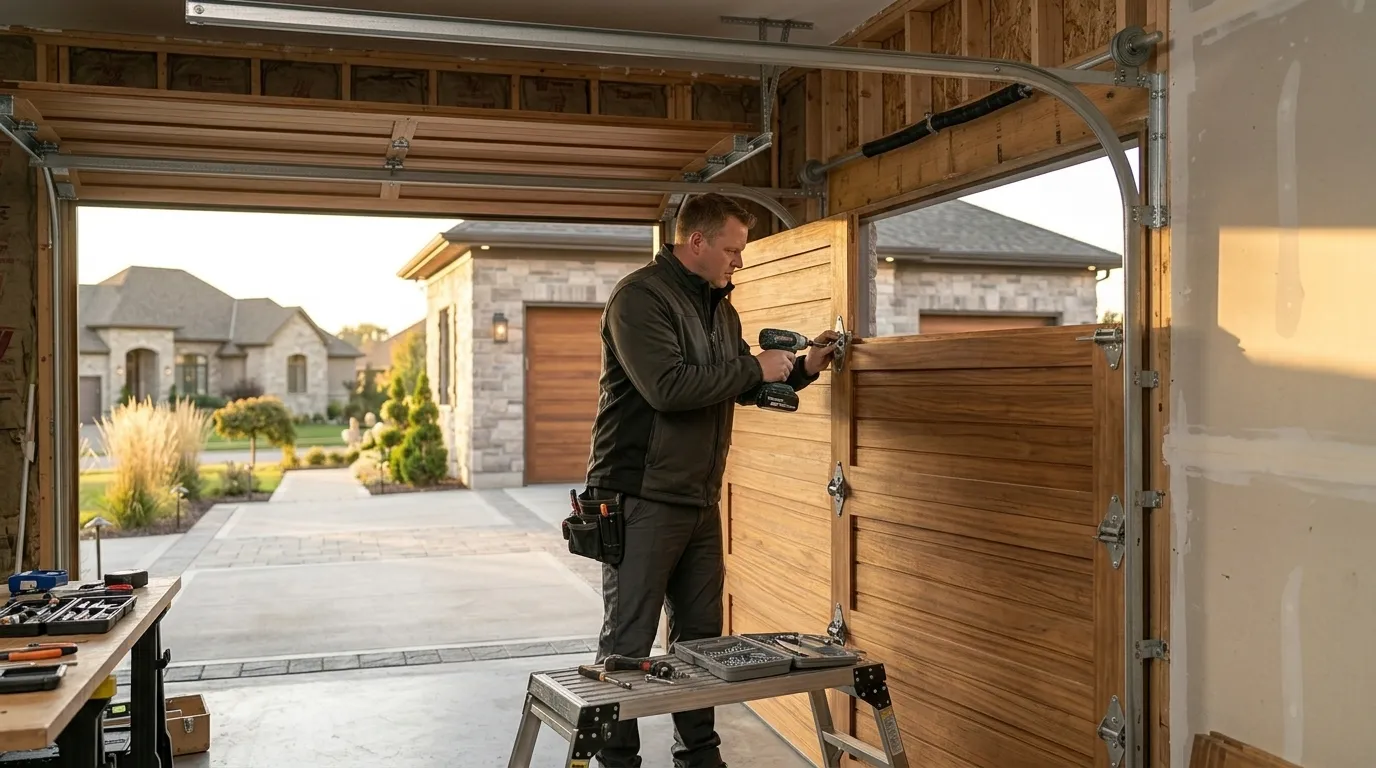
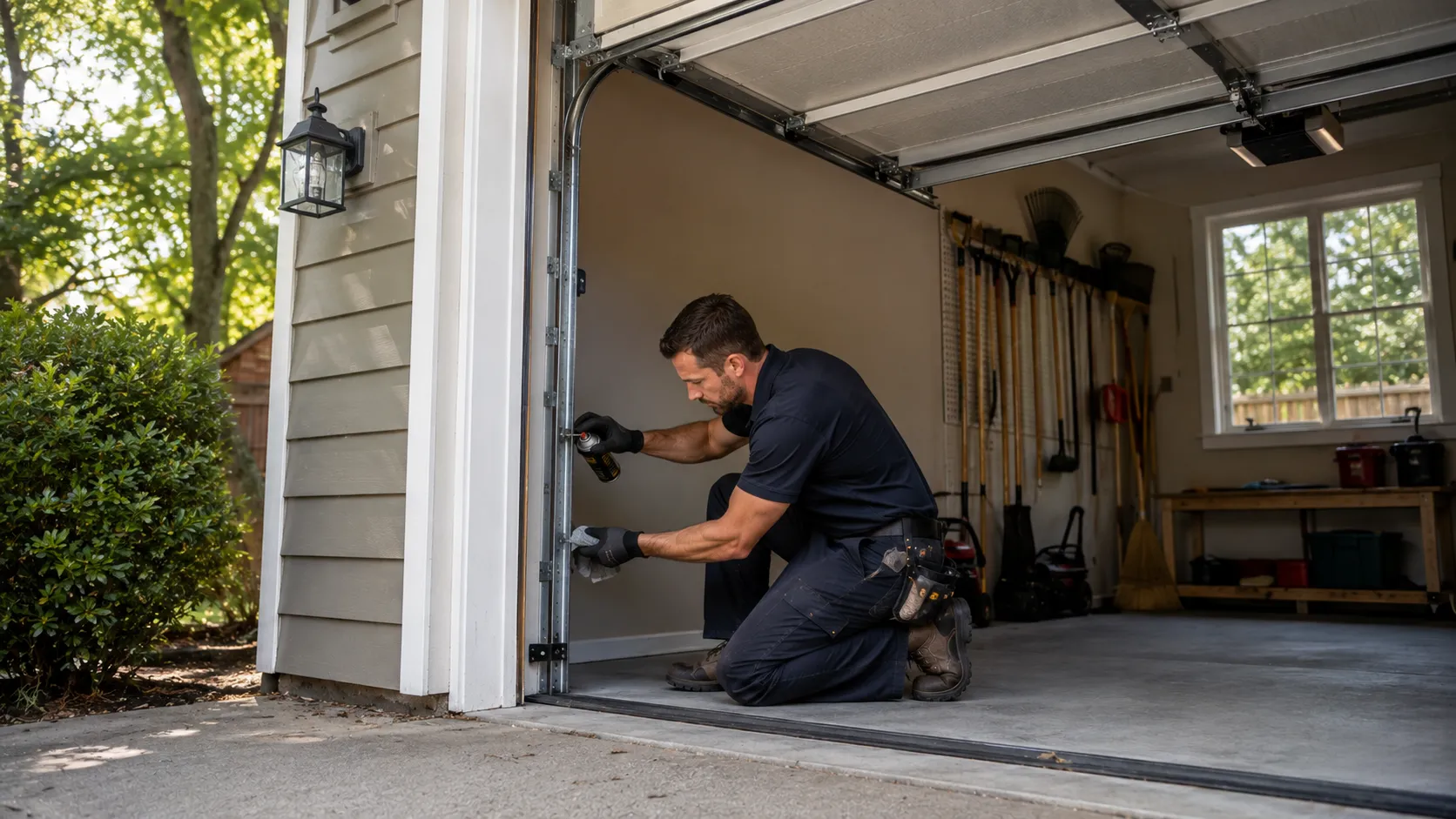
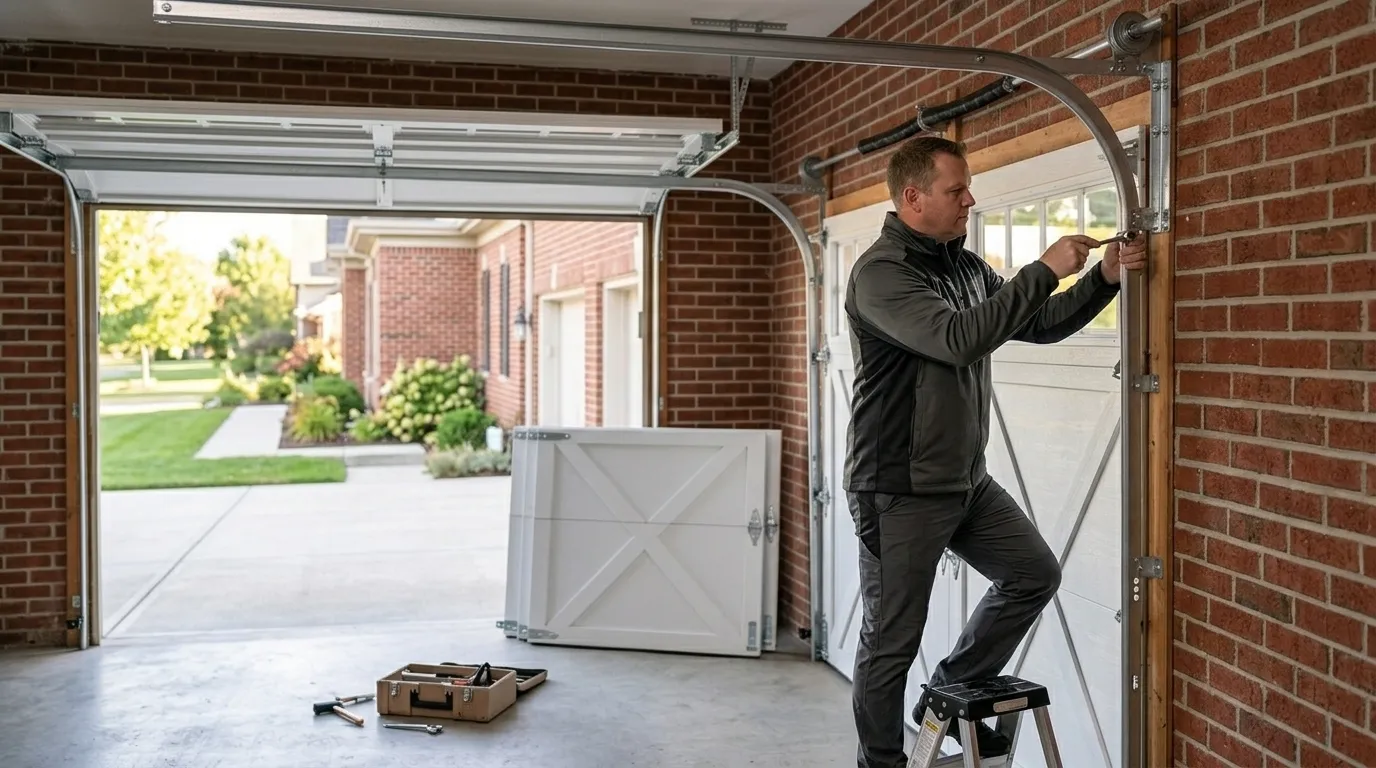
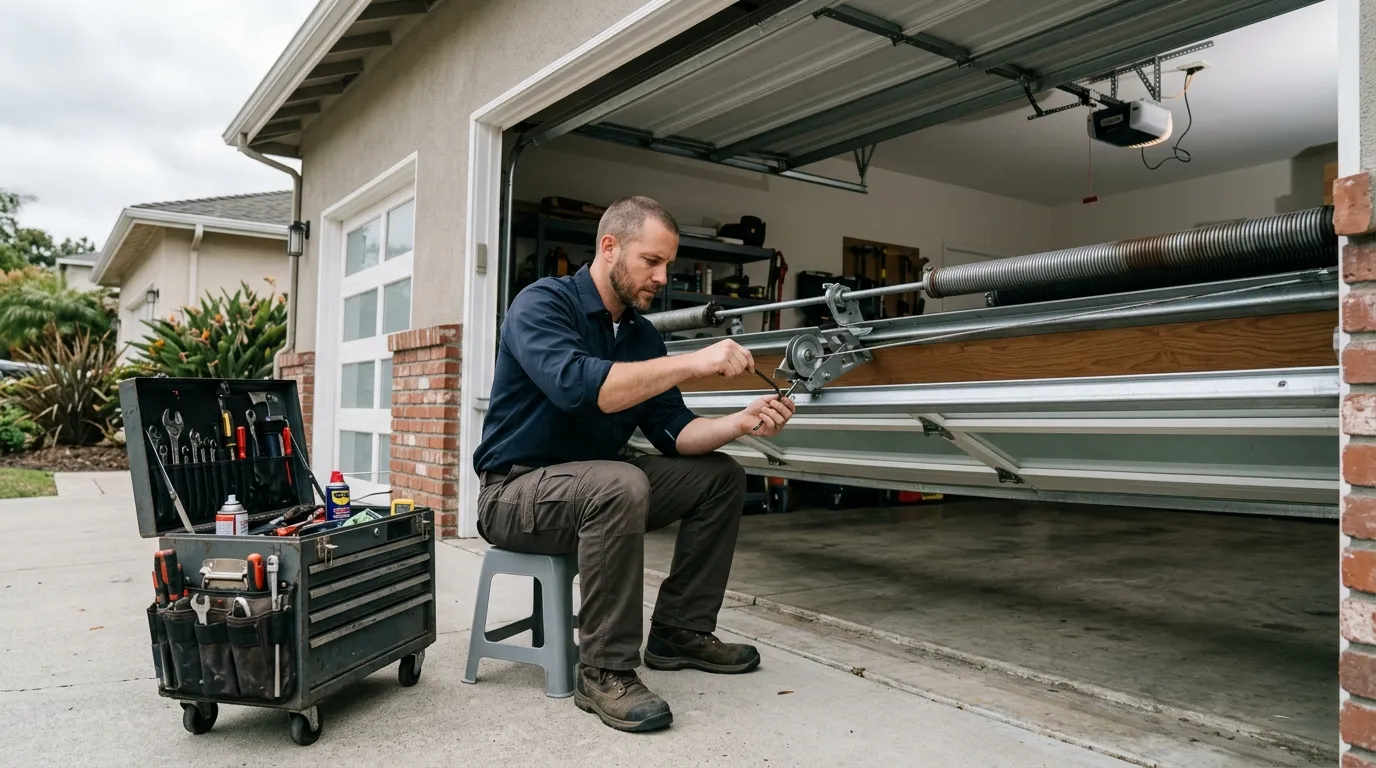
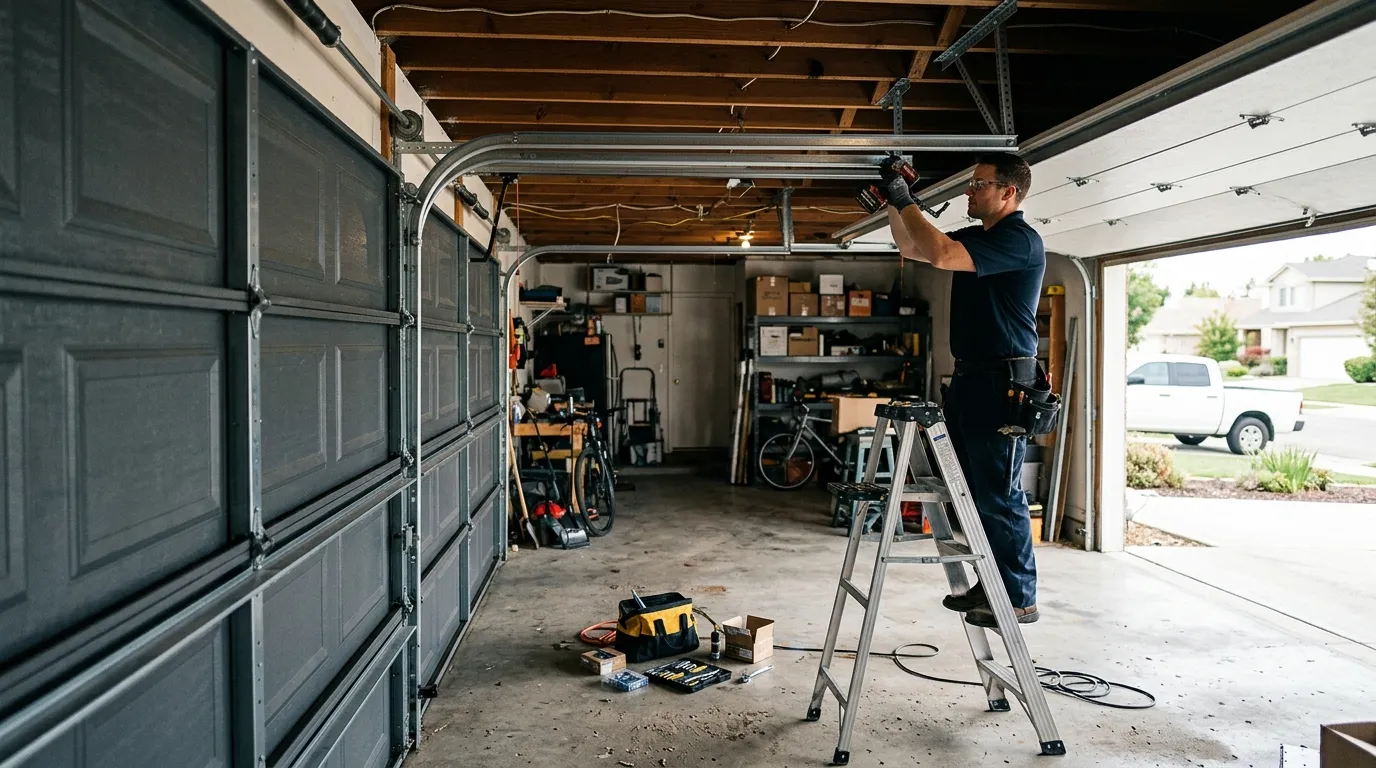
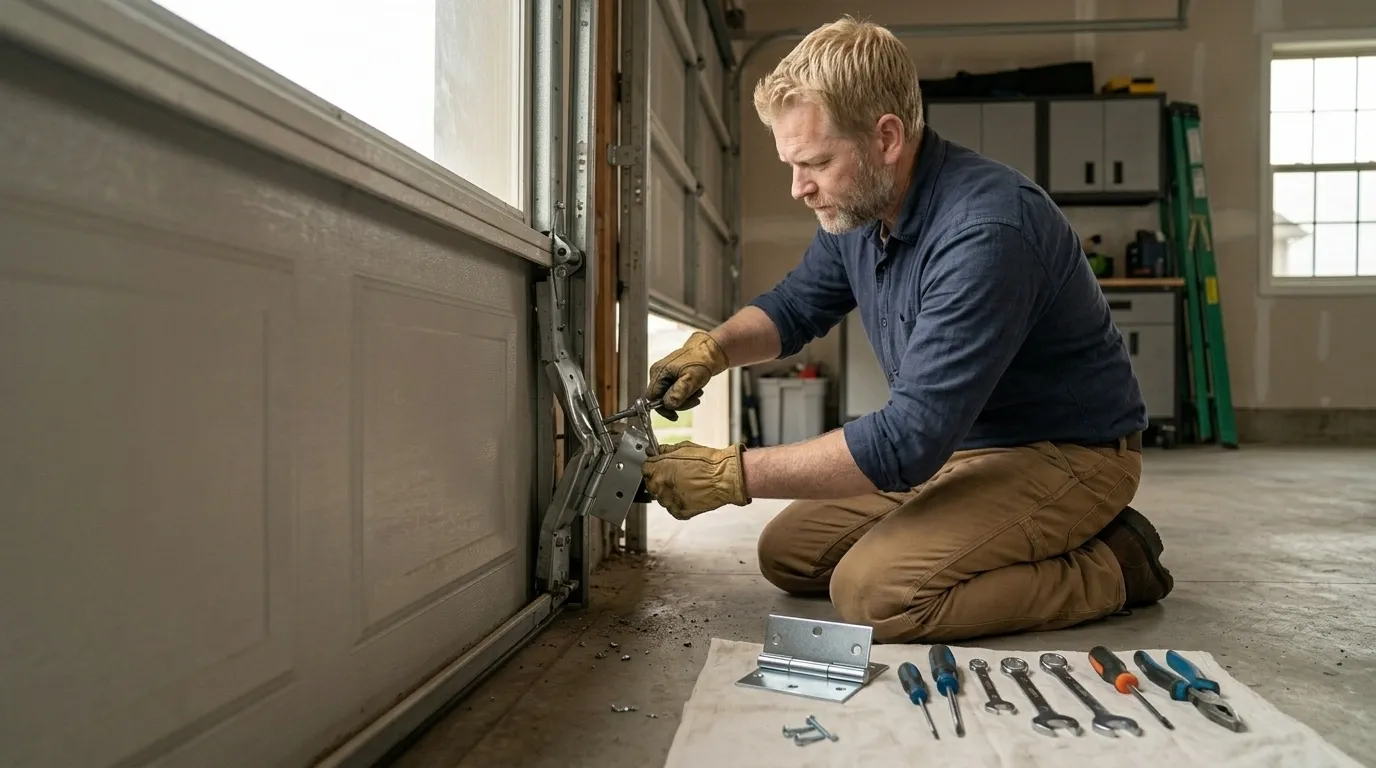
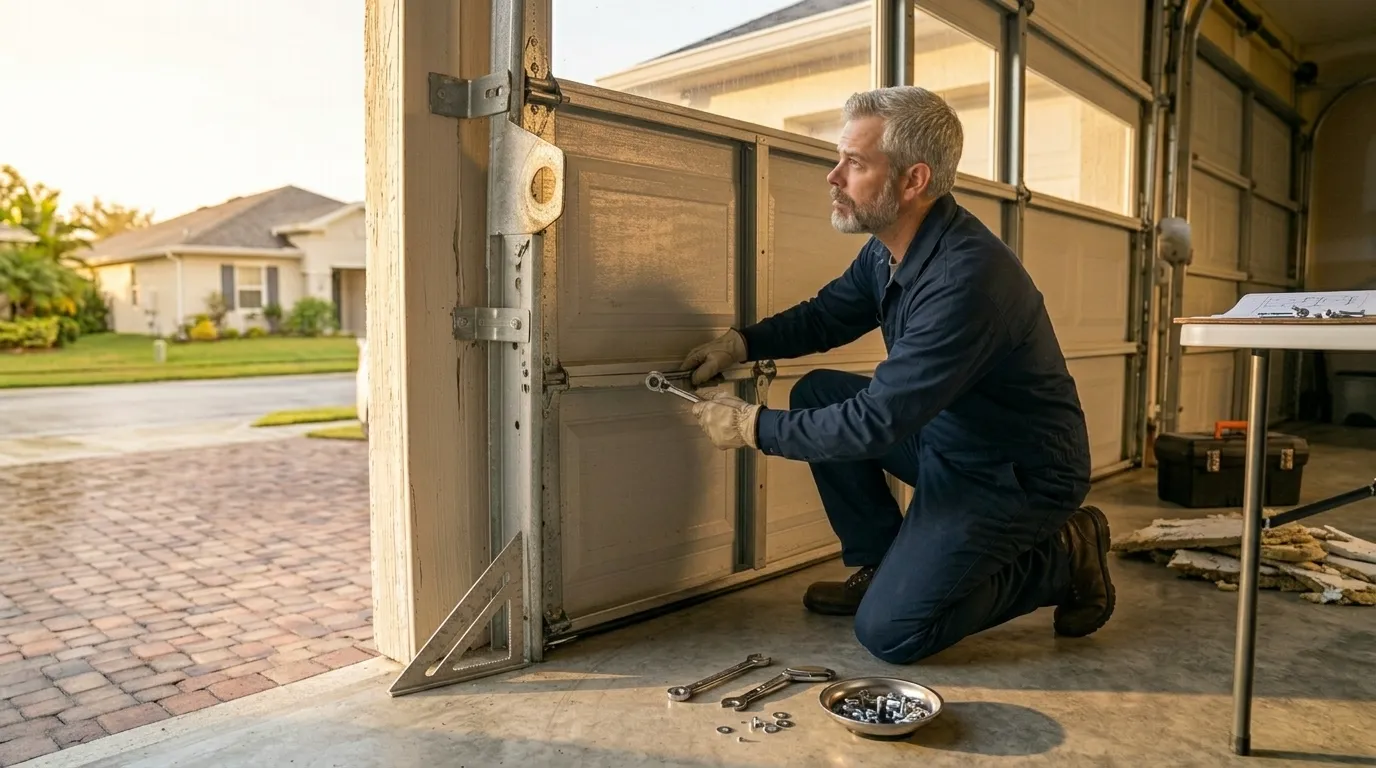
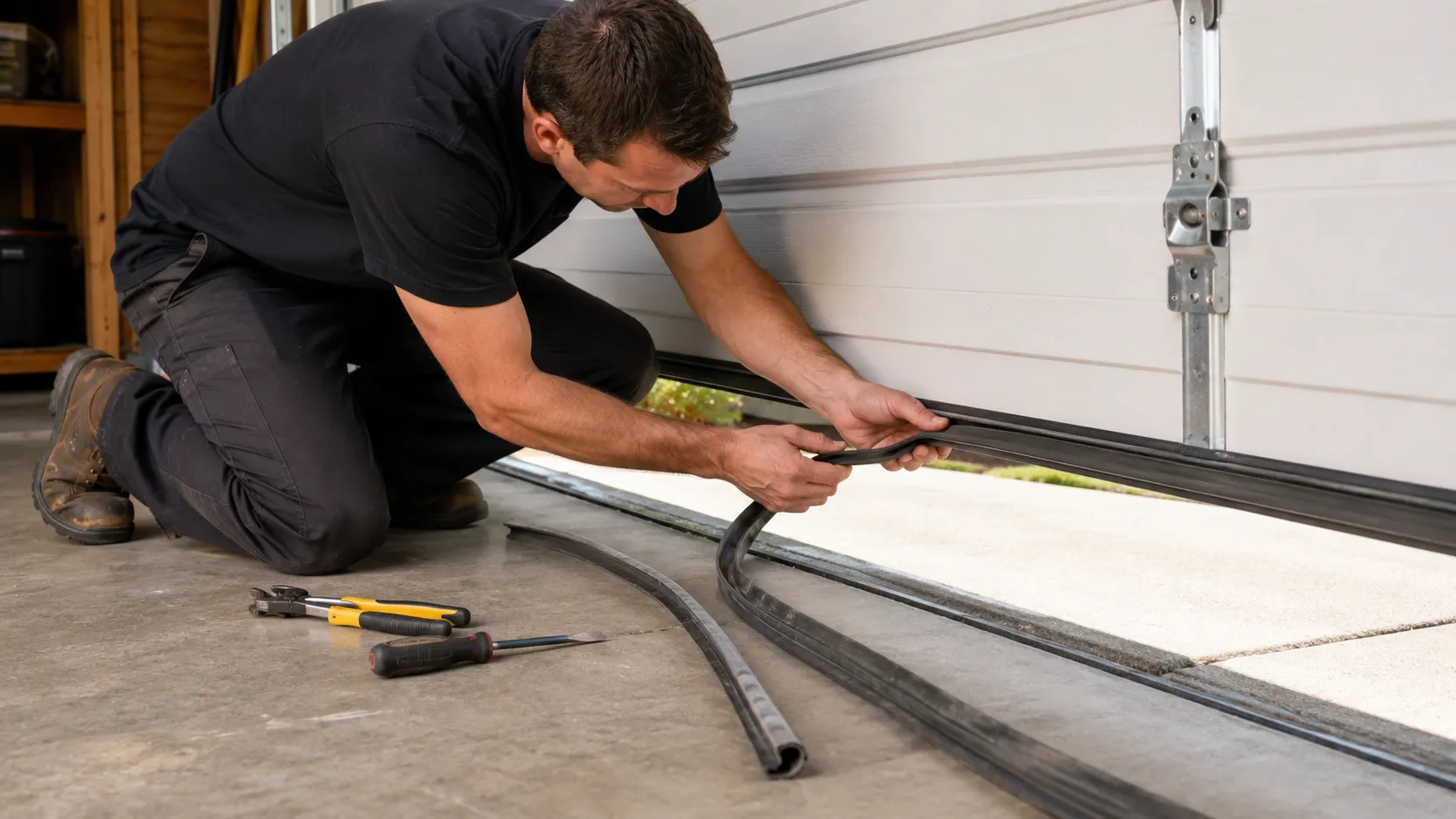
We carry common steel panel sections in standard residential widths and a range of section heights, plus the hinges, rollers, and end caps that usually need replacing alongside a damaged panel - those parts wear at the same rate as the section they're attached to. We stock fasteners and track hardware for standard torsion and extension setups, and enough insulated and non-insulated panel stock to cover most doors built from the 1970s forward. What we can't always carry is a panel matched to a door from the early end of this area's build range - some of those older sizes are special-order, and if that's your door, we'll tell you at the first visit instead of after we've opened up the section. We also carry weatherstrip and bottom seal stock, since a panel swap is a good time to replace a perished seal at the same time rather than come back for it later.