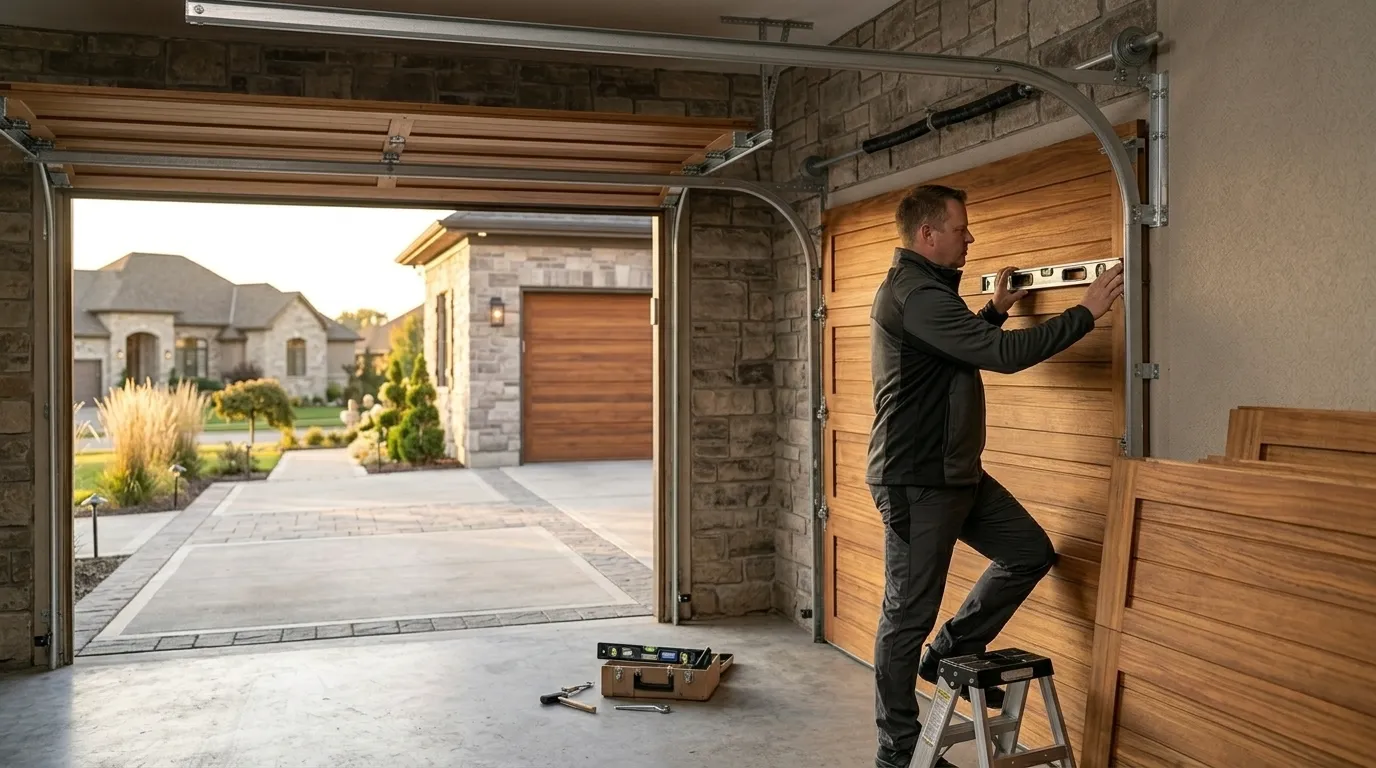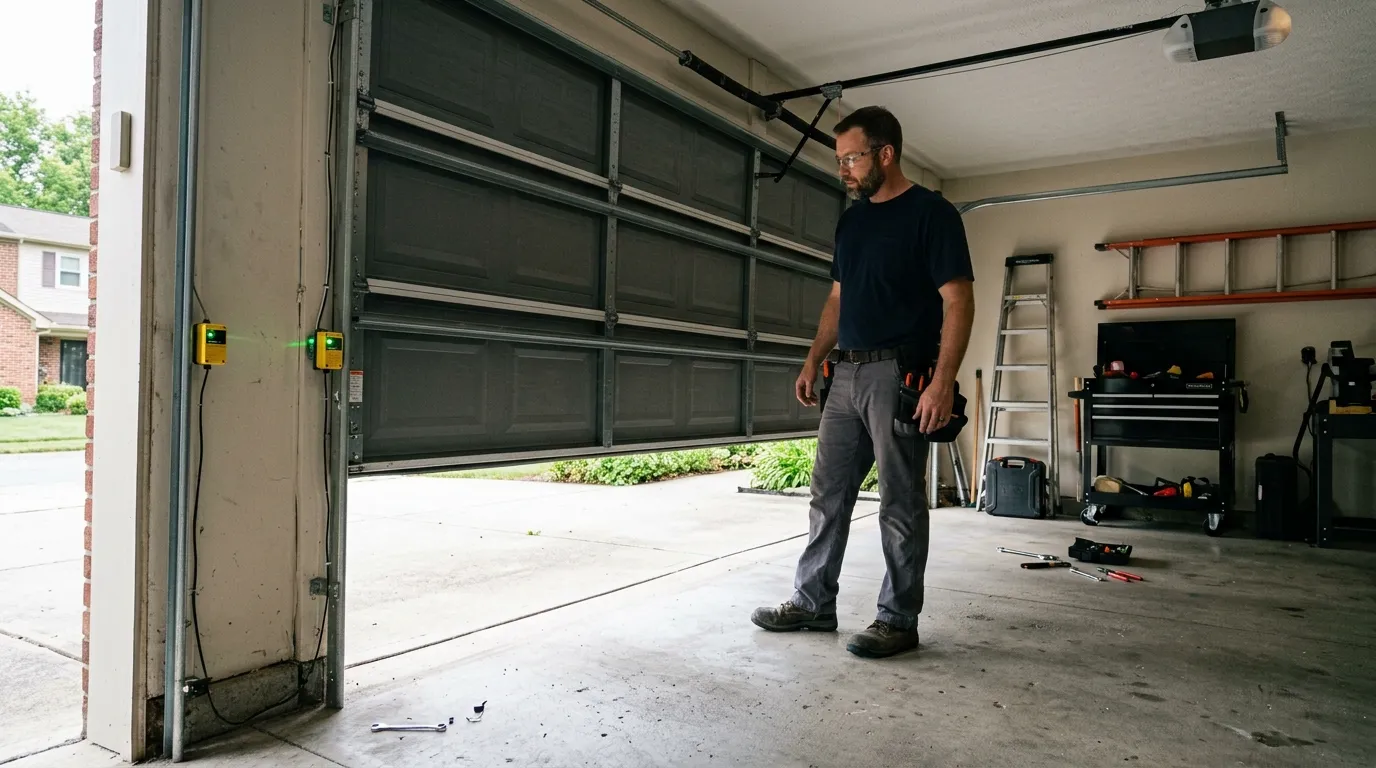
How It Shows Up
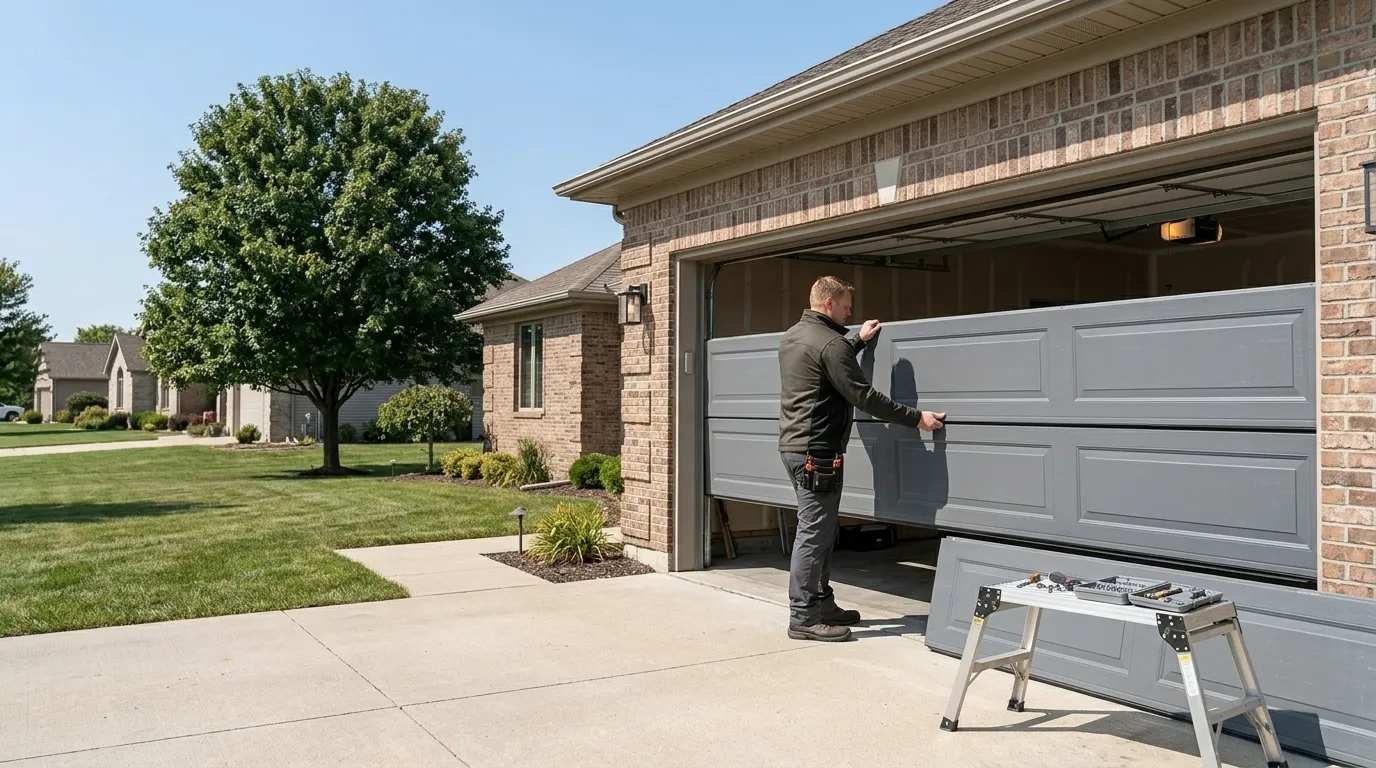
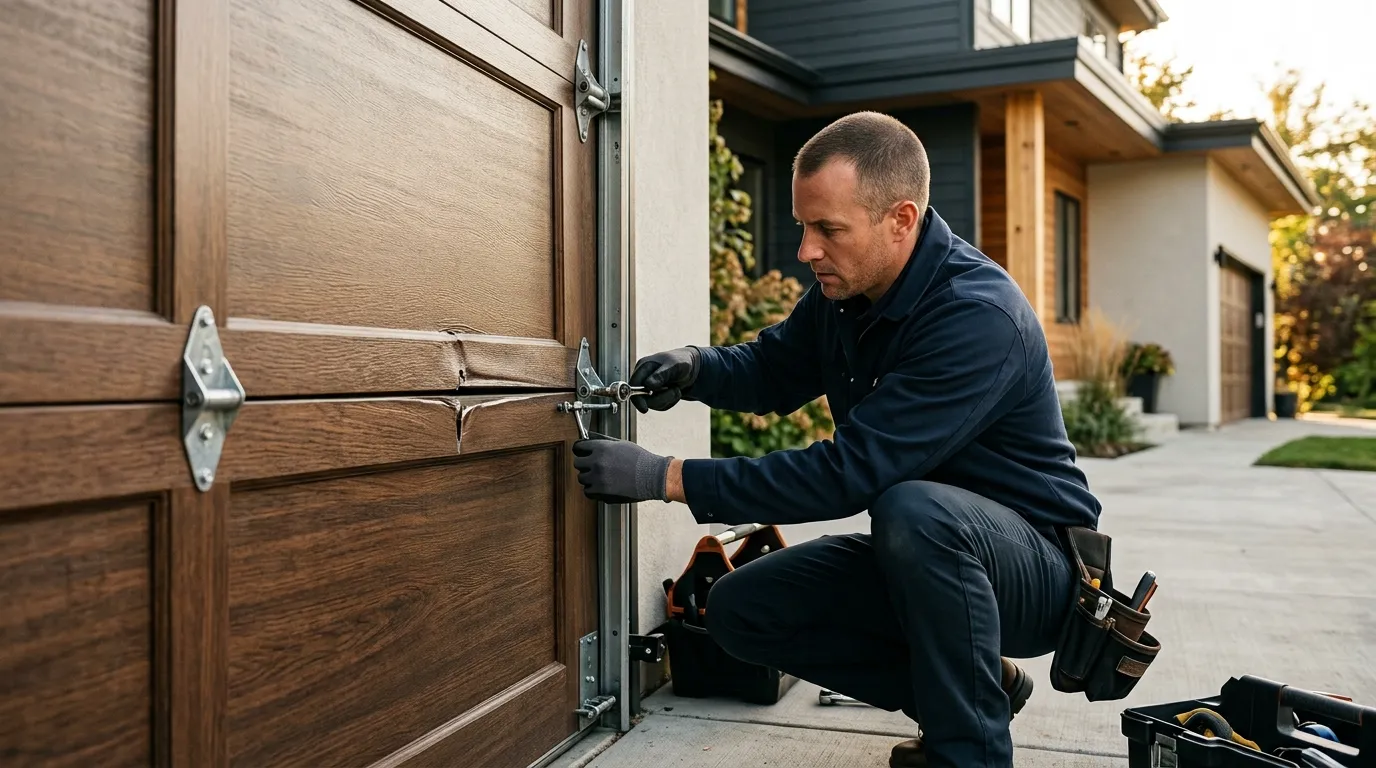
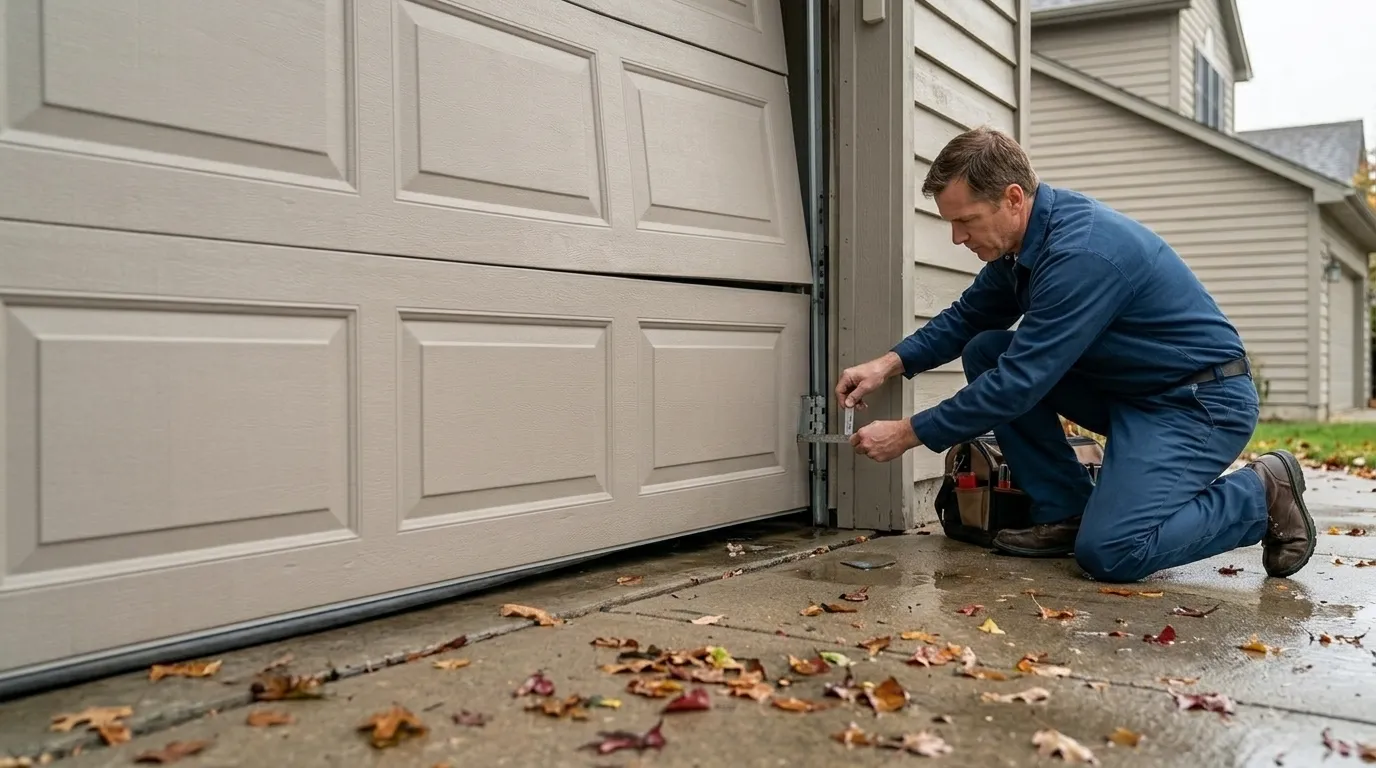
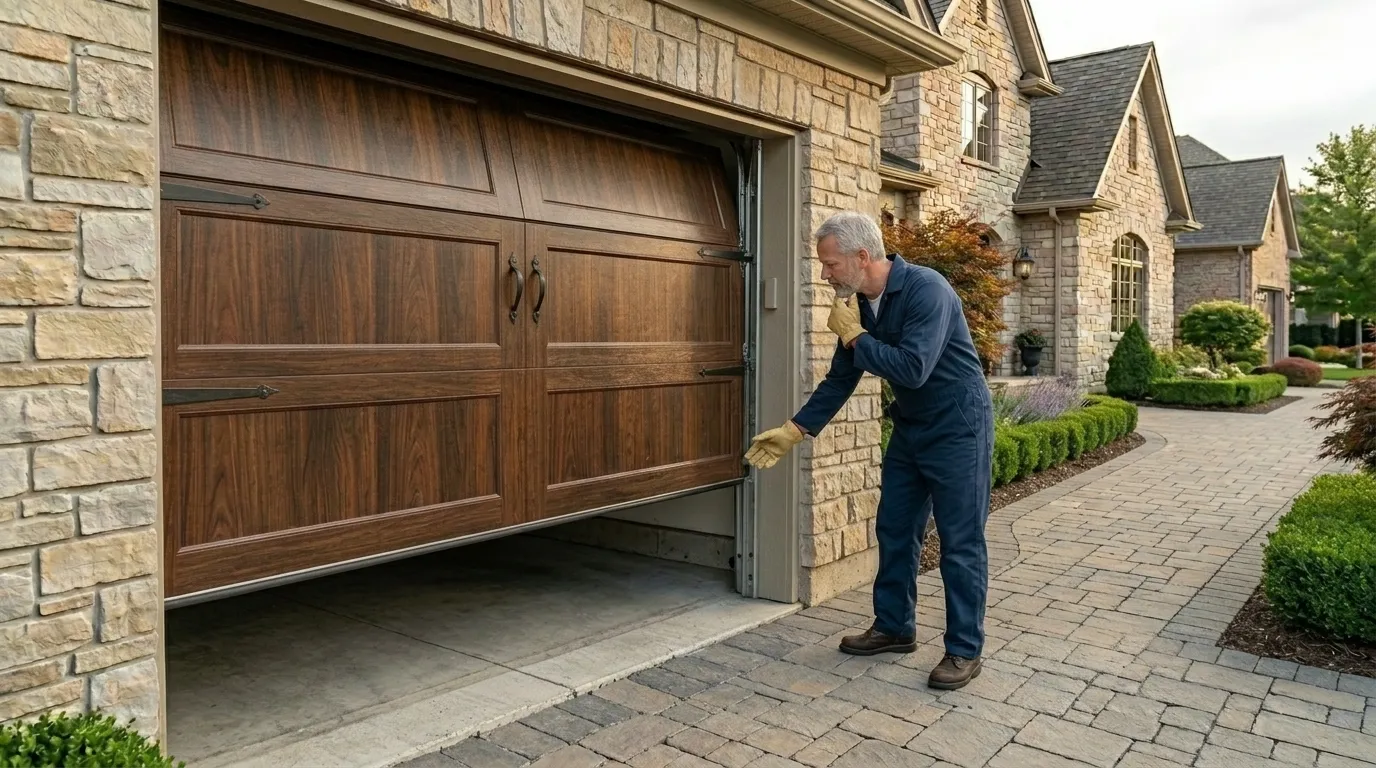
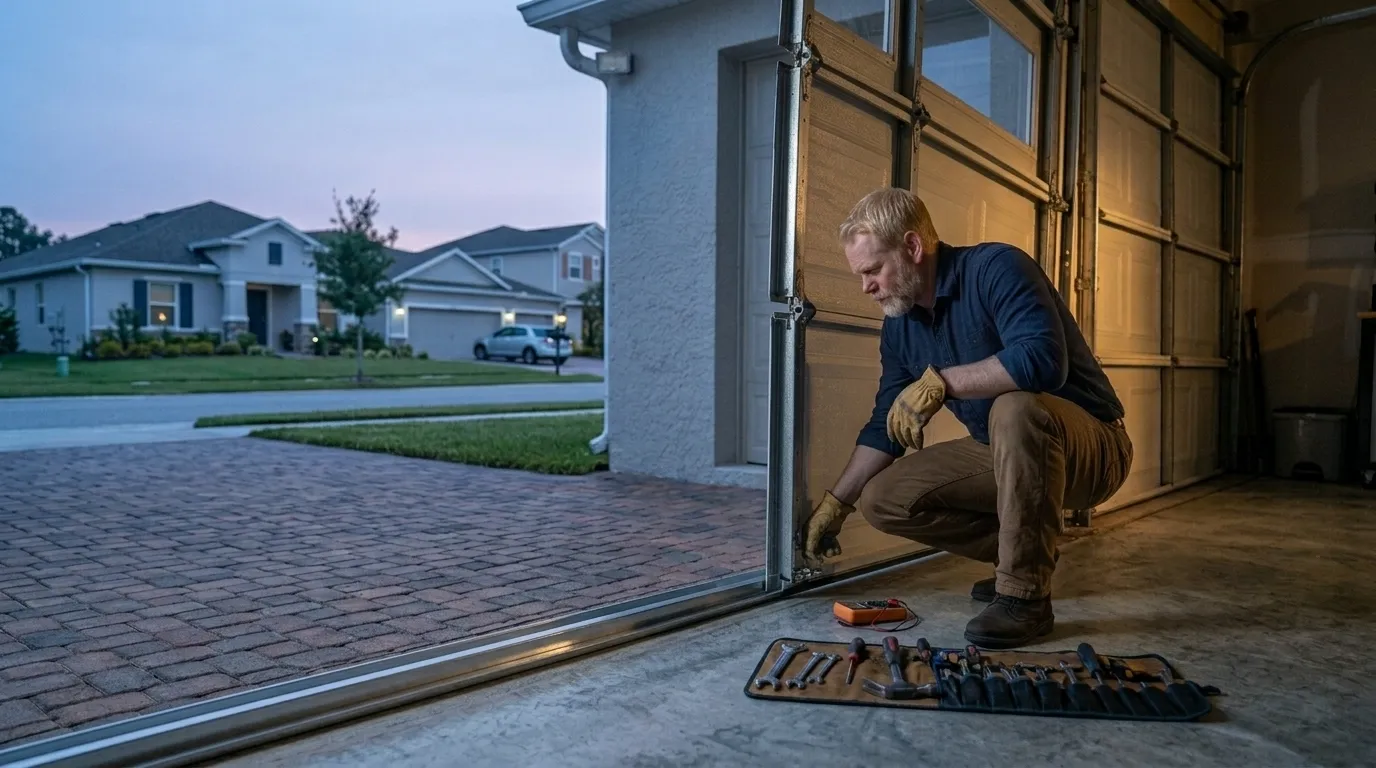
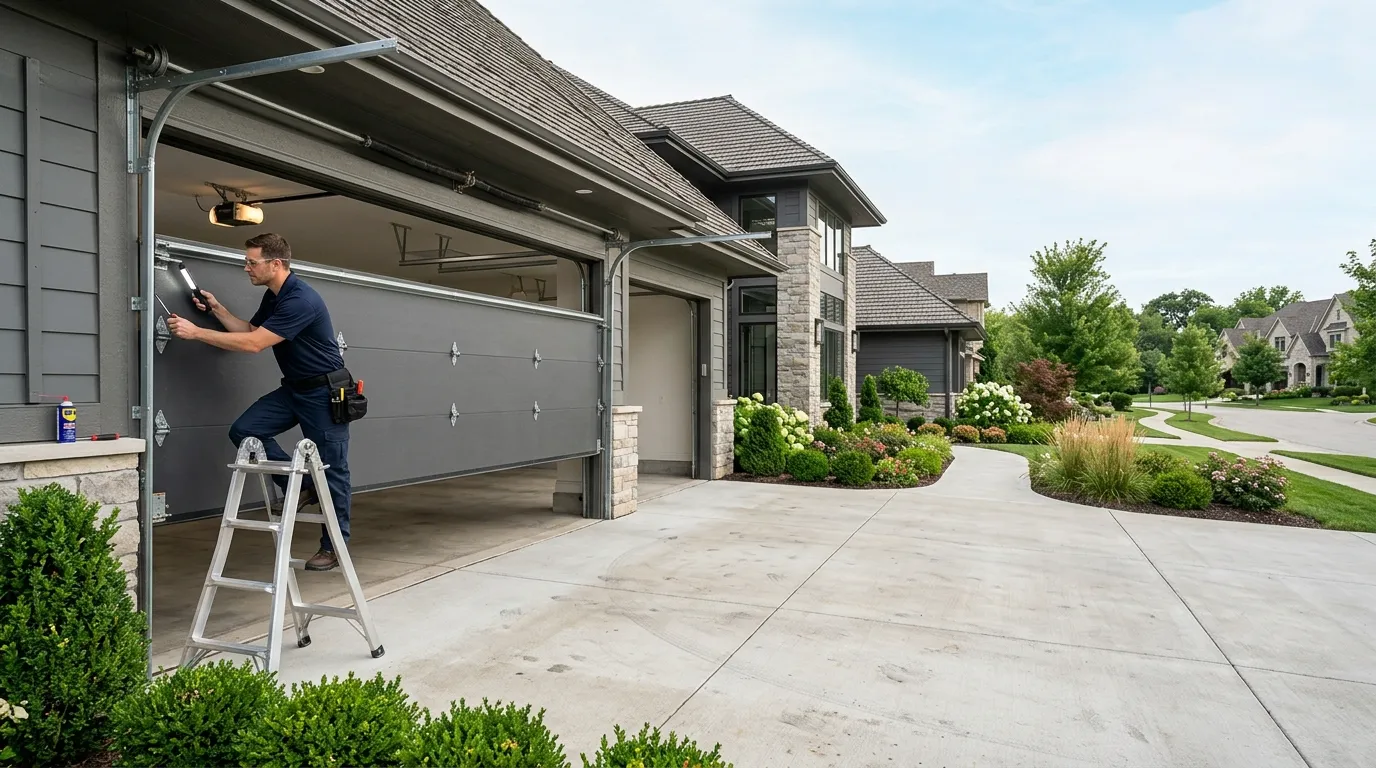
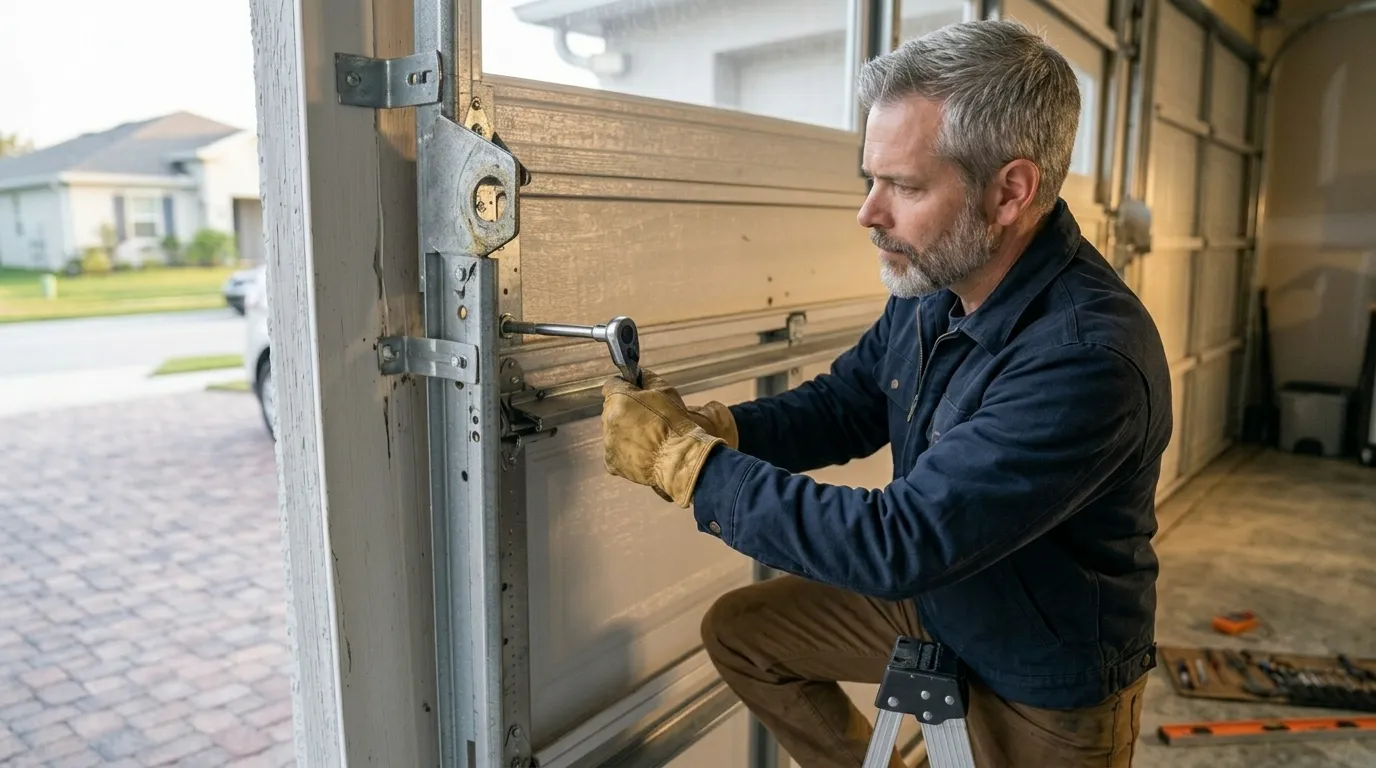
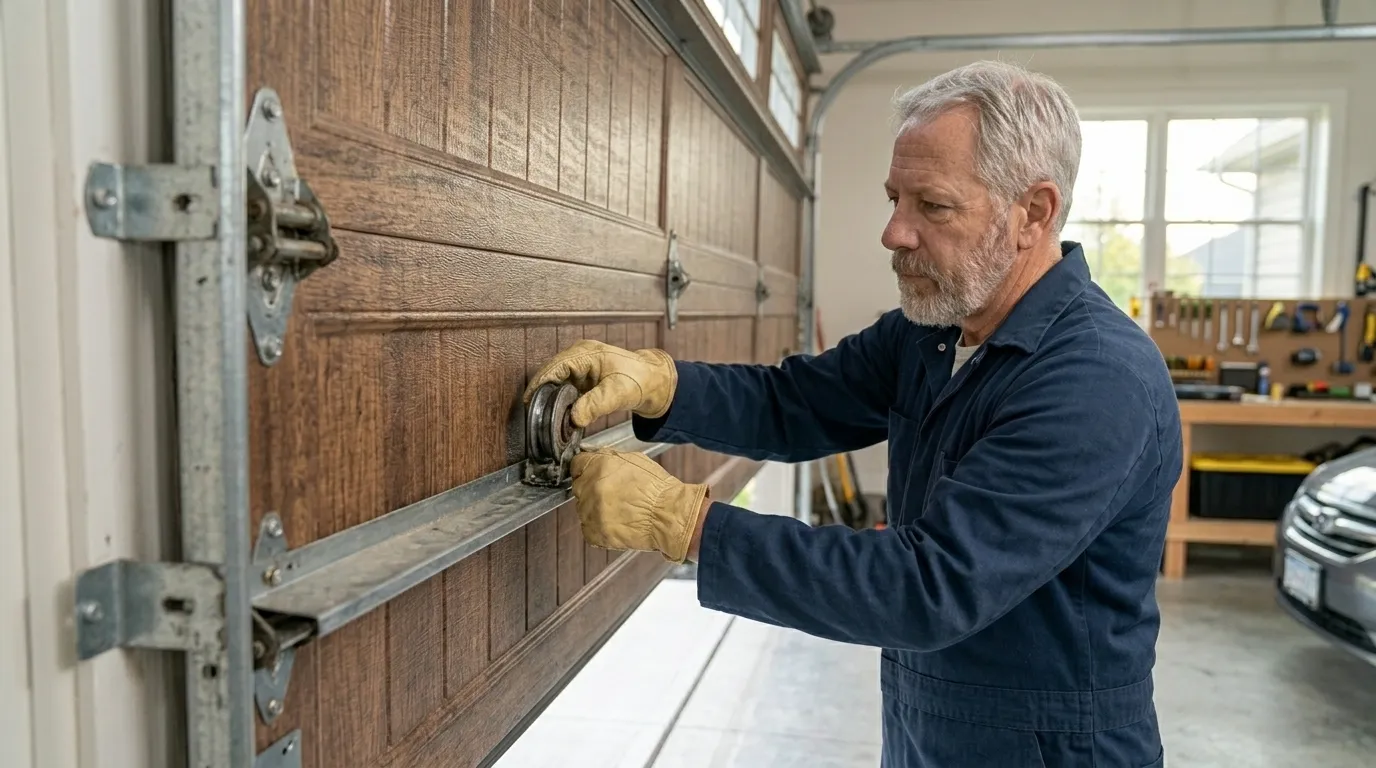
You notice it before you see it. The door jerks partway up the track, or it drops the last foot with a bang instead of settling. Sometimes there's a grinding sound right as the door clears the bend in the track, where the roller has to change direction. Look at the track itself and you'll often find a shiny groove worn into the rail, or a roller stem that's bent slightly off center so the wheel doesn't sit flush anymore.
On a lot of the houses in this part of Ohio, that bend point in the track is exactly where the trouble starts, because the original steel rollers were never built to run smooth for 50-plus years. When a roller's wheel cracks or flattens, the door doesn't glide through the curve, it hitches. Keep running a hitching door and you're not just wearing the roller anymore, you're loading extra stress onto the track brackets and the cable drum on that side. That's how a $20 roller problem turns into a bent track or a jumped cable if it sits too long.
Why It Happens Here
Housing in this service area was mostly built between 1938 and 2004, with the bulk of it going up in the 1960s and 70s across the 67 named areas we cover. That generation of garage door came with steel rollers on plain sleeve bearings, not sealed ball bearings, and those parts have had six decades to dry out, rust, or flatten on one side.
The climate does the rest of the damage. This area sits in a cold, severe winter band, and steel rollers don't tolerate that well. Cold makes the lubricant inside the roller stiffen up, so the wheel stops spinning freely and starts skidding against the track instead of rolling through it. That skid wears a flat spot into the wheel fast. Come spring thaw, the same roller that seized up all winter is now loose in its bracket from the freeze-thaw cycle working on the mounting bolts. On a house with the original hardware from that build era, you're looking at rollers that have outlived every reasonable service interval, and the cold just speeds up the failure.
What Is on the Truck
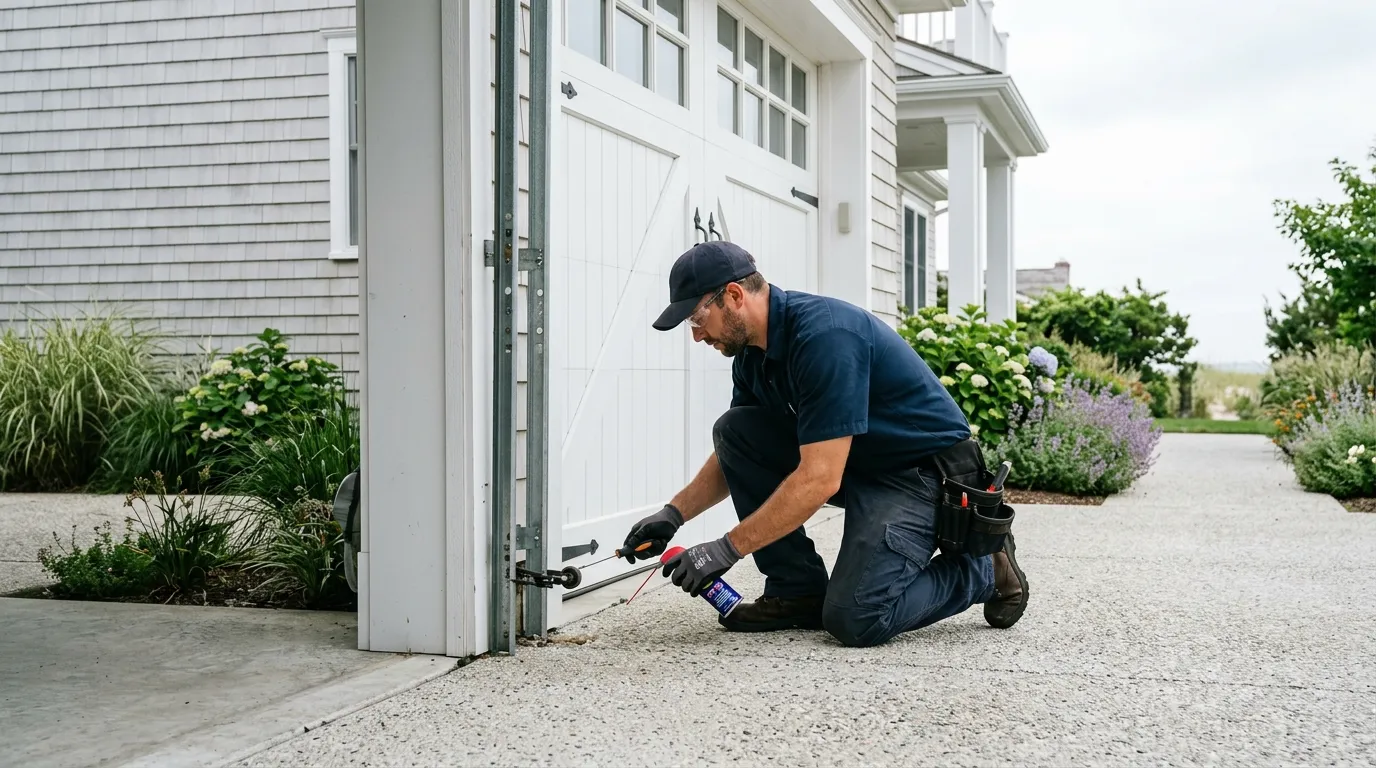
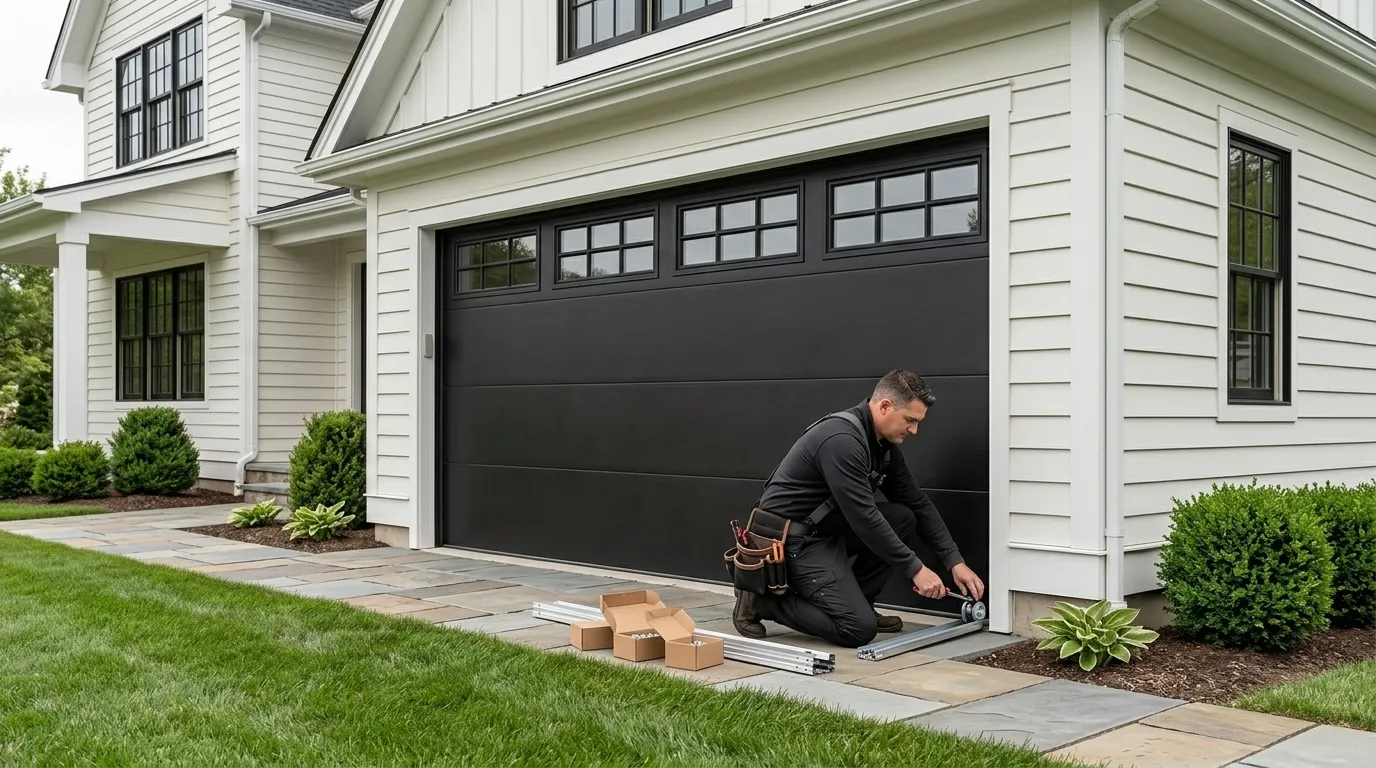
We stock both nylon rollers and steel ball-bearing rollers, since the right choice depends on the door's weight and how the existing track is worn. Nylon runs quieter and handles cold better than the old steel-on-steel design, which matters given the winter band this area sits in. We also carry the stem lengths and bearing sizes that match the track spacing common on doors from the 1960s and 70s building stock across this service area, so we're not guessing at fitment on an older door.
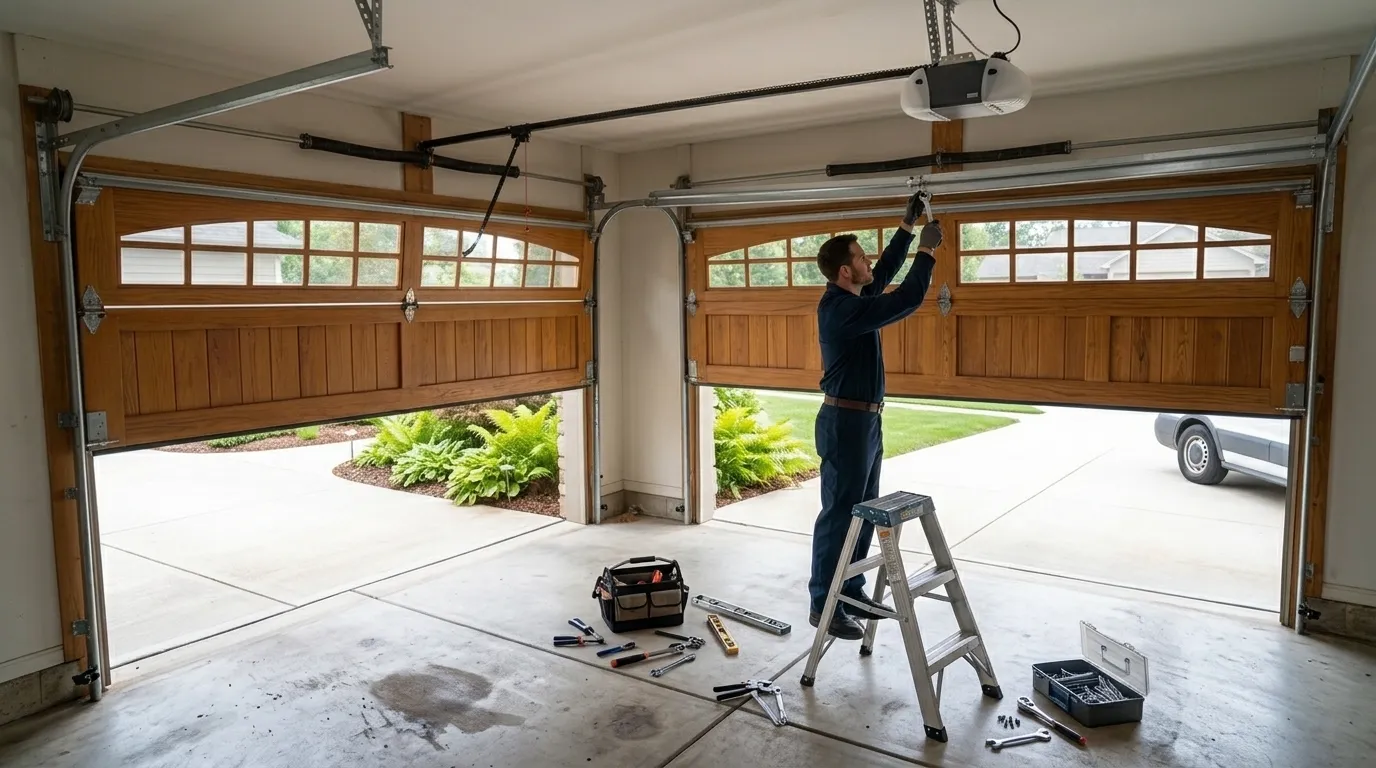
Beyond the rollers themselves, the truck carries the hinges, track sections, and lubricant needed to finish the job in one visit for most single-door and double-door setups. We don't stock every obscure OEM part from every manufacturer that built doors in this era, so on rare hardware we may need to order a specific bracket or hinge style, and we'll tell you that up front rather than jury-rig something that won't hold.