
Doing It Yourself
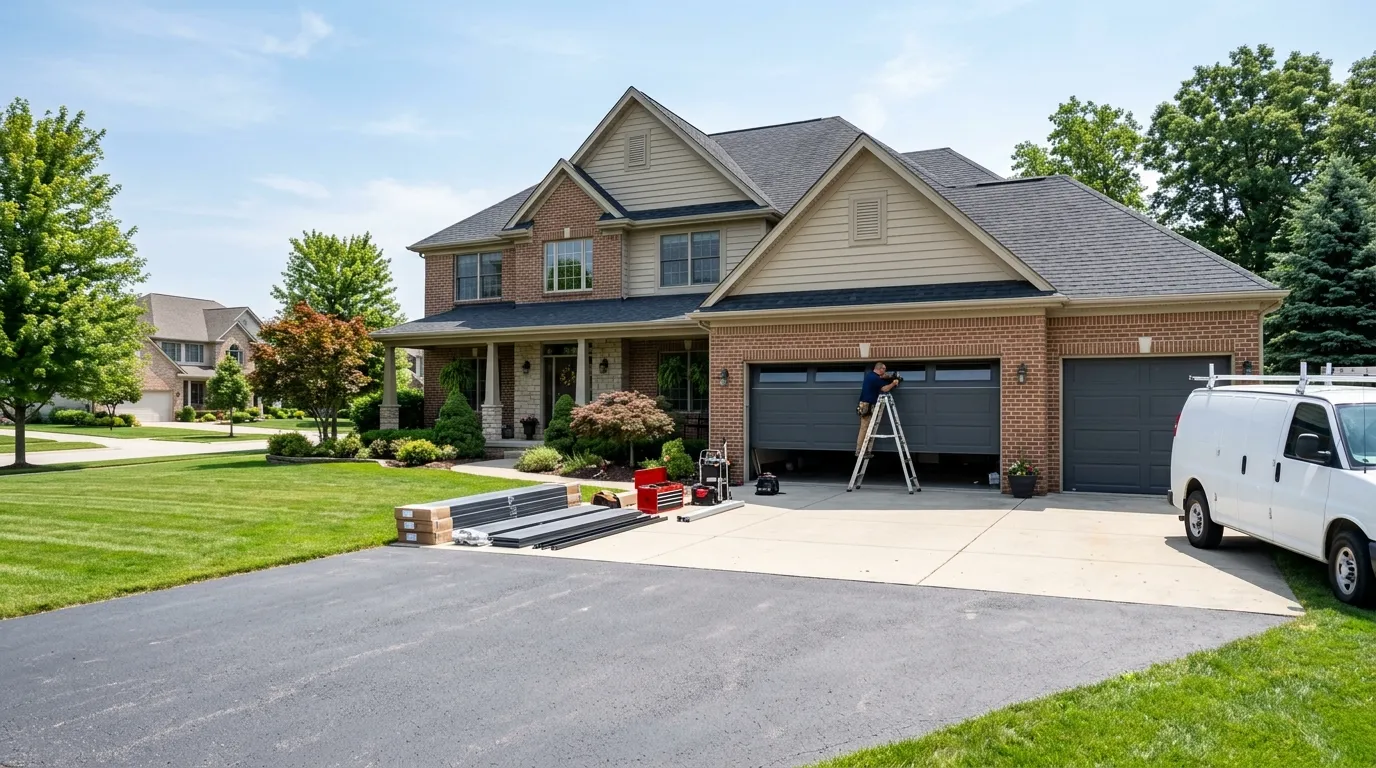
Parma Heights is a small place - about 9,193 households packed into a tight 2-mile radius off Parma - which means the maintenance calls we get here cluster tighter than in bigger suburbs. Fewer houses, fewer builders, fewer hardware variations. Most of what you own dates to right around 1959, square in the middle of the 1938-2004 build range across this service area, and that era of door came with steel tracks and torsion springs sized for lighter panels than what's sold today.
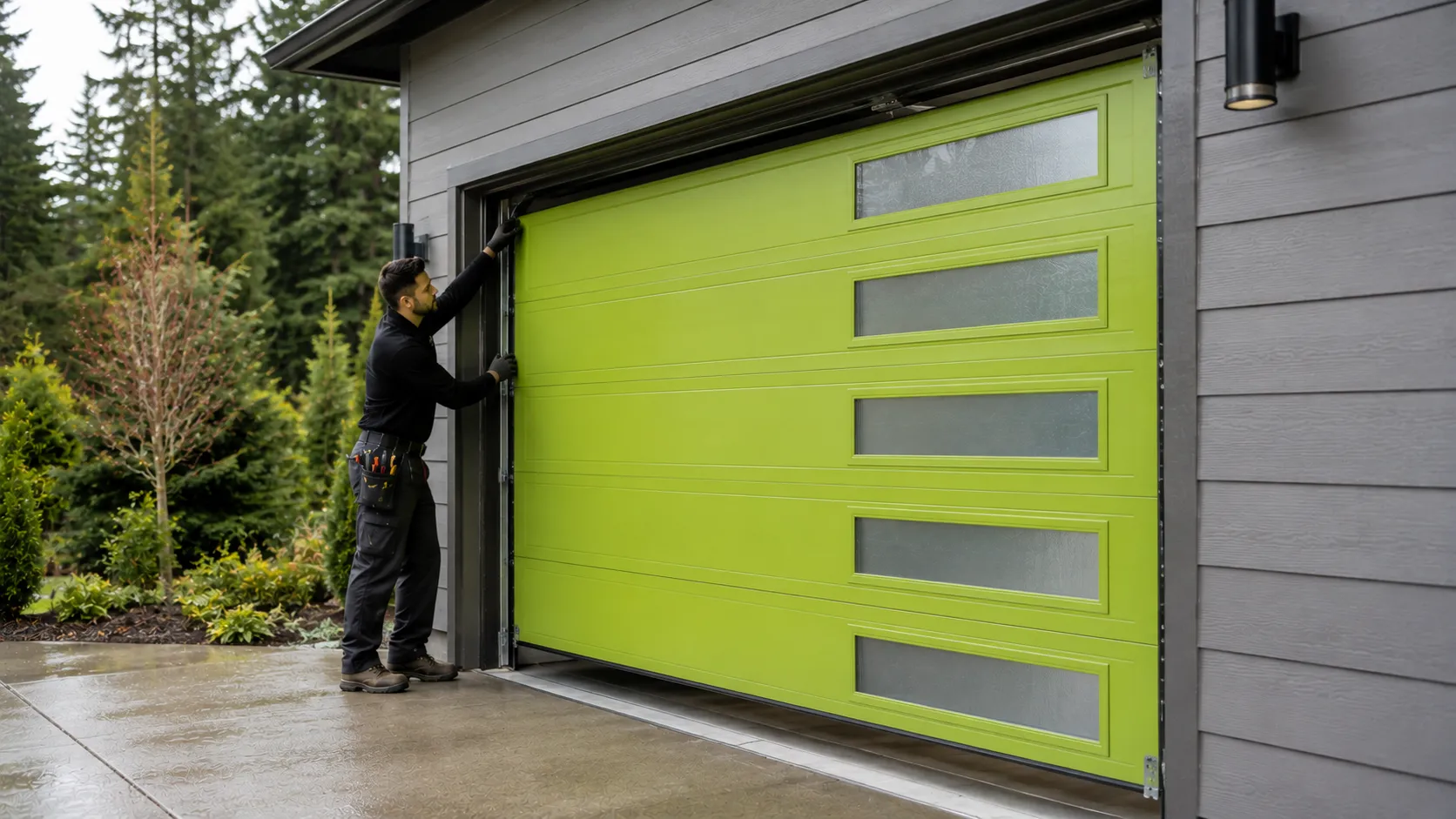
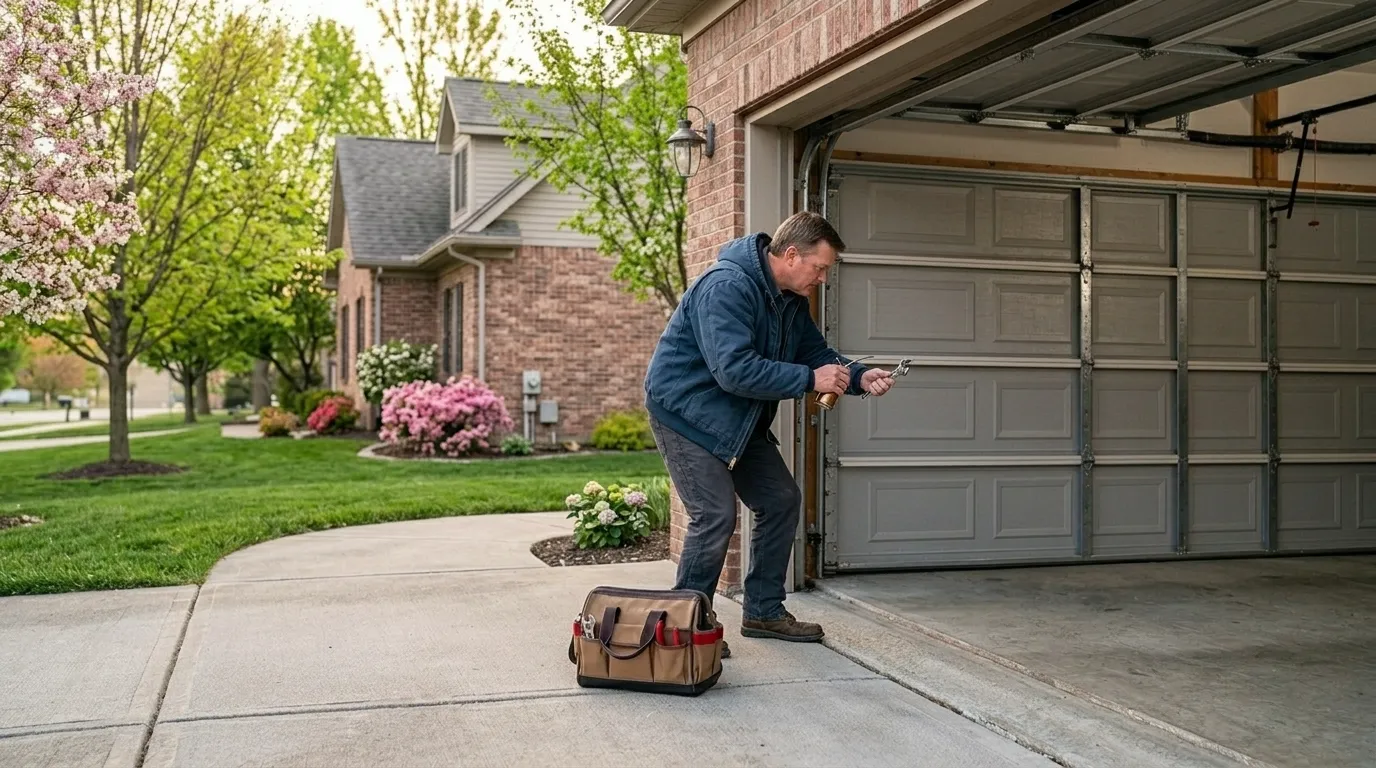
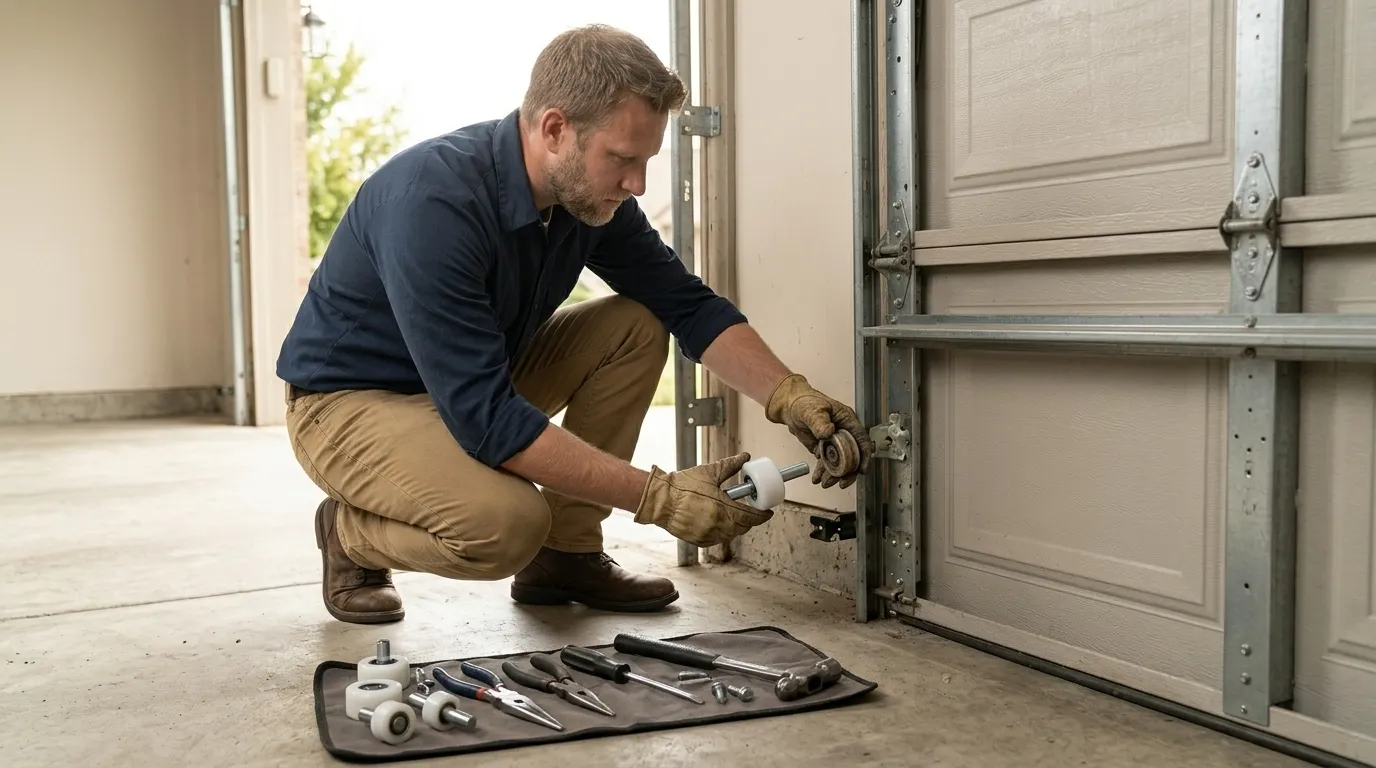
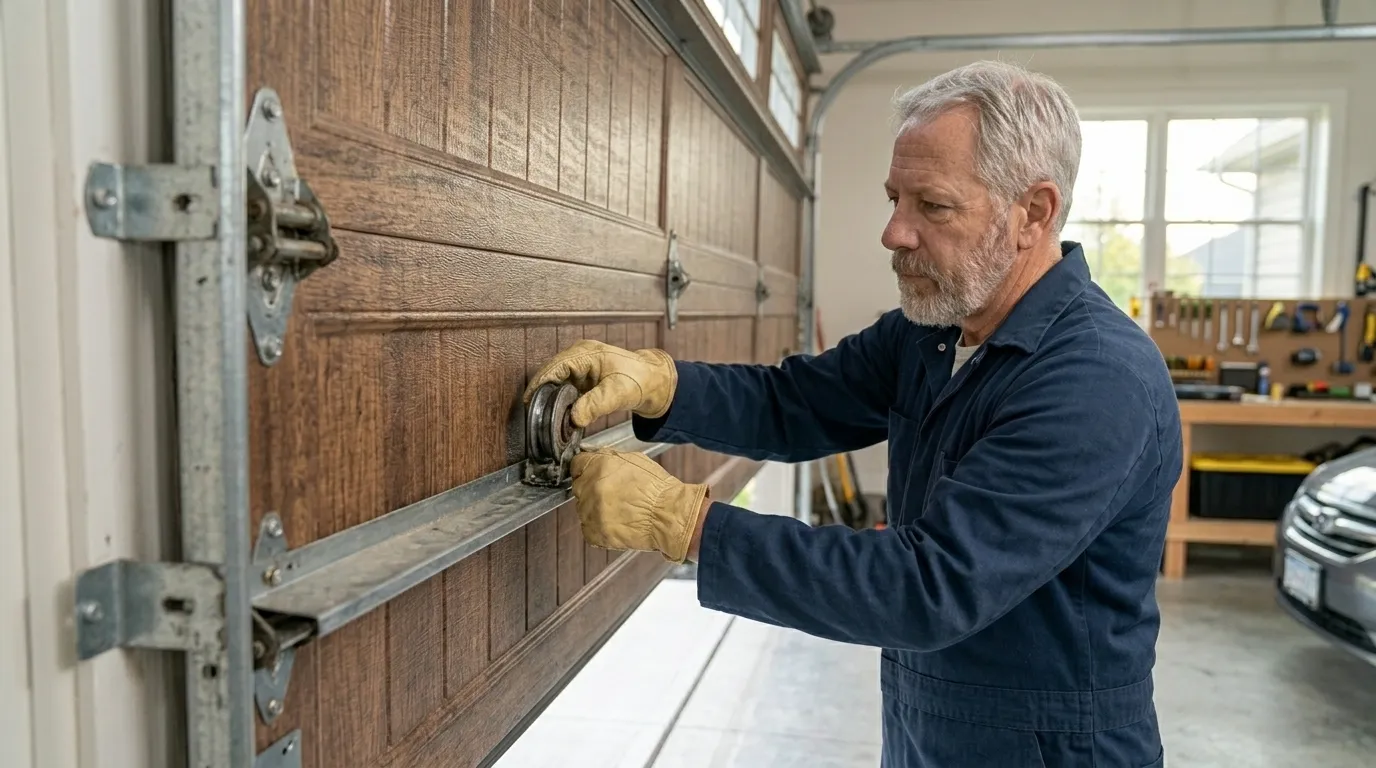
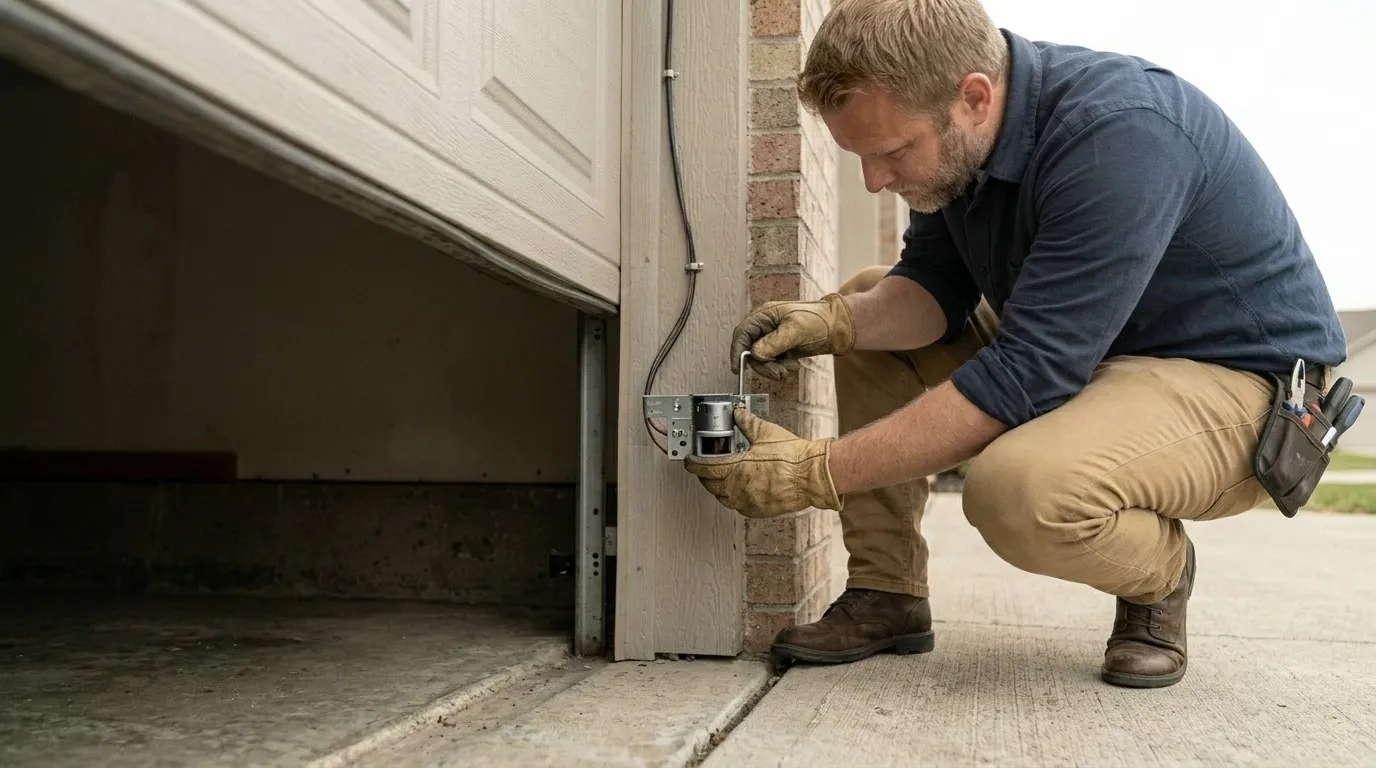
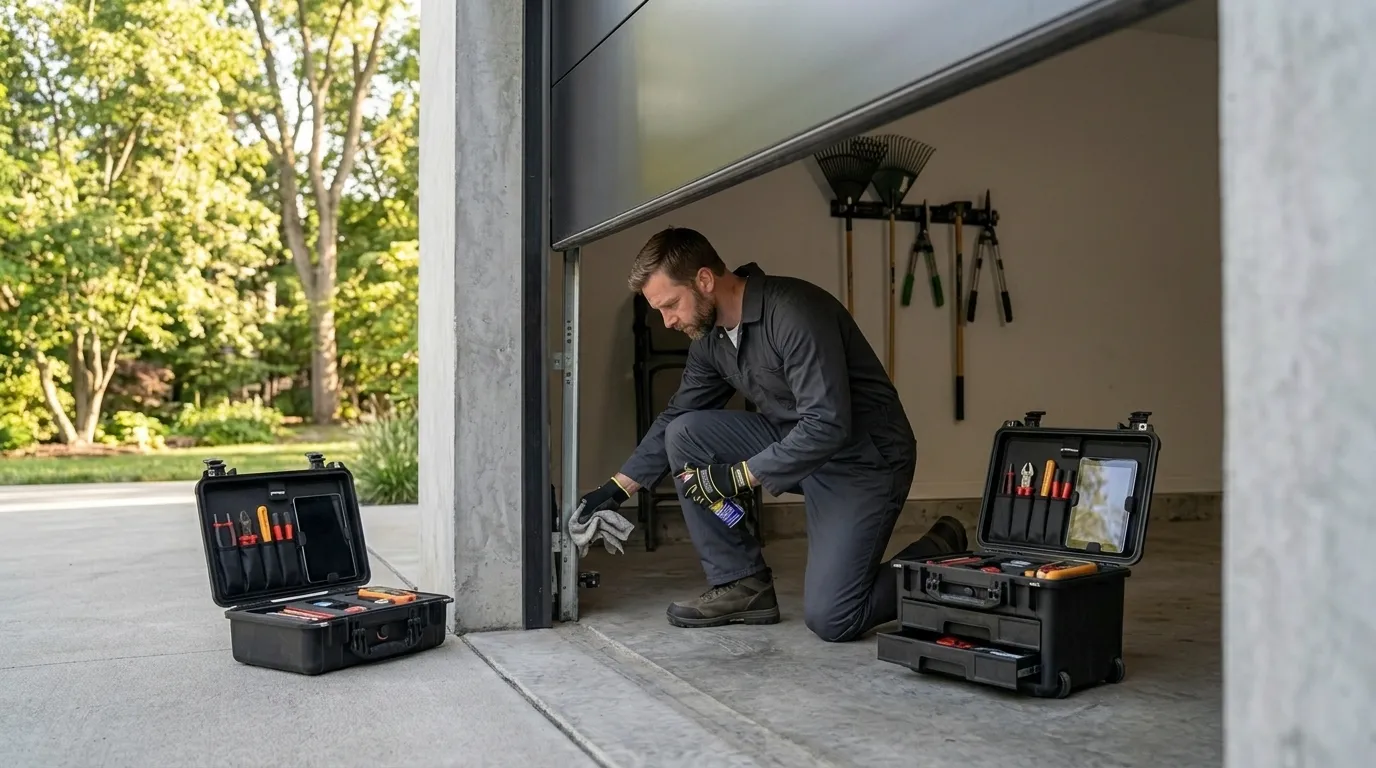
You can do some of this yourself. Once a season, wipe down the tracks with a dry rag and check that the rollers aren't chipped or flat on one side - on a house this age, original rollers are usually nylon or steel and both wear out the same way, unevenly. Snug the track bolts if you can reach them safely. Look at the bottom weatherseal for cracking; in a cold-climate area like this one, a stiff, split seal lets snowmelt track straight onto the slab.
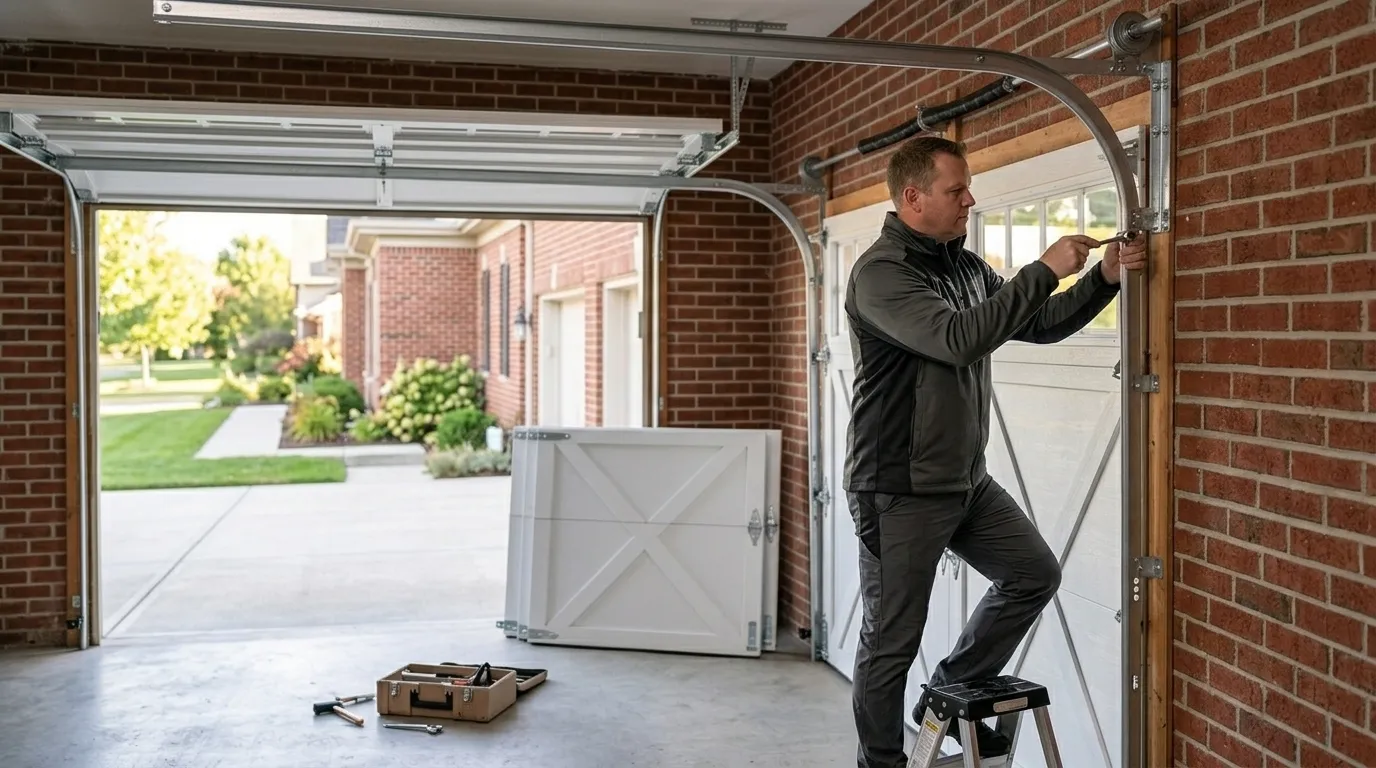
What you shouldn't touch: the torsion spring itself. On a door this old, the winding cone can be original hardware, and if it lets go while you're on a ladder next to it, that's a trip to the ER, not a repair bill. Leave spring tension to someone with winding bars and a truck full of the right size cones.
Where This Job Goes Sideways
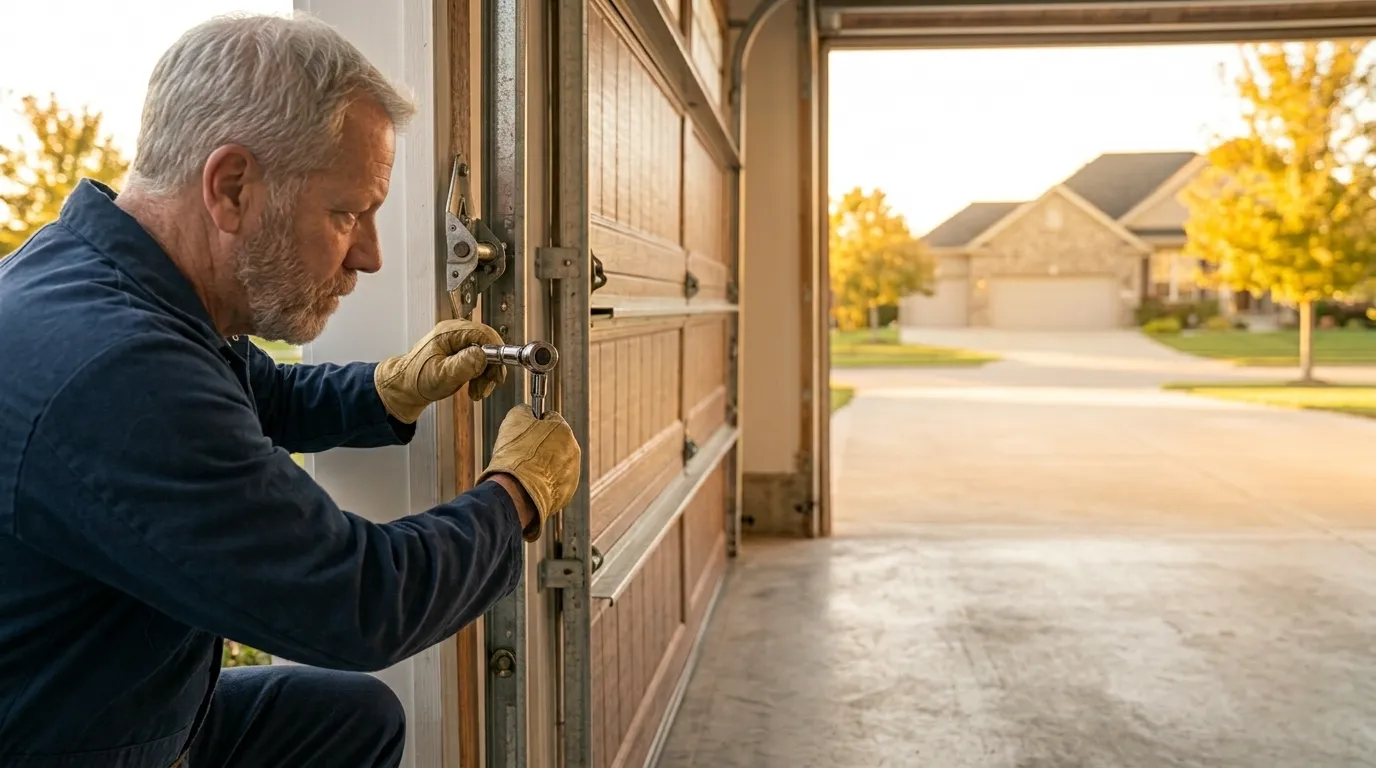
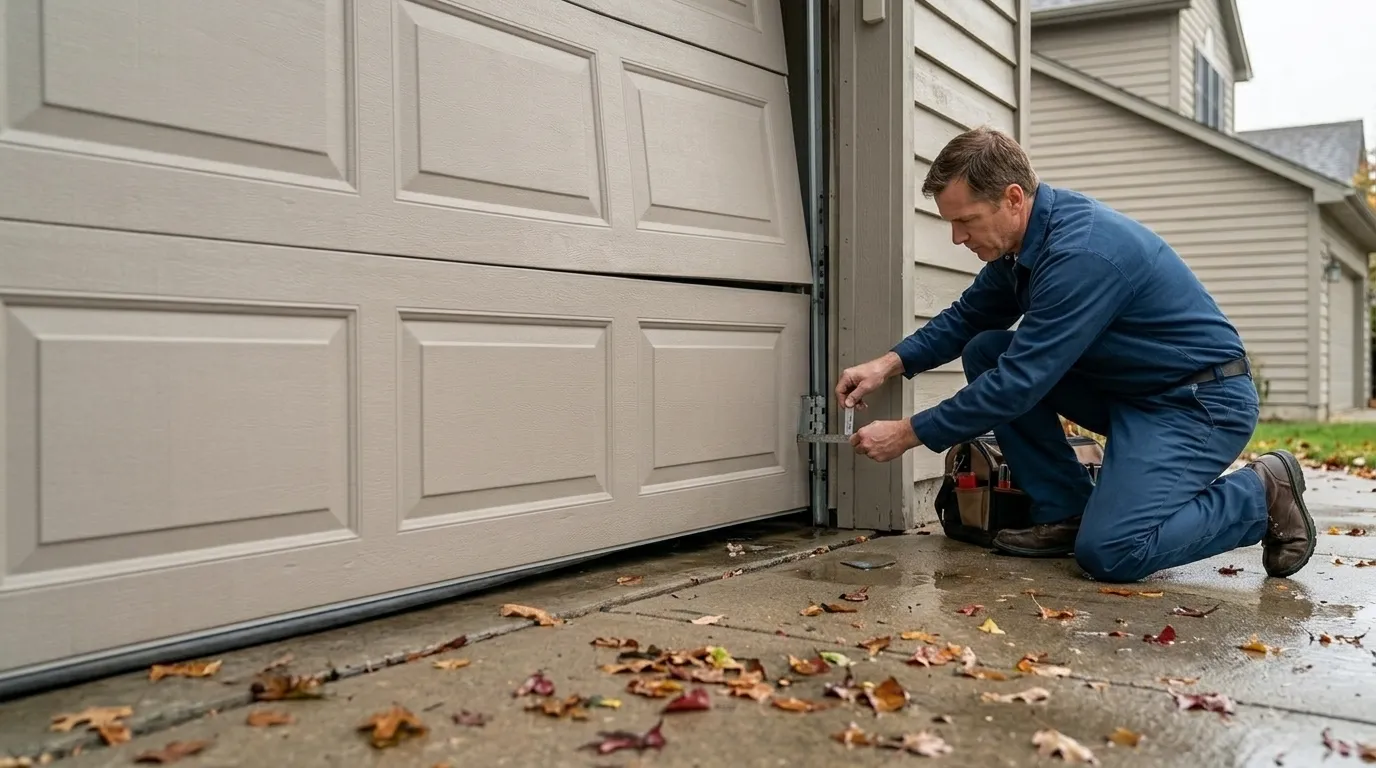
On a median-1959 house, the failure that surprises people isn't the spring - it's the track alignment. Houses of that era were framed before slab settling was as tightly controlled as it is now, and 65 years on, a lot of these garages have a jamb that's drifted a quarter inch out of square. That doesn't matter to the door until a roller starts binding on one side, and then what looks like a simple lube job turns into a track that needs to come off and get re-set to plumb.
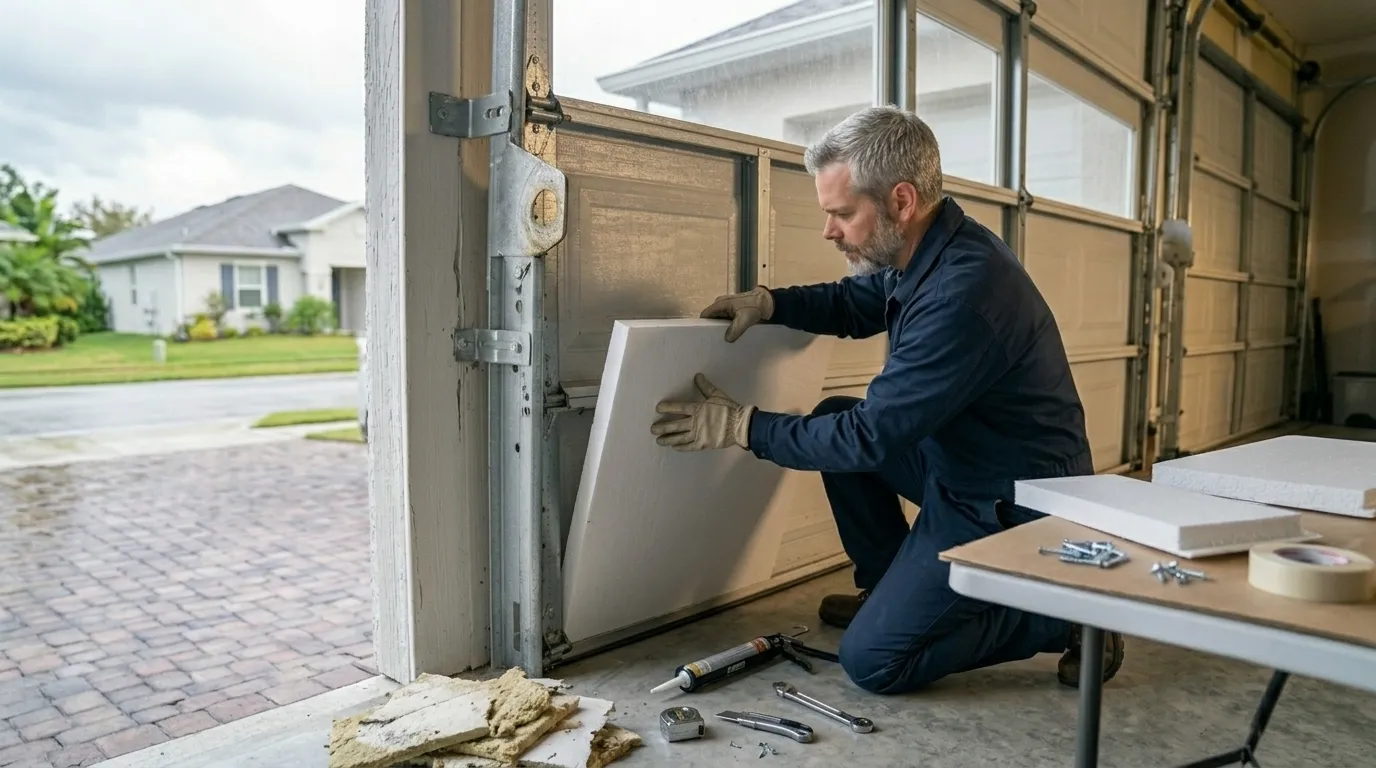
The other thing that goes sideways here: openers bolted to original 1960s-era framing that was never rated for a heavier steel replacement door. If a previous owner swapped panels without checking the header, the opener strains every cycle and the chain or belt wears fast. We see this more in a small, older suburb like this one than in newer construction, simply because there's more original framing still in service.
We won't chase every noise with a part swap. If a door is original from 1959 and the drum, spring, and track are all near end of life at once, patch maintenance on one piece just delays the same call six months out. Sometimes the honest maintenance visit is the one where we tell you which parts to budget for next, not the one where we sell you a tune-up.
Time on the Job
A standard maintenance visit - inspection, lube, roller and hinge check, track and cable inspection, opener force test - runs on the same schedule whether the house is in Parma Heights or a few miles further out, since the drive here is short. The variable is the door itself: a straightforward tune-up on hardware that's been kept up moves quickly. A door that's been ignored for a decade, with a stiff torsion spring and rollers that haven't turned freely in years, takes longer because we're working loose parts before we can even measure them properly.
Given how many houses in this suburb are original to 1959, we plan the visit assuming original hardware until we're standing in front of it. That's not a guess about your specific door - it's just what the numbers here say is likely, and it's why a Parma Heights maintenance call sometimes runs a bit longer than the same service somewhere with newer stock.