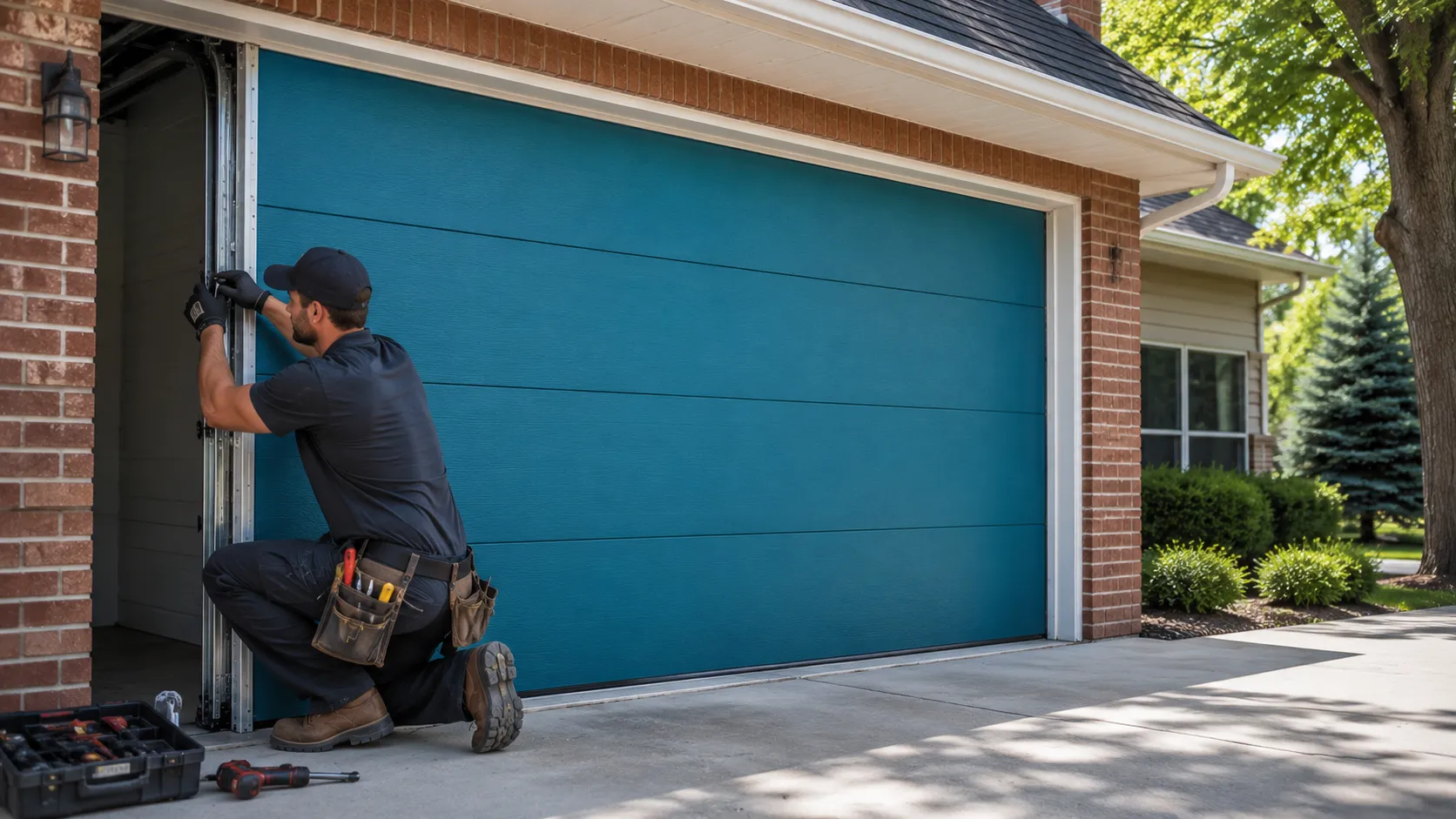
Doing It Yourself
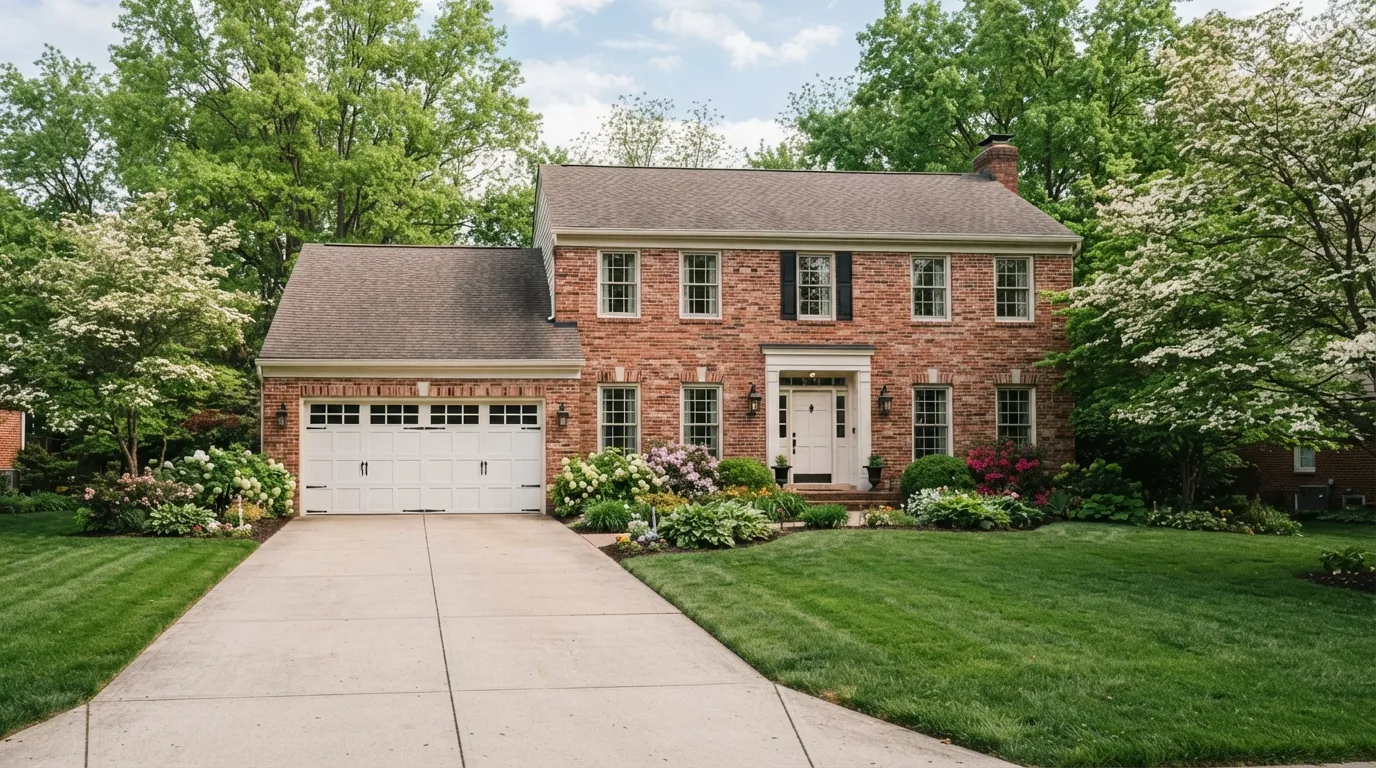
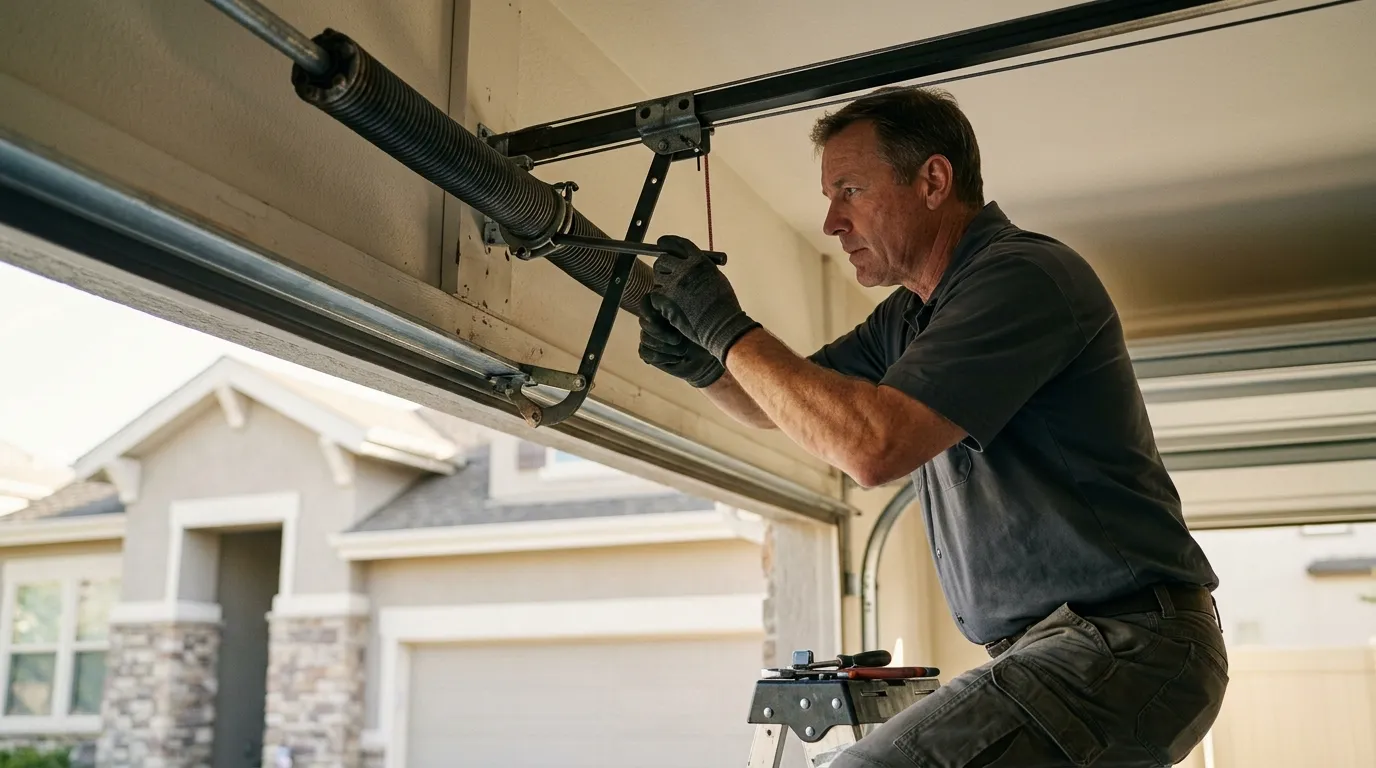
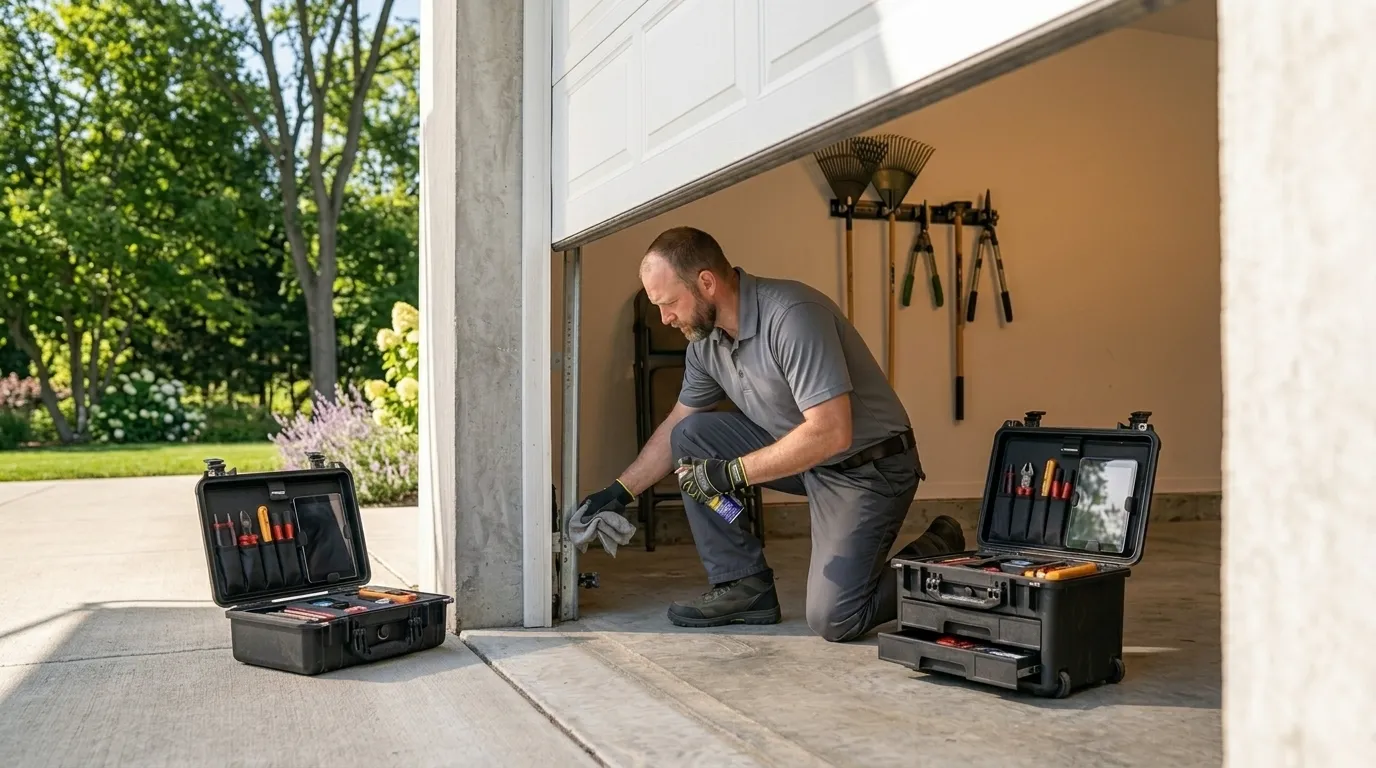
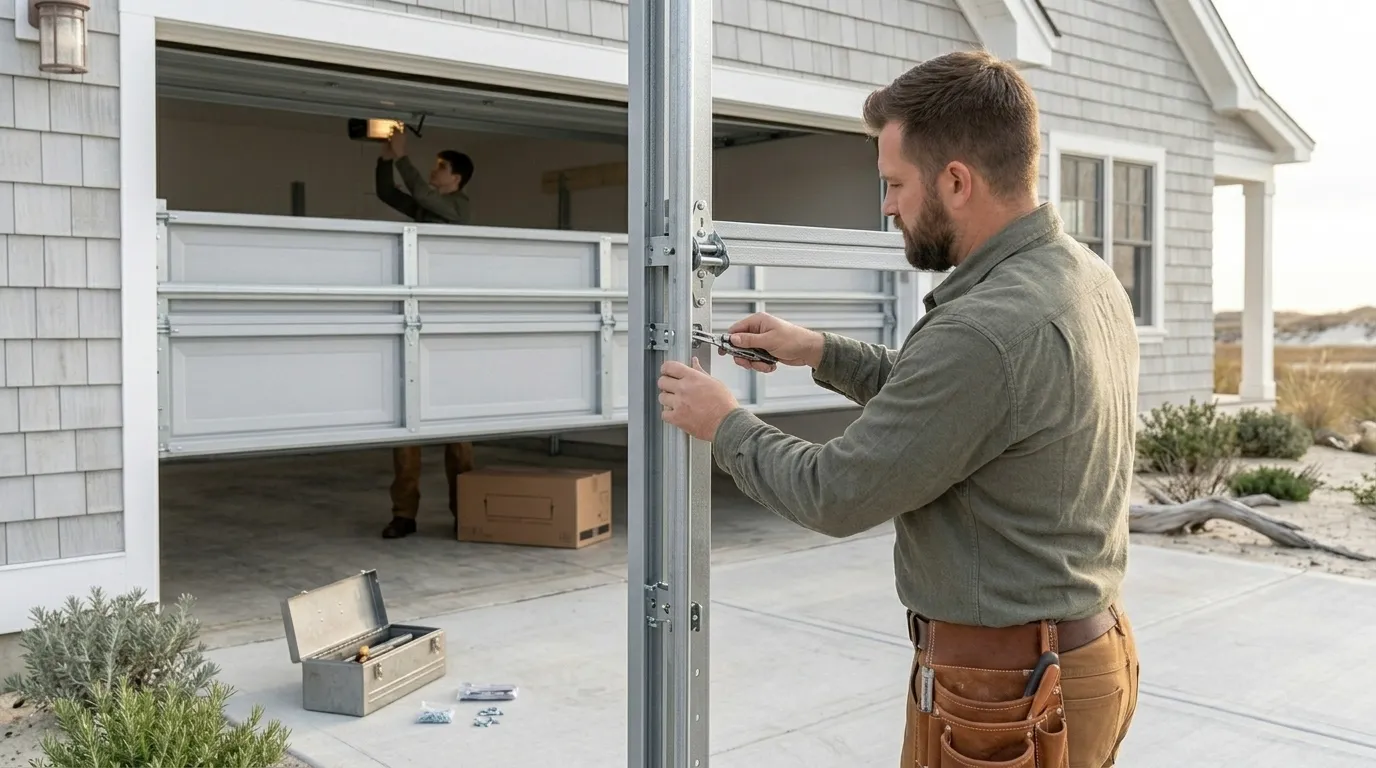
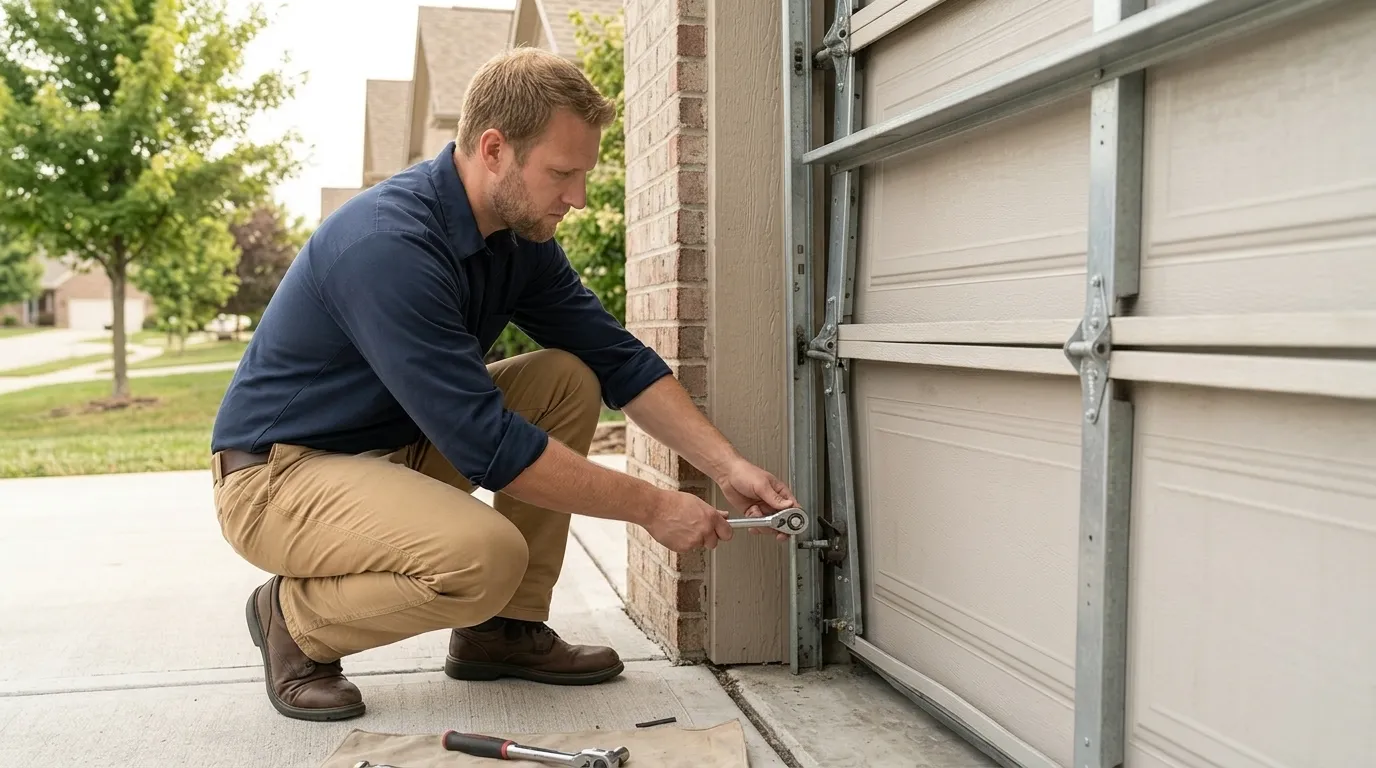
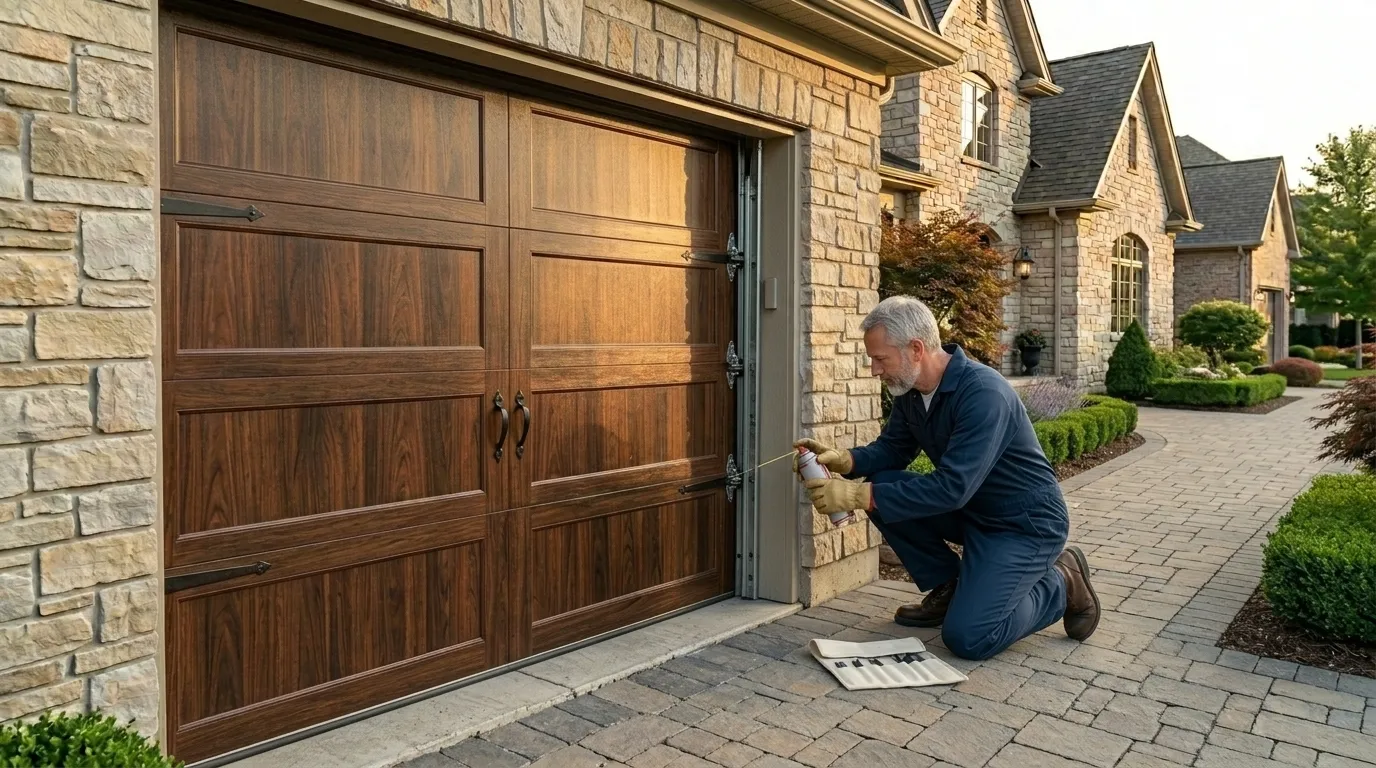
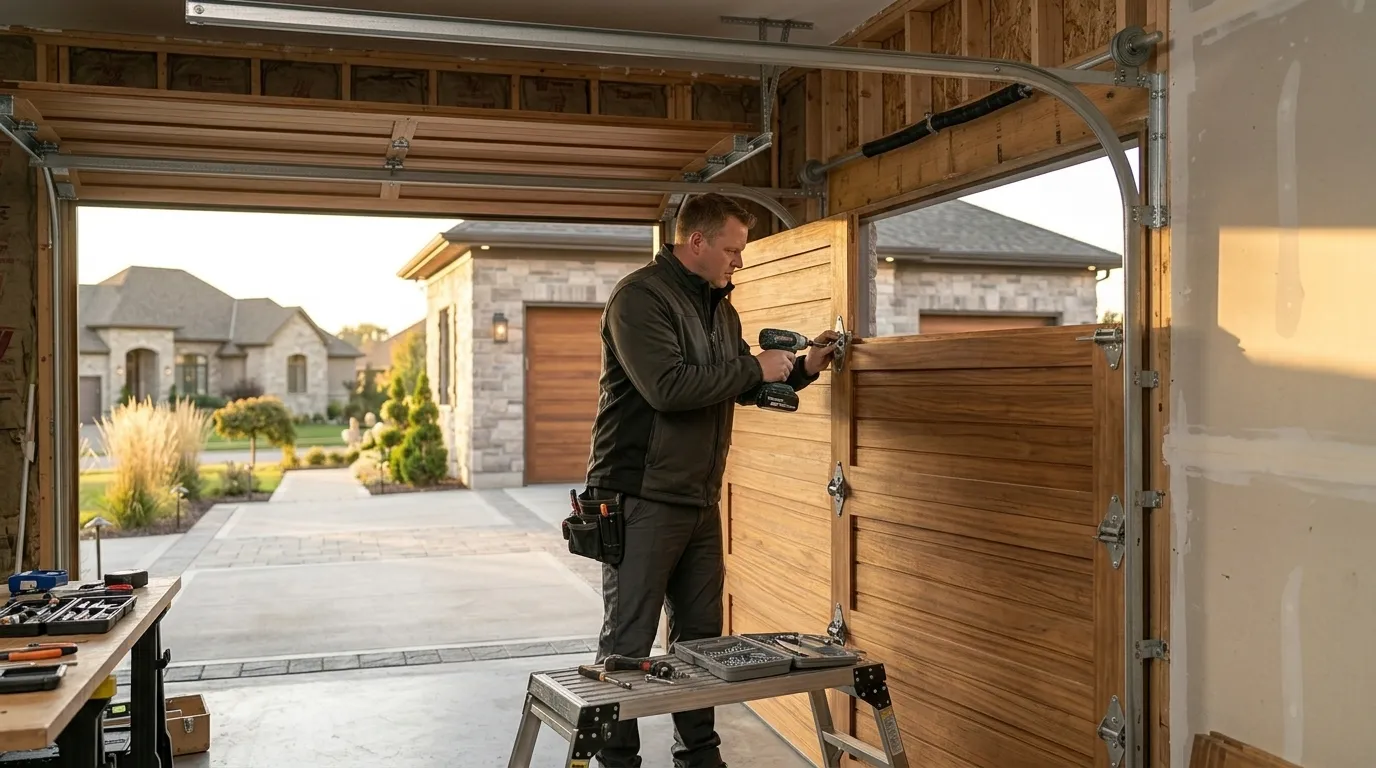
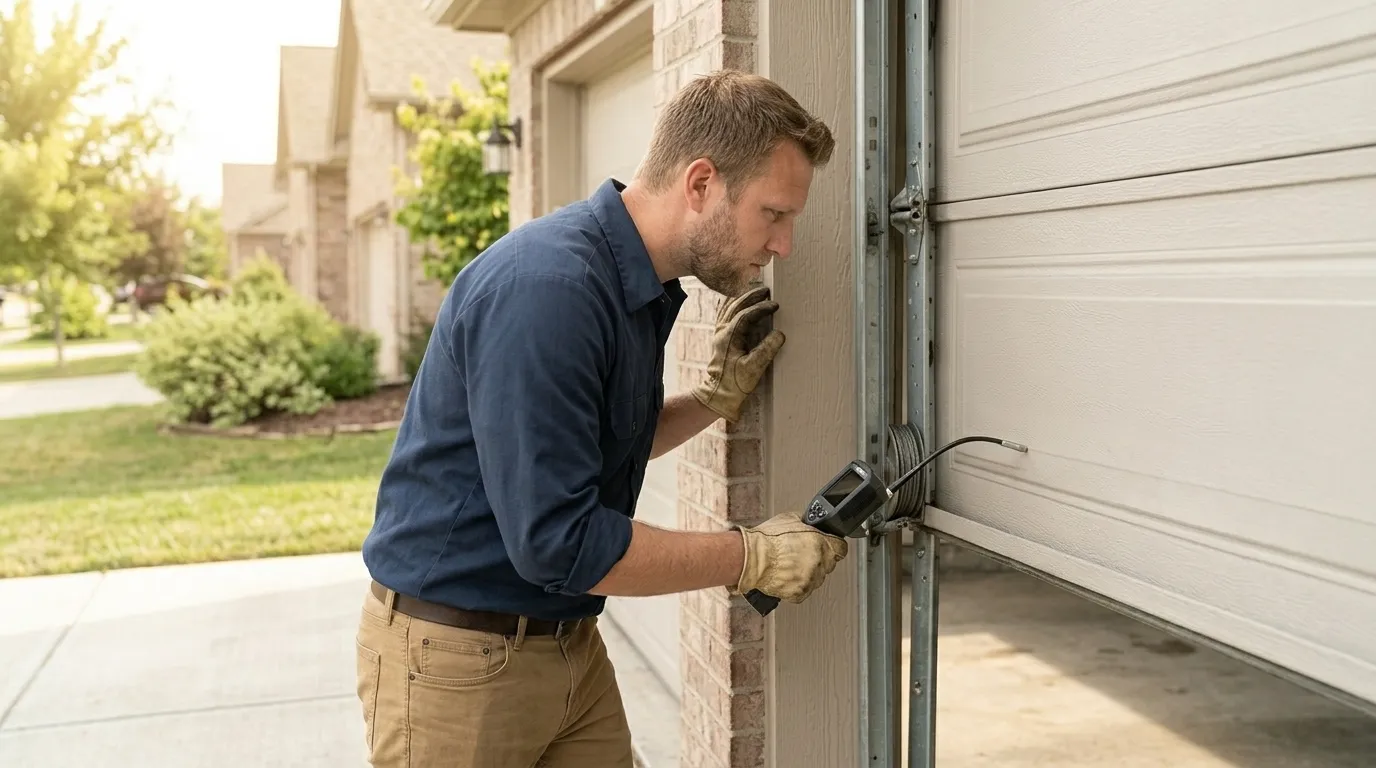
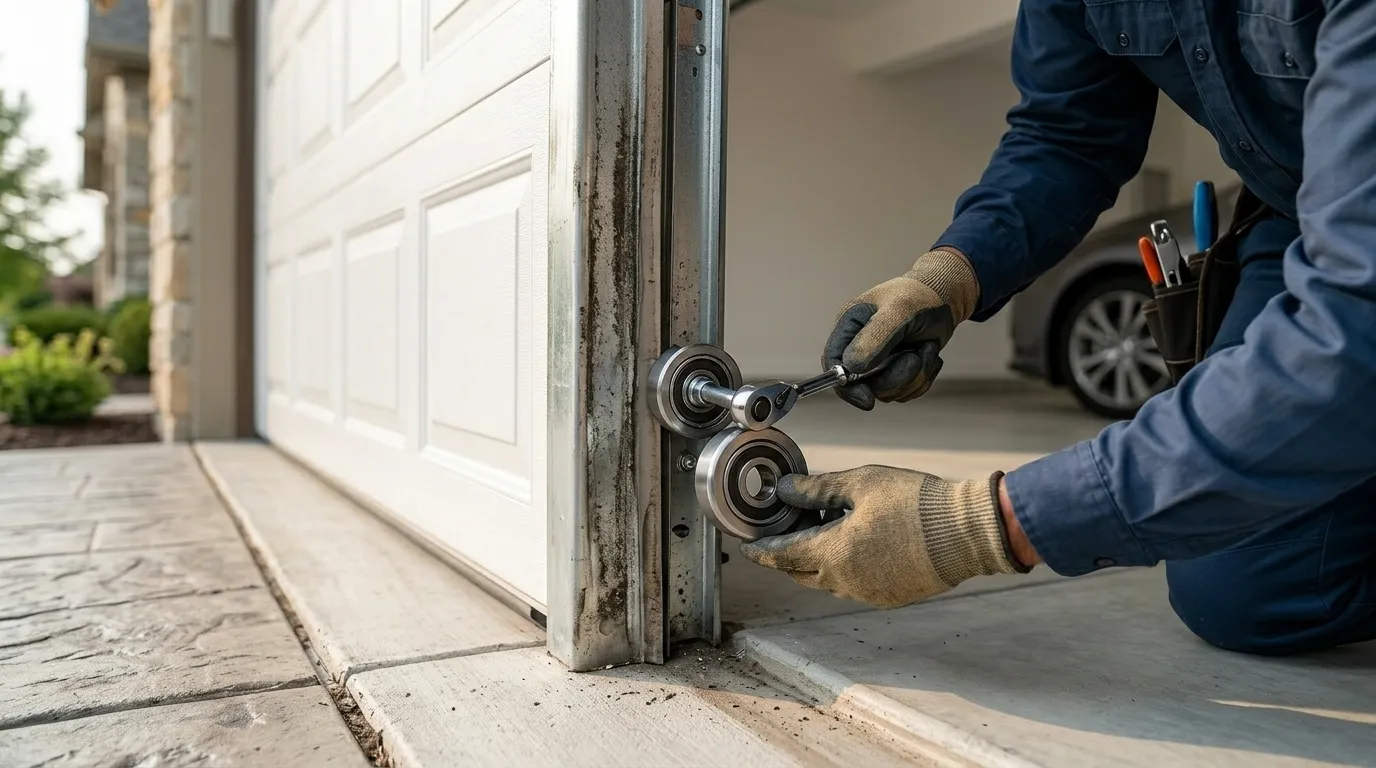
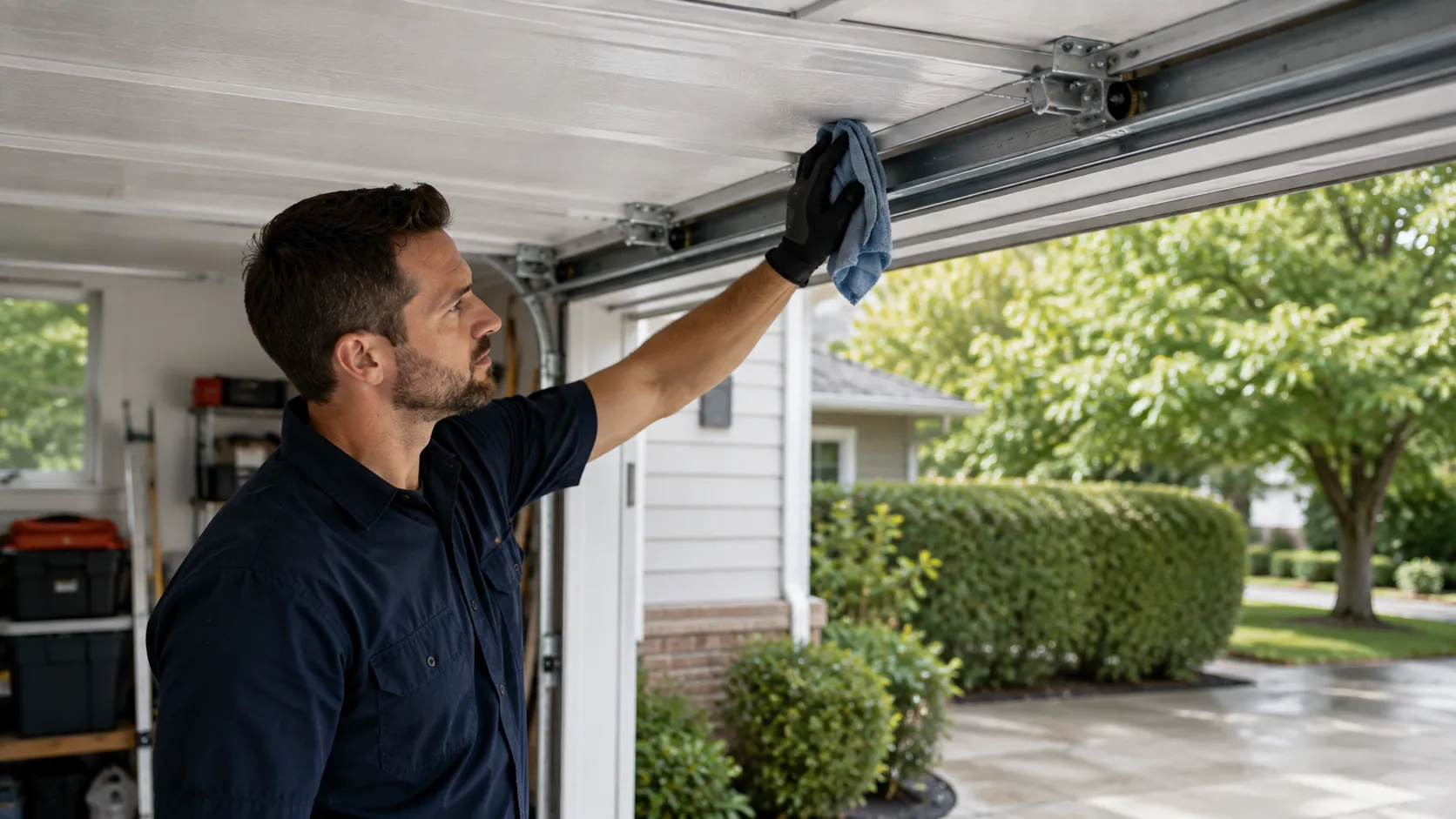
Most garages in Parma Heights went up around 1959, a few years ahead of the wider service area's 1966 median. That earlier build date matters because the doors that came with those houses are almost never the doubled-up, insulated steel panels you see in newer construction. They're single-layer steel or a wood-and-panel hybrid, usually on a narrower 8 or 9-foot opening, hung on extension springs mounted along the horizontal track rather than the torsion bar over the header that became standard later. If your door is original, you're not dealing with a modern hardware kit. Before you touch anything yourself: unplug the opener, check whether the door will lift and hold halfway by hand (if it drops, a spring's given out - don't force it), and look at the cables for fraying at the drum. What you can reasonably do yourself is lubricate hinges and rollers with a light oil and tighten loose hinge screws. What you shouldn't touch is anything under spring tension - on a 1959-era extension-spring setup, that tension is stored differently than on newer torsion systems, and the failure mode (springs and cable whipping loose) is not something to learn on your own garage.
Where This Job Goes Sideways
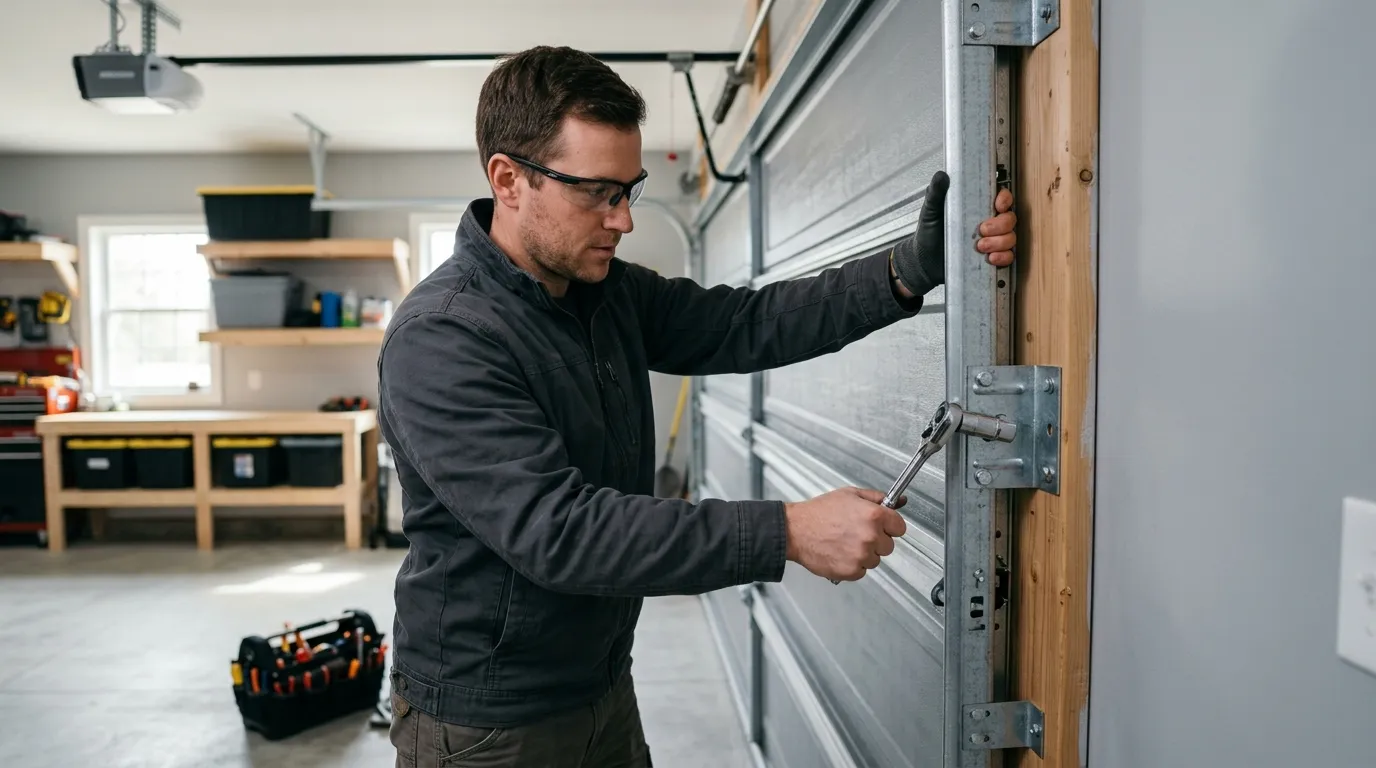
The trouble in Parma Heights usually isn't the spring itself - it's what's attached to it. On a door this age, the drum, the pulley, and the track brackets have often been repainted, rusted, and repainted again over sixty-some years, and the mounting bolts have worked loose in wood jambs that have shifted with the frost. We get called for "the spring broke" and find the real job is a bent track from a stretched cable, or a jamb bracket pulling out of soft, moisture-damaged wood. Northeast Ohio's cold winters don't help - repeated freeze-thaw cycles work screws and lag bolts loose in older framing faster than in newer builds. The other place this goes sideways: openers retrofitted onto these original doors sometimes weren't matched to the door's actual weight, so you get a chain drive straining against hardware it was never sized for. We won't quote a spring swap over the phone on a door like this - not until we've seen the track and the jamb in person, because on a lot of these houses the spring is the cheap part of the fix.
Time on the Job
We come from Parma, about 2 miles out, so travel isn't the variable here - what determines the time on site is what we find once the door's open. A straight spring-and-cable job on one of these older extension-spring setups usually runs about what you'd expect for that scope of work. Where it runs long is when the track's bent, the jamb bracket needs re-anchoring into old wood, or the opener's chain and gearing have to come apart to get at a hardware failure behind it. Because so much of Parma Heights' stock dates to the same narrow build window, the parts and the problems tend to repeat house to house - which is part of why we carry what we carry. We'll tell you on site if it's a same-visit fix or a return trip for a part, and we won't guess at that over the phone before we've seen the track.