Where This Job Goes Sideways
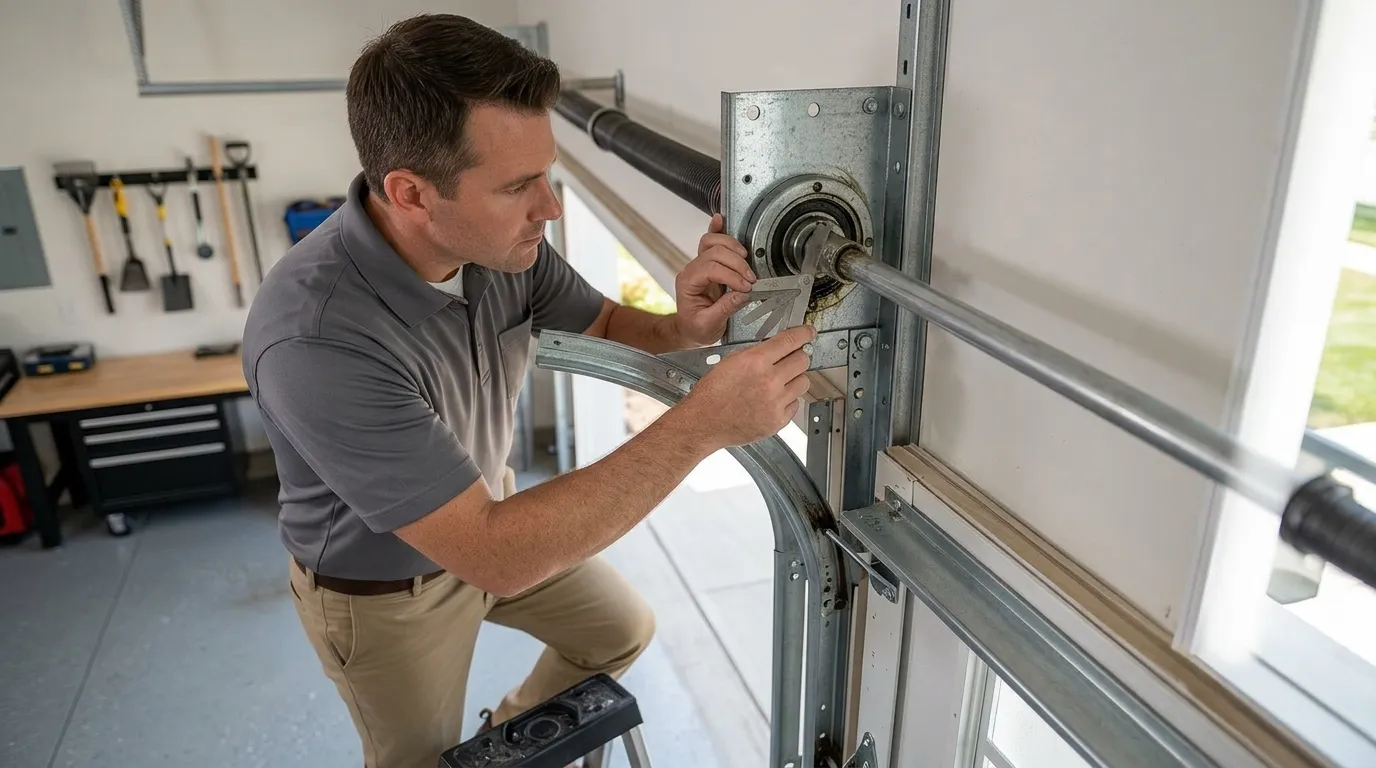
Garfield Heights homes cluster around a median build year of 1955, which puts a good share of the housing stock in the same window as the rest of the Parma service area's older neighborhoods but on the earlier end of it. That matters because a door installed when a house went up in the mid-1950s has had roughly seven decades to wear, and in a lot of cases nobody has ever touched the spring, the hinges, or the track brackets since. We see doors here where the torsion spring is the original one - not a replacement, not a second-generation part, the one that shipped with the house. Springs are rated in cycles, not years, and a spring that's outlasted three or four openers usually isn't far from failing. The sideways part isn't the door breaking. It's the cable snapping while the door is half up, or a bracket pulling loose from lumber that's dried and shrunk for seventy years, because nobody ever put a wrench on it to check. On a job this old, maintenance isn't really "maintenance" - it's often the first inspection that hardware has ever gotten.
Why It Happens Here
Garfield Heights sits in the same cold-climate band as the rest of the Cleveland-area service territory, which means freeze-thaw cycles work on steel and lubricant every winter. Grease that was fine in 1955 has gone through decades of that cycling - it hardens, track alignment shifts as slabs settle, and rollers that were never swapped out wear oval instead of round. None of that is unique to any one house; what is specific to Garfield Heights is how much of the original 1950s-era hardware is still in place, because this suburb's stock skews older than several of the towns around it. A door built to code in 1955 also predates a lot of the safety hardware standard today - things like auto-reverse sensors just weren't part of the build. That's not a defect, it's an age gap, and it's the kind of thing that only shows up once someone's actually looking at the door rather than just opening and closing it.
What Is on the Truck
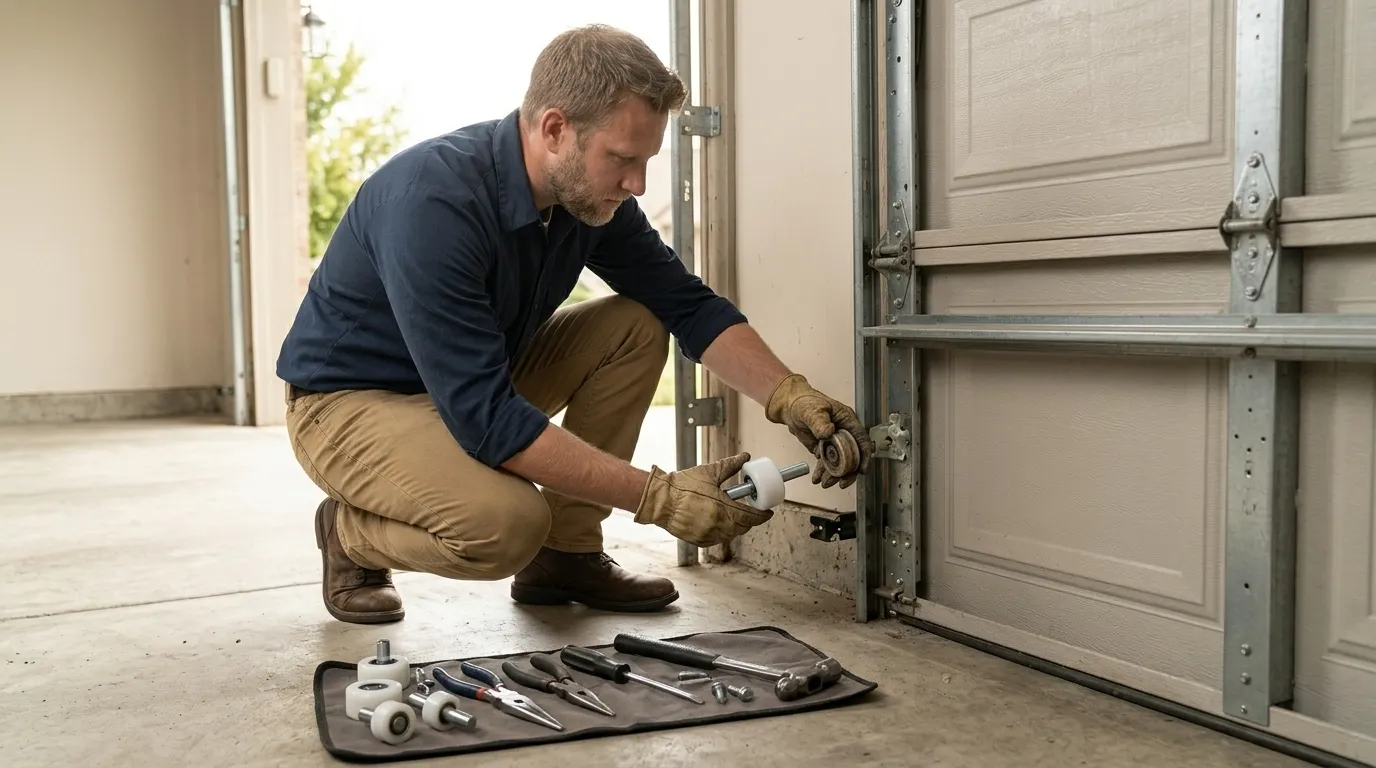
For a maintenance visit on housing stock this age, the truck carries torsion springs sized for older door weights, replacement rollers (steel and nylon), lift cables, and hinge sets that match the drilled patterns common on doors from the 1950s and 60s - because a lot of these panels weren't built to today's standard hole spacing. We also carry track brackets and lag hardware sized for the older lumber typically found in framing from that era, since original studs and headers have shrunk over the decades and standard fasteners don't always seat right. What we don't stock on the truck is anything specific to a brand of door that's been out of production for that long - if a panel itself needs replacing rather than the hardware around it, that's sometimes a special-order part, and we'll tell you that up front rather than have you wait on a truck that doesn't have it.