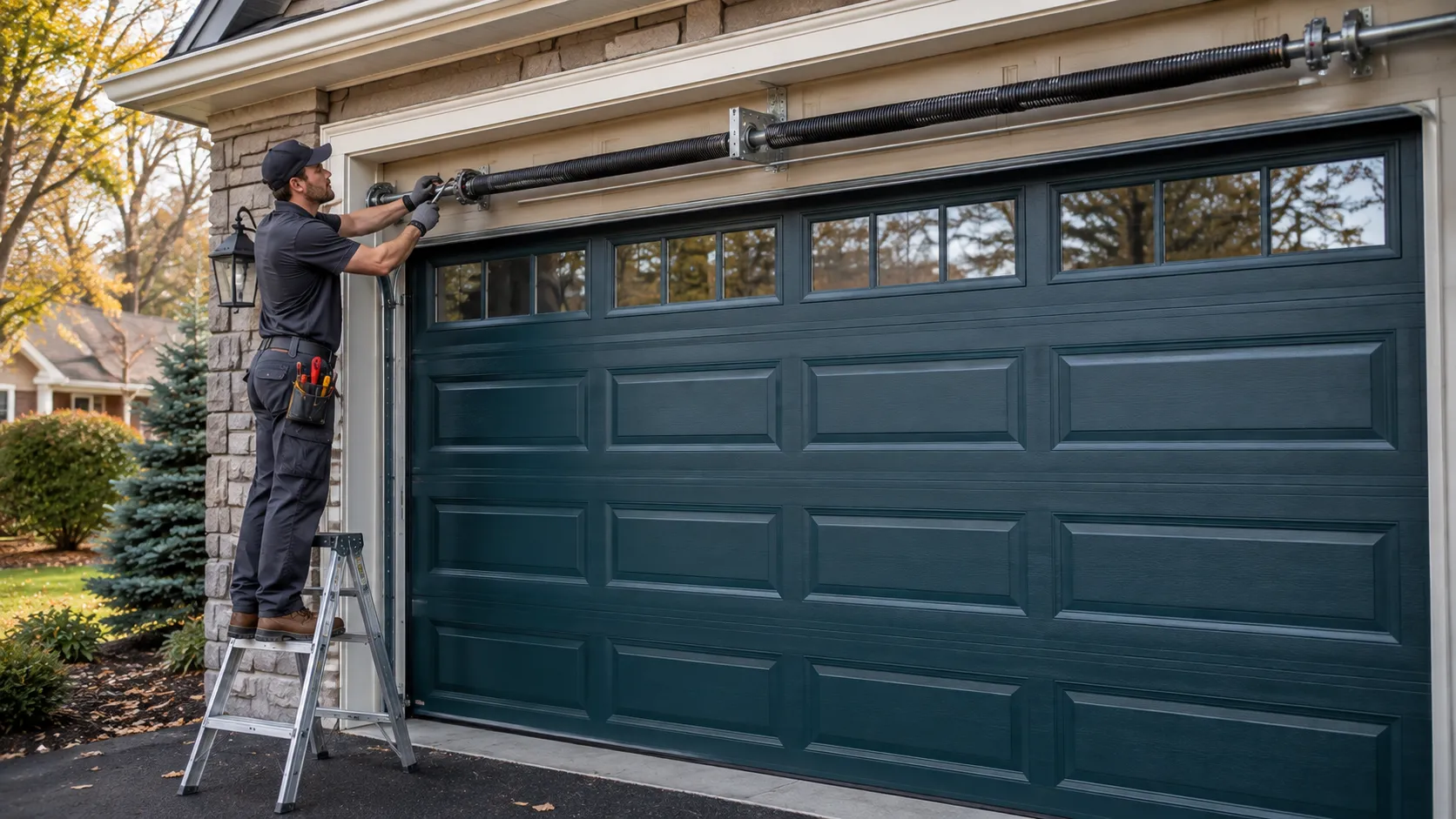
Where This Job Goes Sideways
Median household income in Garfield Heights sits at $52,006, well under the $95,313 median across the wider service area we cover from Parma. That number matters more than any other on this page, because it decides where the repair-or-replace line falls. A homeowner here weighing a $300 spring job against a $1,400 full replacement is making a very different call than someone in a higher-income suburb, and most of the time the math points to fixing what's there rather than starting over.
That math only works because the doors in Garfield Heights are, in most cases, worth fixing. Houses here run older than the area average - median year built is 1955, a full eleven years ahead of the 1966 median across the 67 named areas we serve. Older doors mean older tracks and older spring setups, but it also means simpler mechanisms with fewer proprietary parts. We're not chasing a manufacturer's discontinued opener board from 2004; we're dealing with hardware that's been standard long enough that most of it is still stocked.
We run this job out of Parma, about 7 miles away. That's a short drive, not a same-metro coincidence - it's close enough that a mid-morning call can get looked at the same day, without adding a trip charge that eats into a repair that's already sized for a tighter household budget.
Why It Happens Here
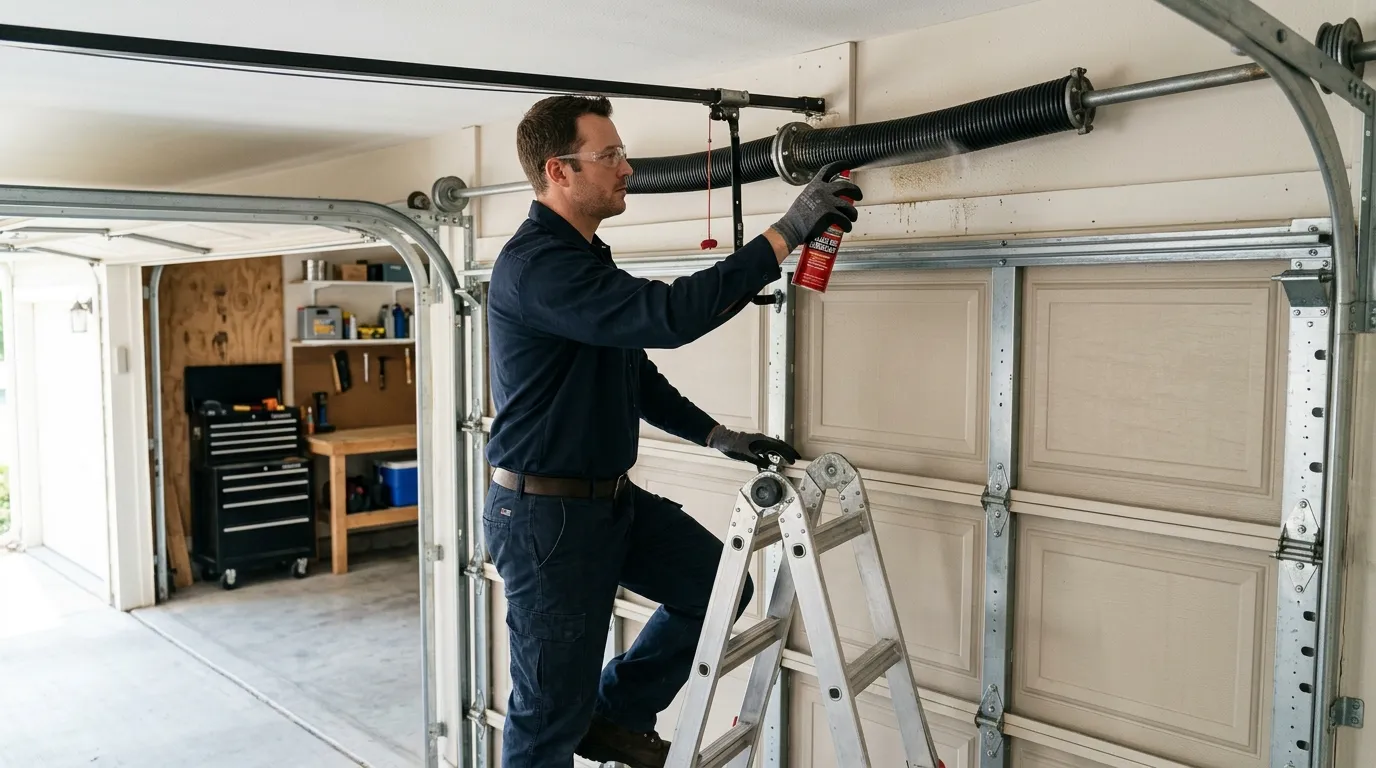
A 1955-built garage in this part of Ohio has usually seen one of two things: the original door and hardware, patched piecemeal for seventy years, or a full swap sometime in the 80s or 90s onto a frame that was never squared up for a modern door. Either way, the failure points are predictable. Torsion springs on these older setups tend to be undersized for anything but the original lightweight wood door - if a previous owner swapped in a heavier steel door without upsizing the spring, that spring is working harder than it was built for every single cycle.
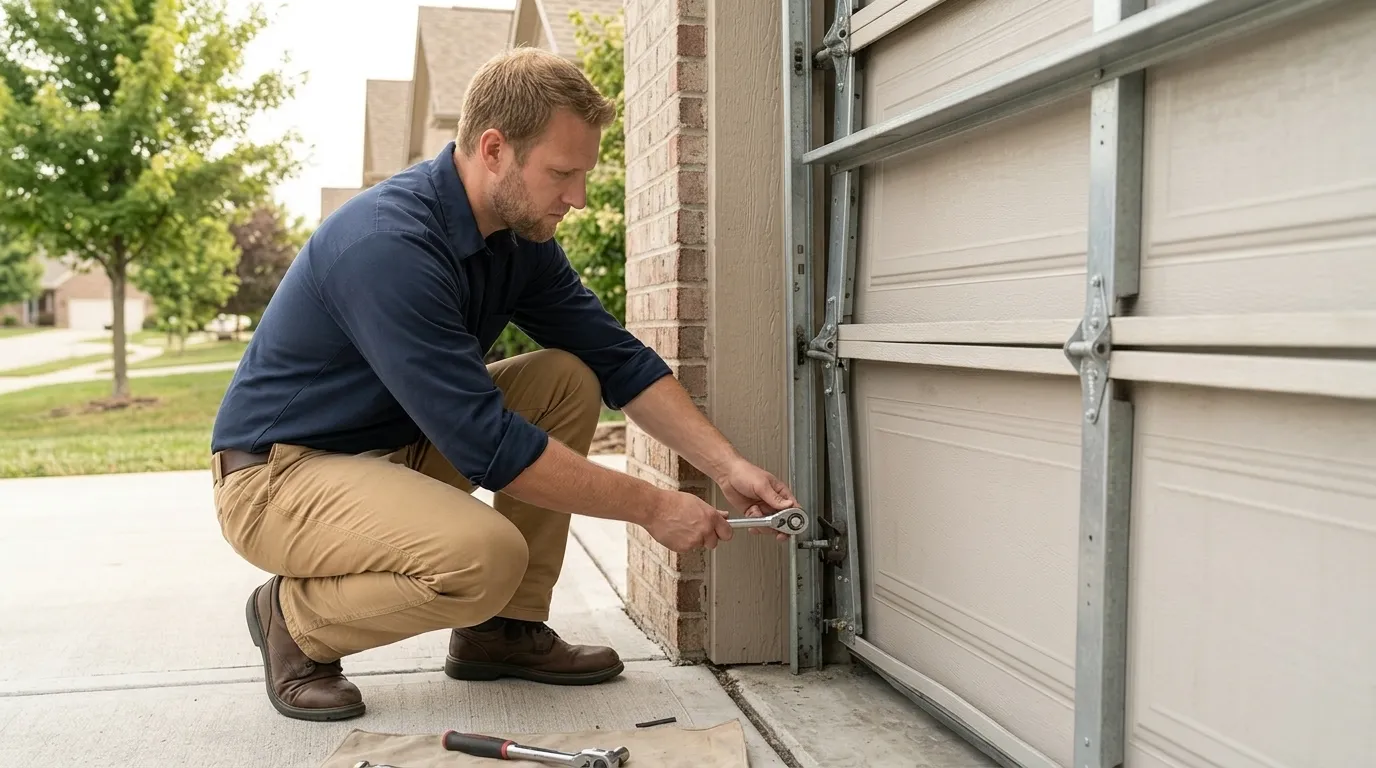
Winters here are the other half of the story. This region sits in a cold-climate band with severe seasonal swings, and steel contracts hard in a below-freezing garage. Cables that were fine in August go stiff and brittle by January, and a rusted roller that was just noisy in fall can seize a track completely once the cold sets in. We see more calls tied to hardware fatigue than to any single dramatic failure - it's usually the slow kind of wear that finally gives out on the coldest week of the year, not a sudden break out of nowhere.
What Is on the Truck
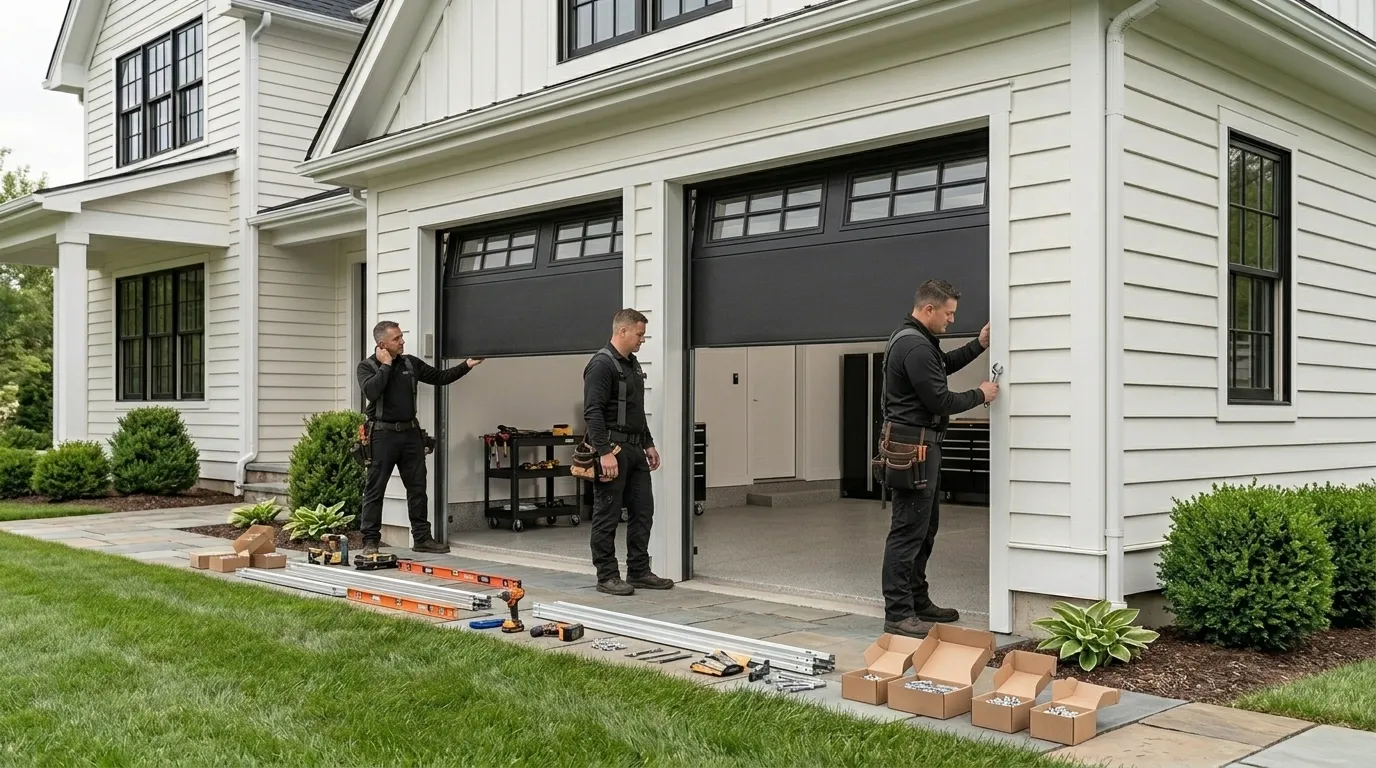
For a house this age, the truck carries standard torsion springs in the common wire gauges used on residential doors from that build era, replacement rollers (steel and nylon), galvanized lift cables, and the brackets and hinges that tend to rust through first in a cold-climate garage. We stock the parts that fit a mid-century door and its later hardware swaps, not the sensor boards and belt-drive parts that only show up on doors installed in the last decade or two.
The honest limitation: if your door was replaced recently with a newer opener or a specialty panel, we may not have that exact part on the truck the same day. Some opener boards and custom panel sizes are special-order and take a few days to land. On the older hardware that's typical of Garfield Heights houses, though, we can usually diagnose and finish the repair in one visit, because that's the stock we plan around.