How It Shows Up
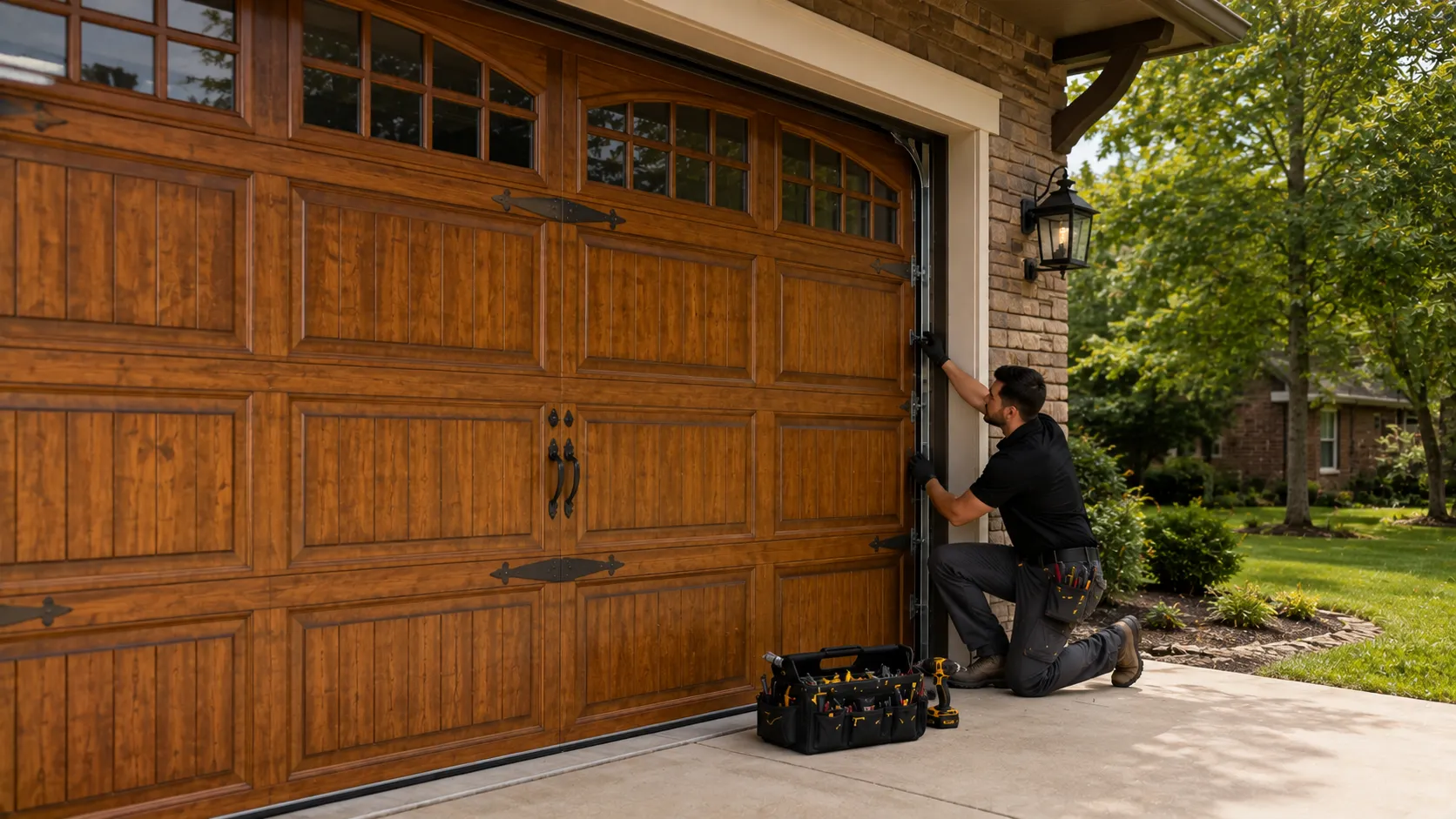
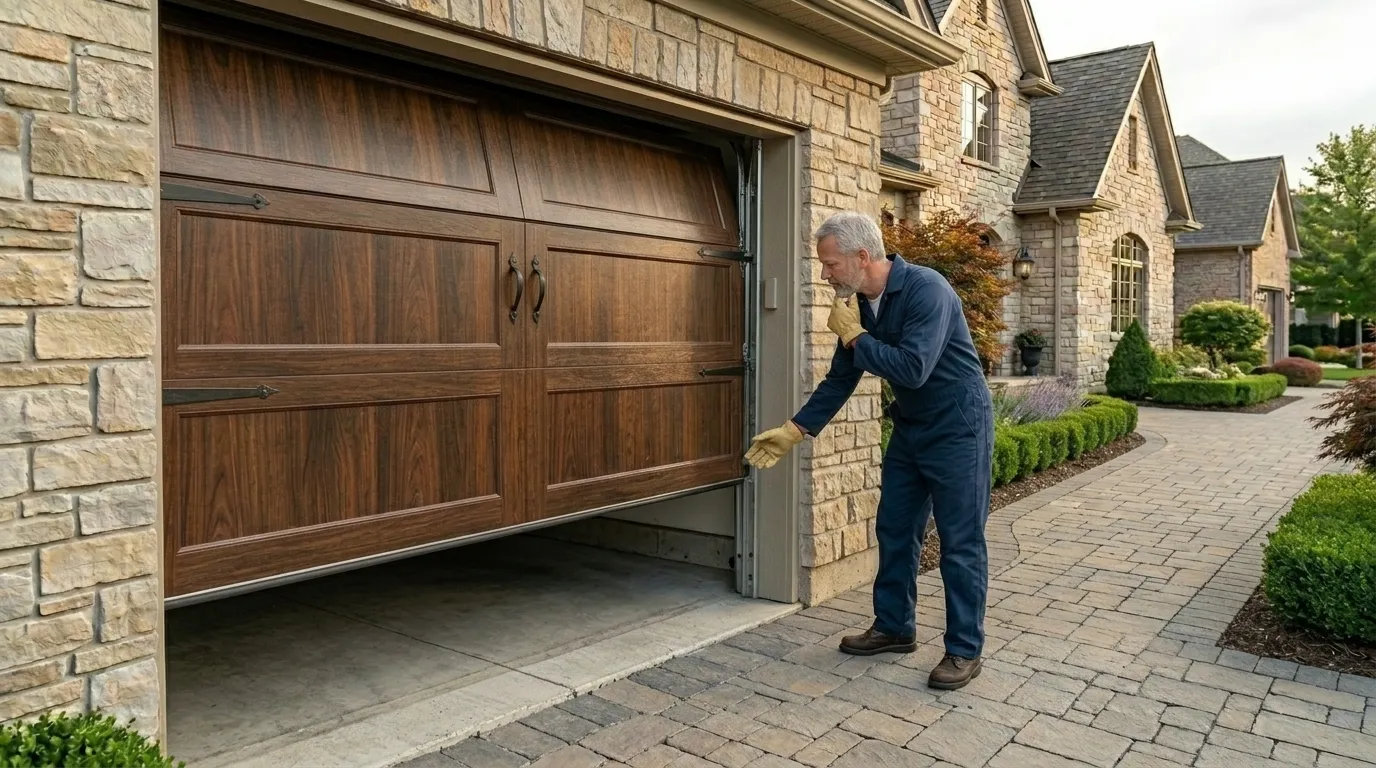
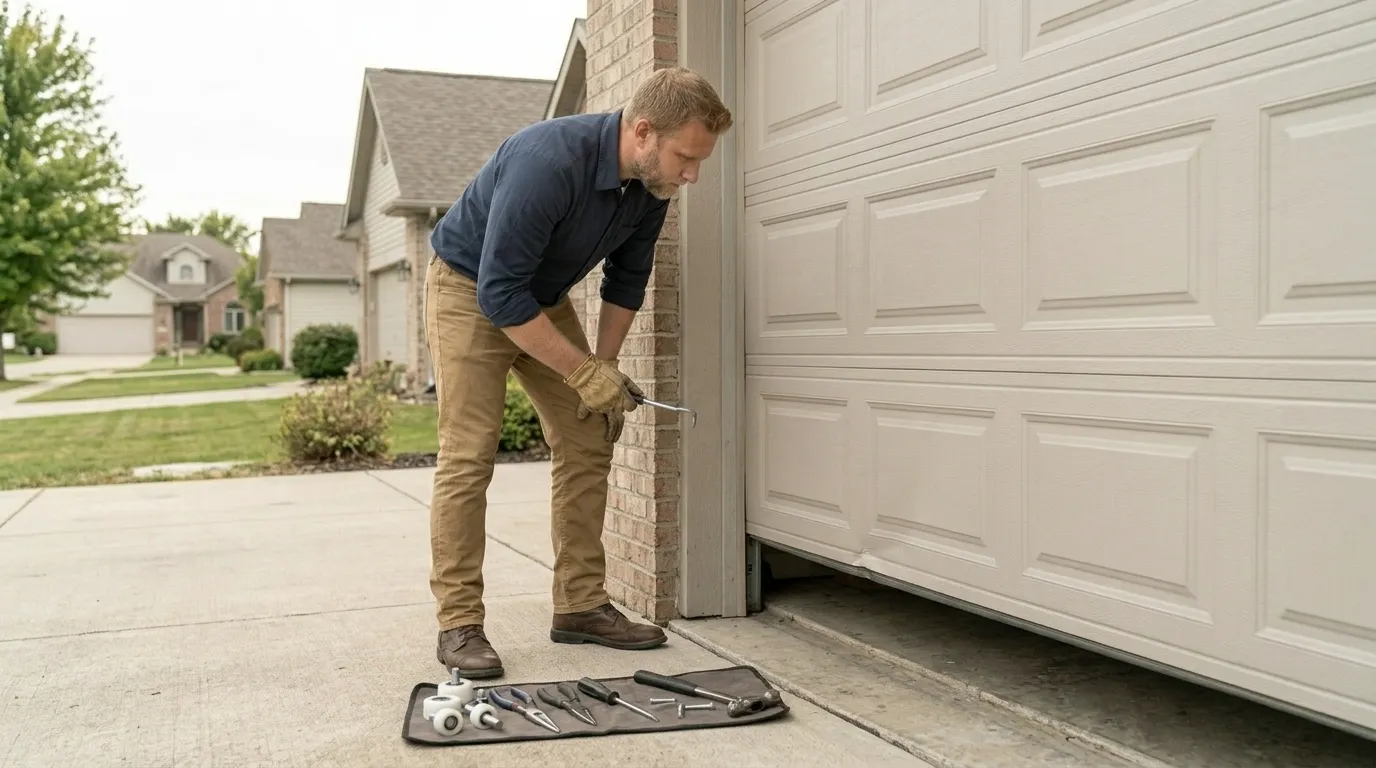
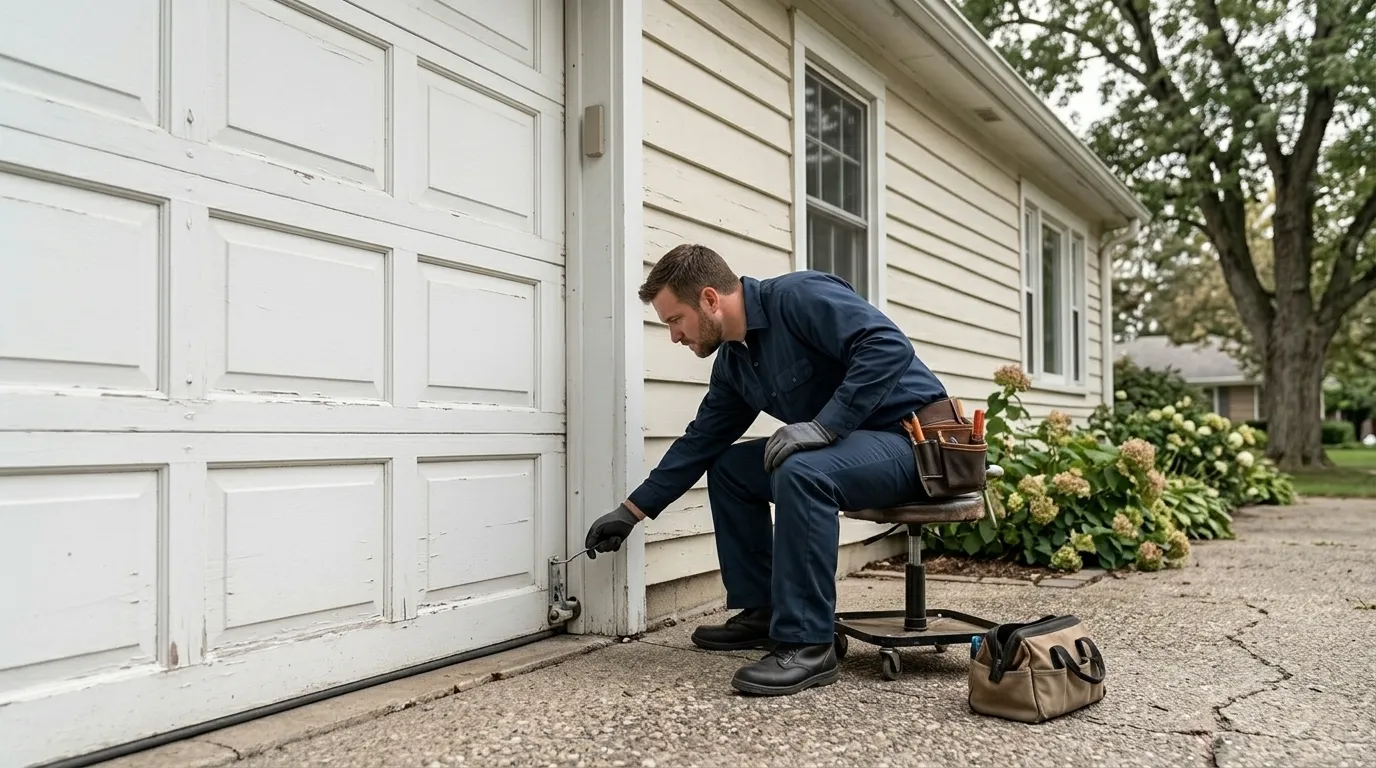
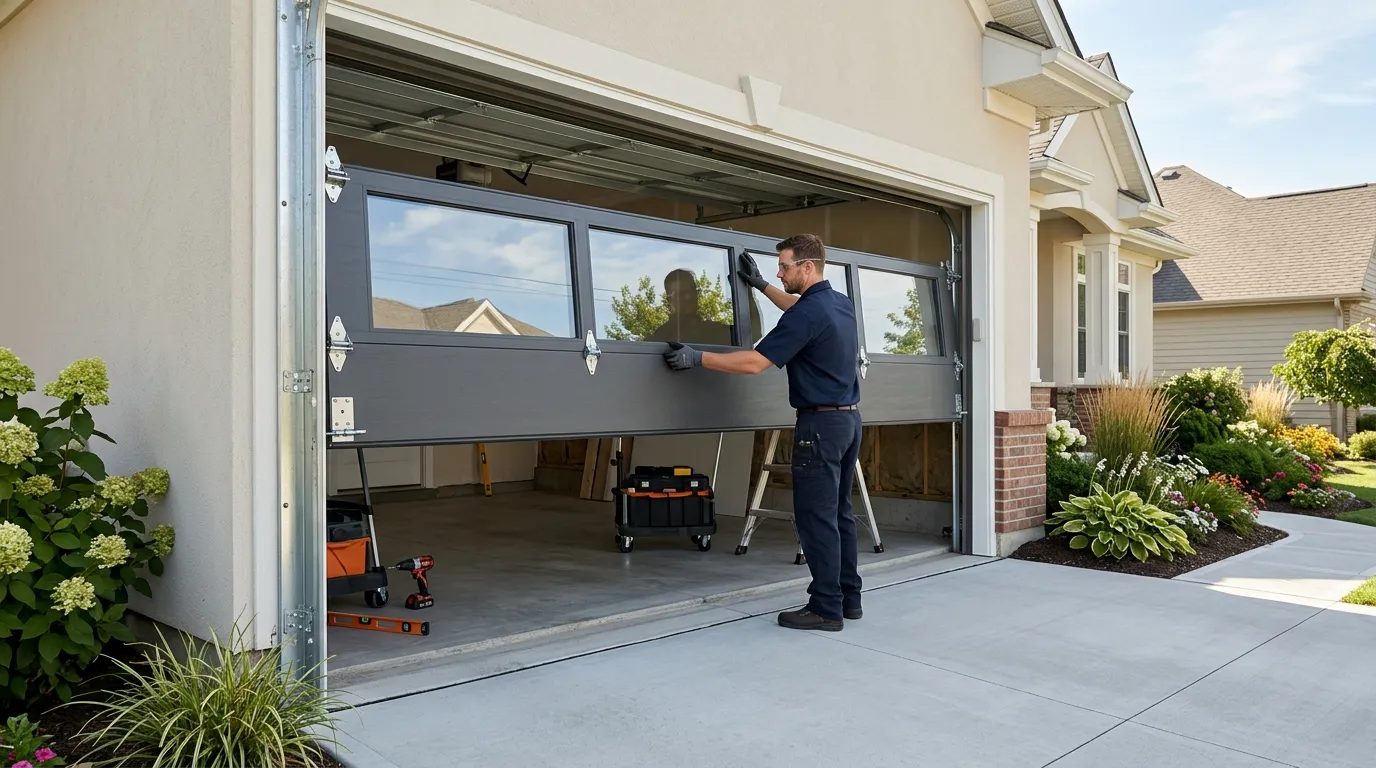
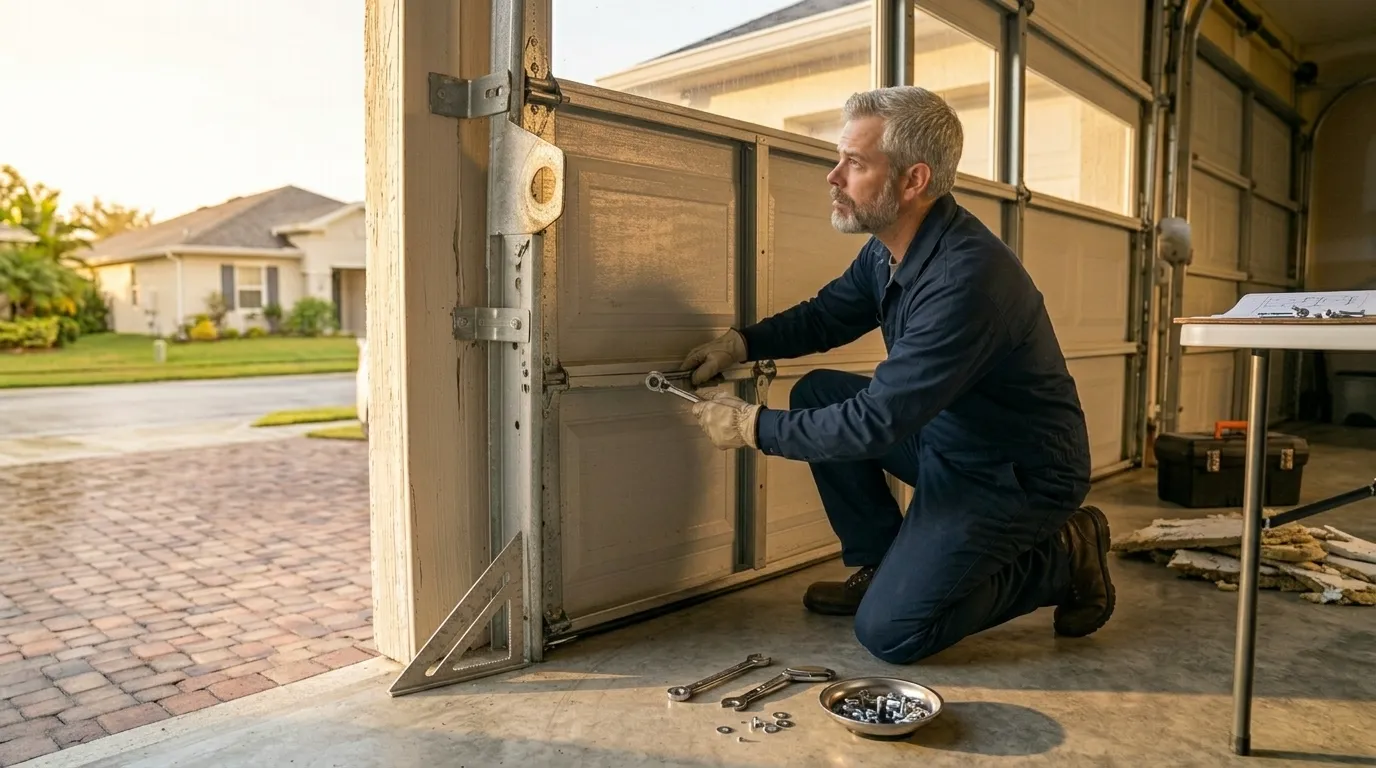
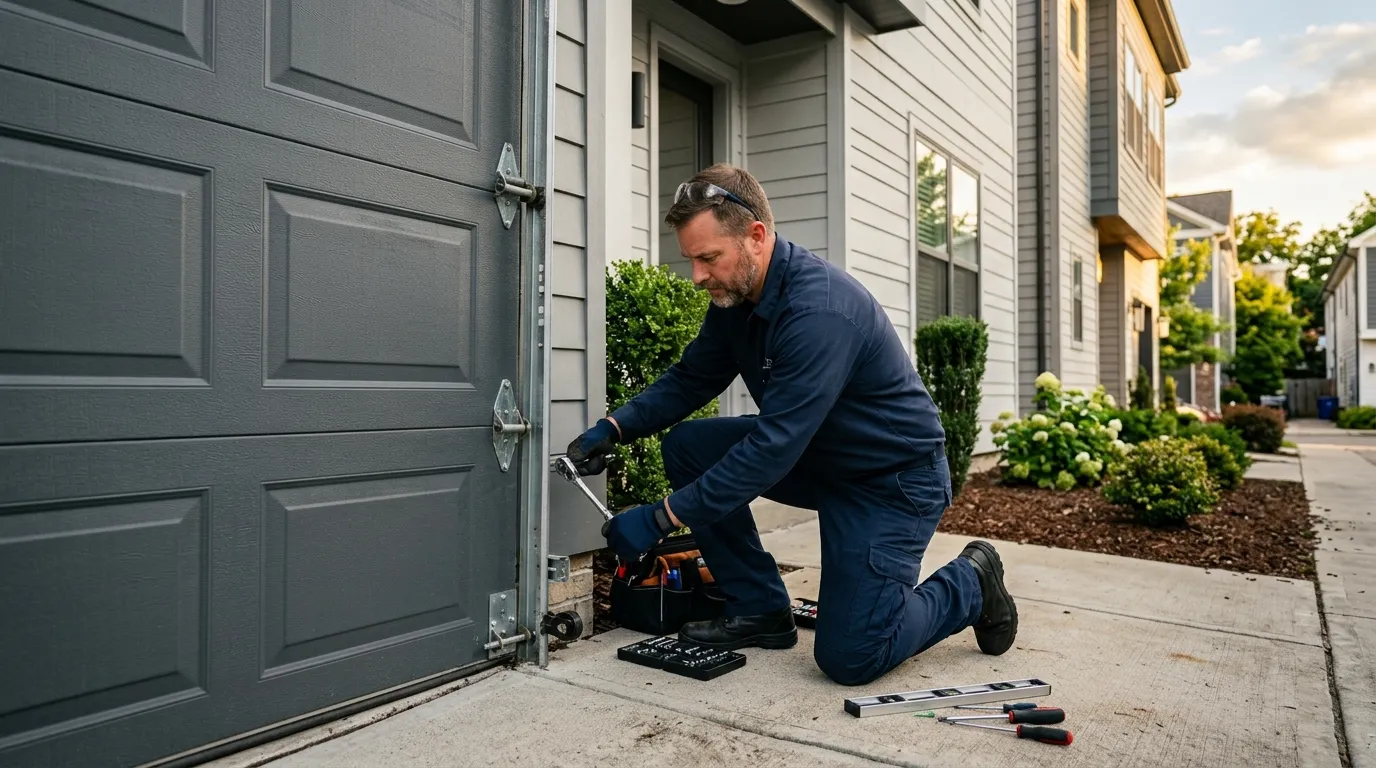
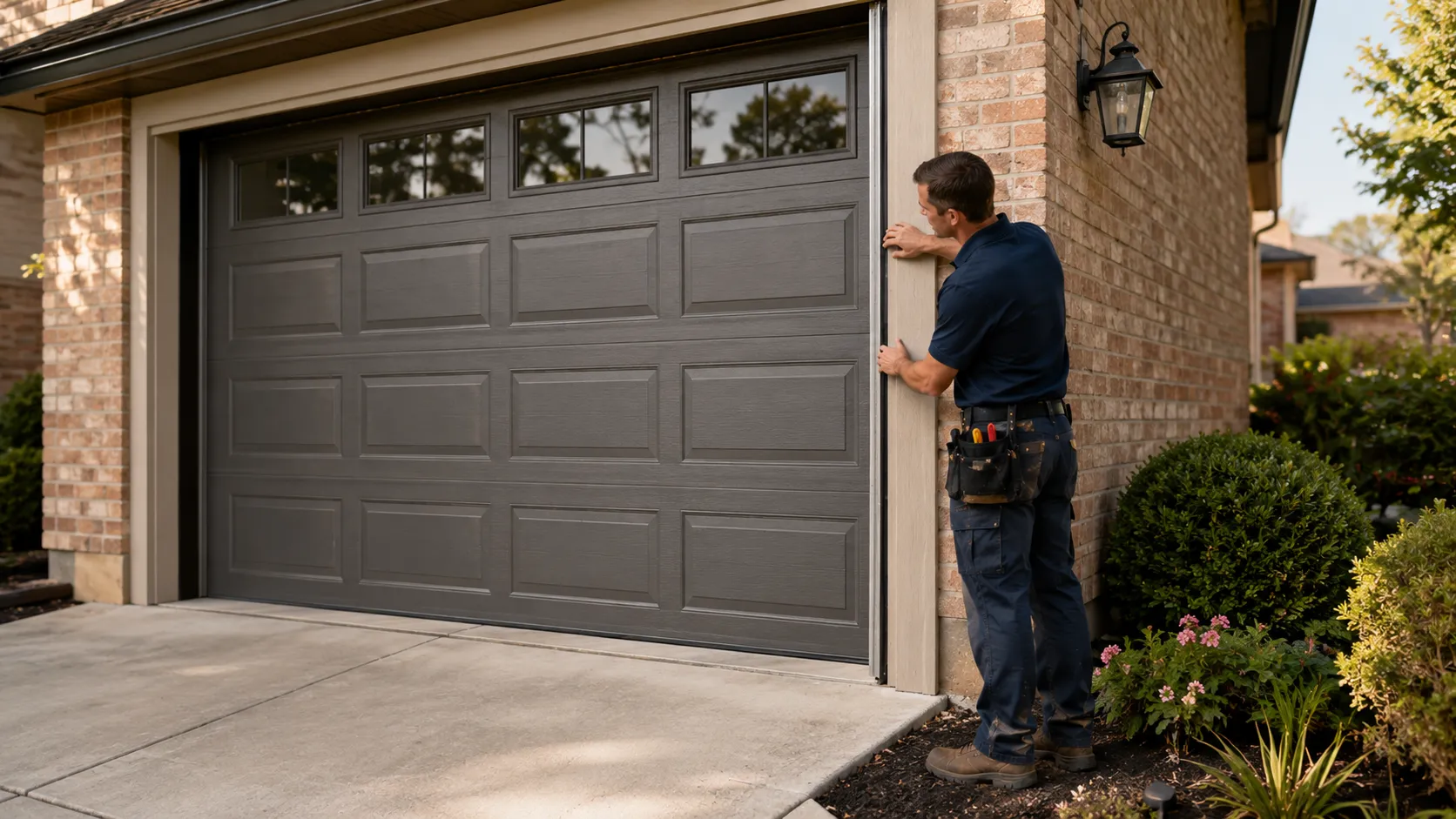
The call usually starts the same way: the door still opens, but it's heavy, drafty, or the panels are dented enough that a new opener won't help. In Brook Park that's less about age of the opener and more about the door itself. With a median build year of 1961 for houses in this area, a lot of garages were framed for a single-layer door - steel or wood, no insulation, narrow track, and an opening sized to a standard that predates the wider doubles builders use now. When we measure for a replacement here, we're often working around a header height or a side-room gap that a modern insulated door and its heavier torsion spring weren't designed for. That's the actual fault: not that the door failed, but that the opening was never built for the door people want to put in it now. You find out fast when the new unit doesn't sit flush, or the track clears the framing by half an inch instead of the two it needs. Fixing that right means shimming the jamb or adjusting the track mount before the door ever gets set, not after.
The Cost of This Job
We don't have a published price list to quote you here, so I won't invent one. What I can tell you is what drives the number up or down on a house like the ones common in Brook Park: a straight swap into an opening built for a door the same size costs less than a job where the header has to be reframed to fit a taller insulated panel. With median household income in Brook Park at $67,178, most jobs we see here land toward the practical end - a well-built steel door with foam core, not the top-tier glass-paneled custom units. That's not a compromise, it's the right door for a garage built in 1961 with standard clearance. If your opening needs structural work before a new door goes in, that's a separate conversation, and we'll tell you plainly if it's worth doing versus if you're better served patching what's there another year or two.
Doing It Yourself
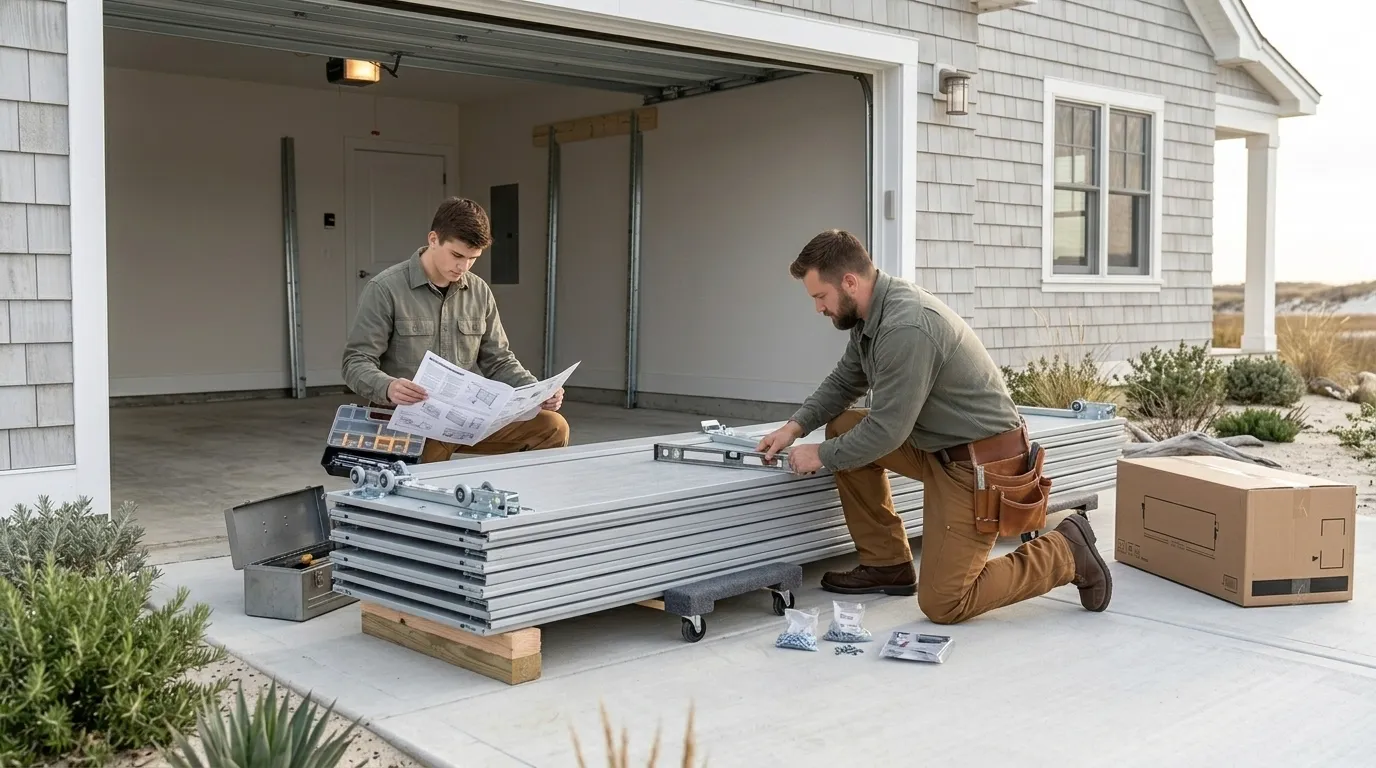
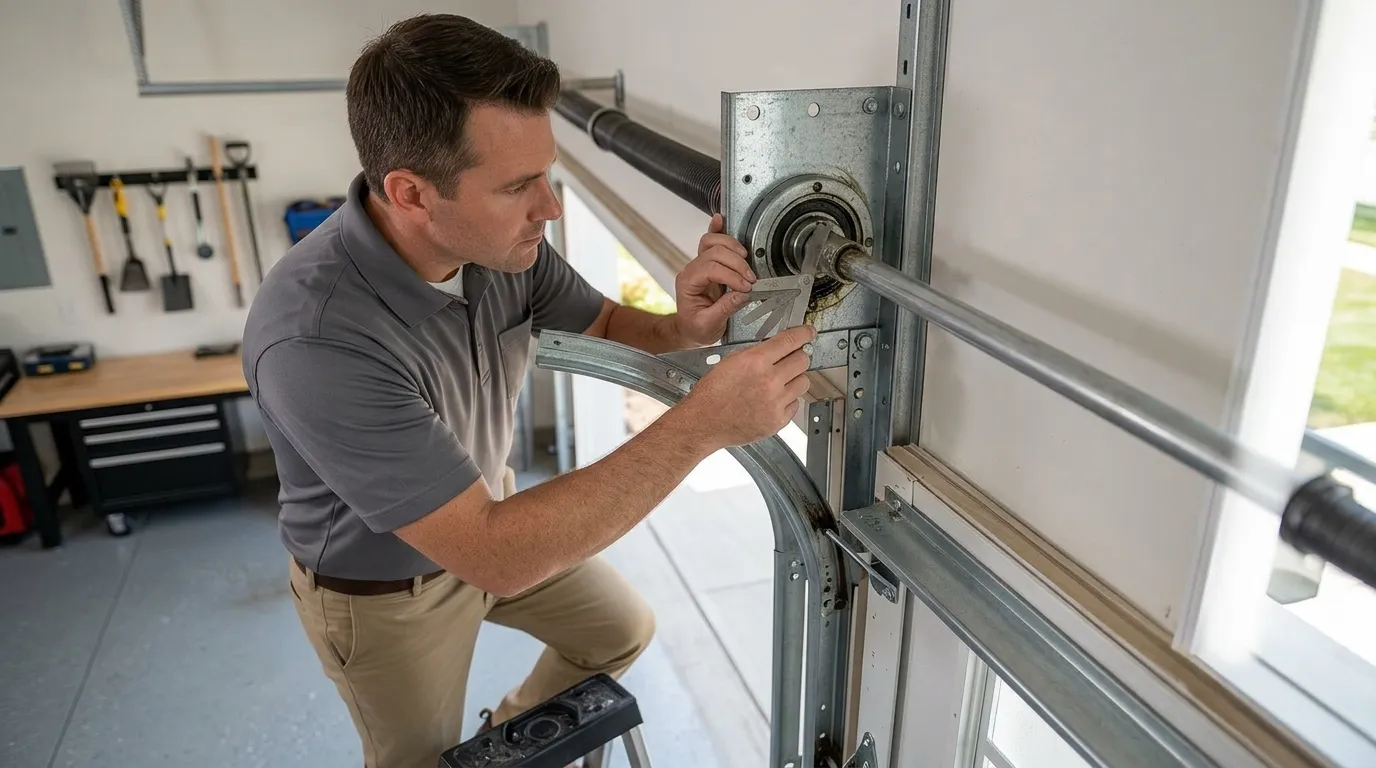
Swapping a garage door yourself isn't unreasonable if the opening is standard and you're comfortable with a torsion spring under load - but that second part is where people get hurt, and it's the reason I'd rather talk you through it than have you learn it live. On a house built in this era, the bigger risk is that the header or jamb isn't square anymore after sixty-plus years of settling, and a DIY install that doesn't catch that ends up with a door that binds on one side. If you're set on doing it yourself, at minimum get someone to check headroom and backroom clearance against the new door's spec sheet before you order, and don't touch the spring cable under tension without the right bars. This isn't a job where a small mistake is just cosmetic.
Why It Happens Here
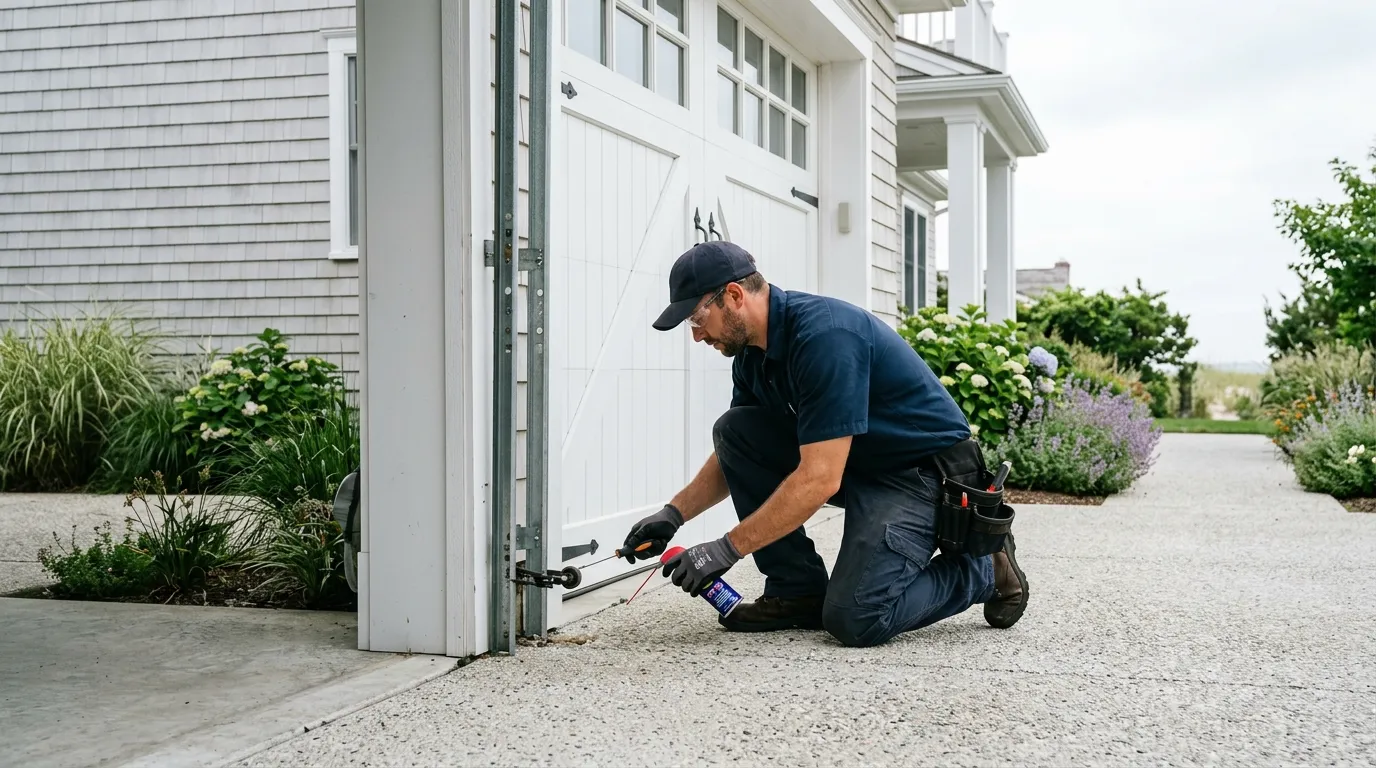
Brook Park sits about 5 miles from our shop in Parma, and the building pattern is consistent enough that we can usually guess the door problem before we see the house: 1961 median construction, roughly 7,991 households in the area, and a winter that falls in the severe end of the cold climate band this whole region shares. That combination matters for doors specifically because a garage built for a lightweight, uninsulated panel in the early 1960s wasn't engineered for the thermal cycling that comes with a Northeast Ohio winter pushing a heavier insulated door open and shut for twenty-plus years. Seals dry out, tracks contract, and steel doors without a thermal break sweat and rust from the inside. None of that is unique to one street - it's the whole housing generation in this part of the service area, which is also why the fix (right-sized insulated door, correctly tensioned spring, sealed track) tends to be the same fix, house after house.