How It Shows Up
Brook Park's median household income sits at $67,178, well under the $95,313 median across the rest of the area we cover. That gap matters before you even open the garage - it decides whether a $300 spring job or a $1,400 door replacement is the right call for a given house. On a fixed budget, a repair that buys another eight to ten years out of hardware built in 1961 usually beats a full swap, provided the track and opener bracket are still square.
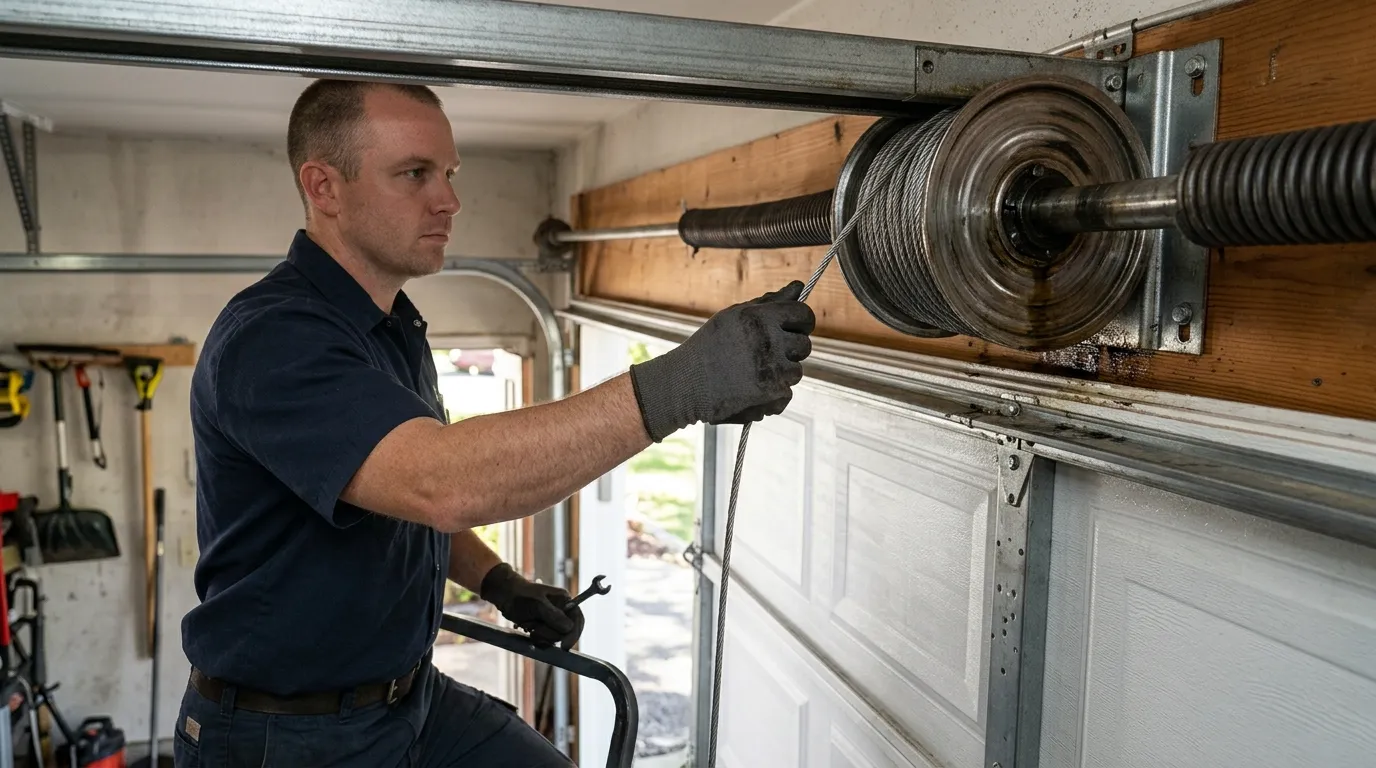
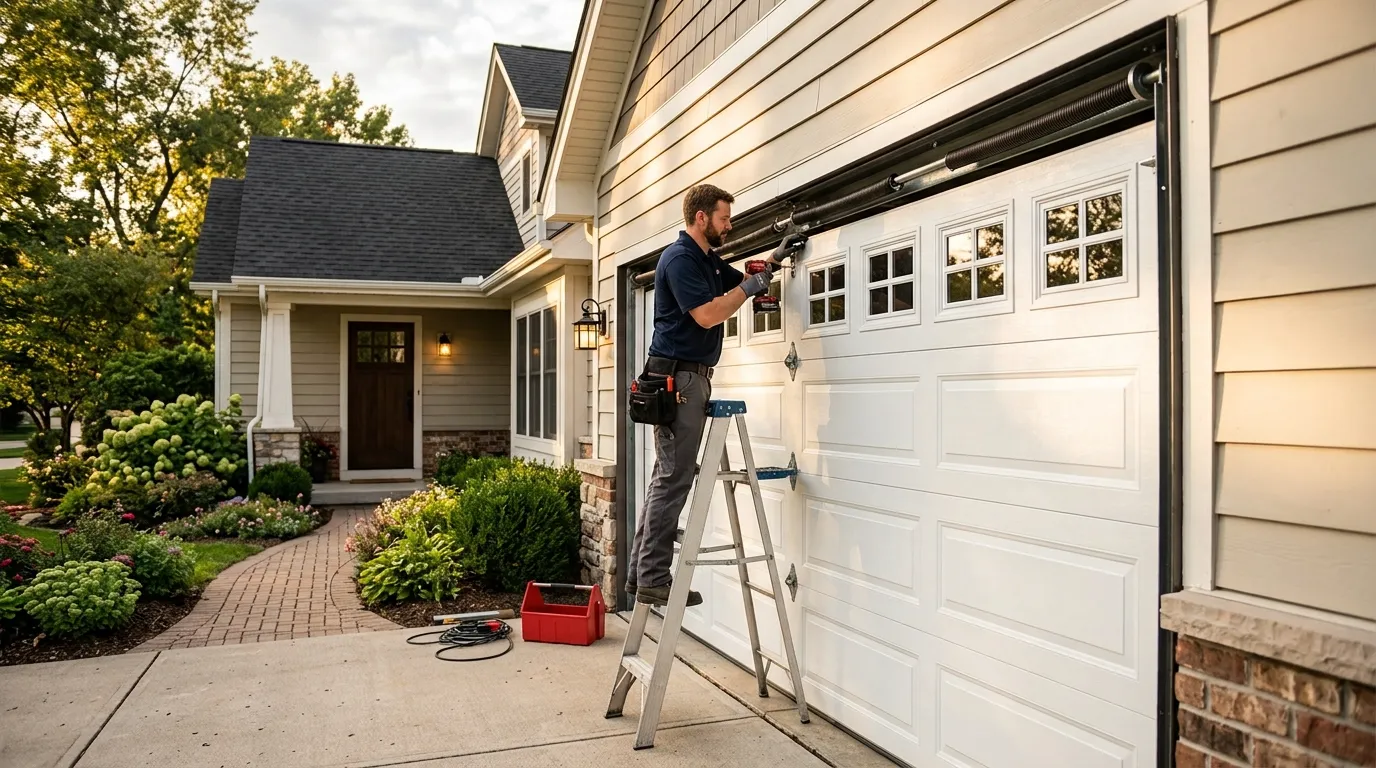
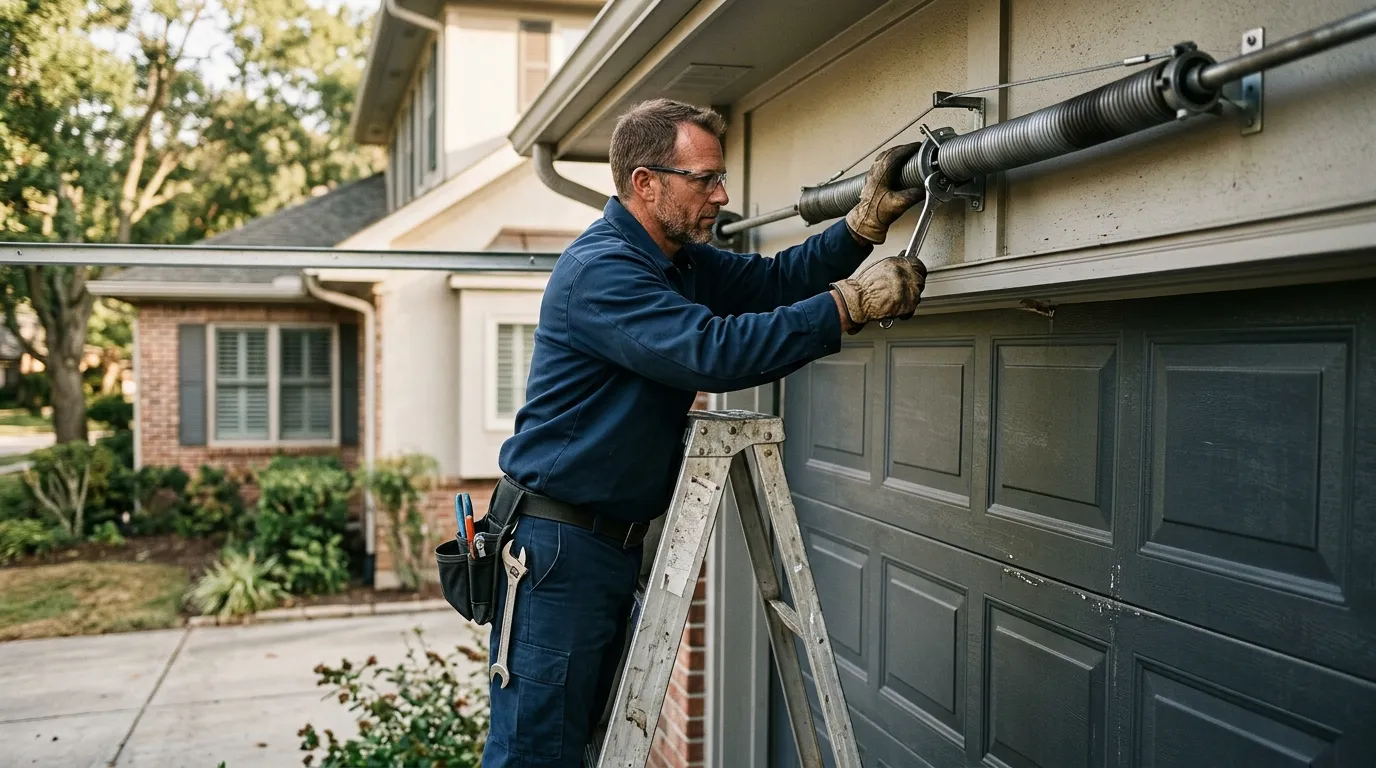
The failures we see out here track the housing stock. Brook Park's homes went up around a median year of 1961, which puts a lot of original torsion springs and early steel-panel doors past their expected life by a wide margin. A spring rated for 10,000 cycles doesn't care what year it is once it hits that number - and a lot of these houses hit it a decade ago. The common call is a door that slams down the last foot of travel, or won't lift past waist height without help. Both point to a spring that's given out, not an opener that's failing.
The Cost of This Job
We don't quote a flat number here because the job depends on what's actually installed, and Brook Park has a narrower range of ages than some of the towns we cover - most of what we open is 1960s-era hardware, not a mix of decades. That narrows the guesswork some, but it doesn't remove it.
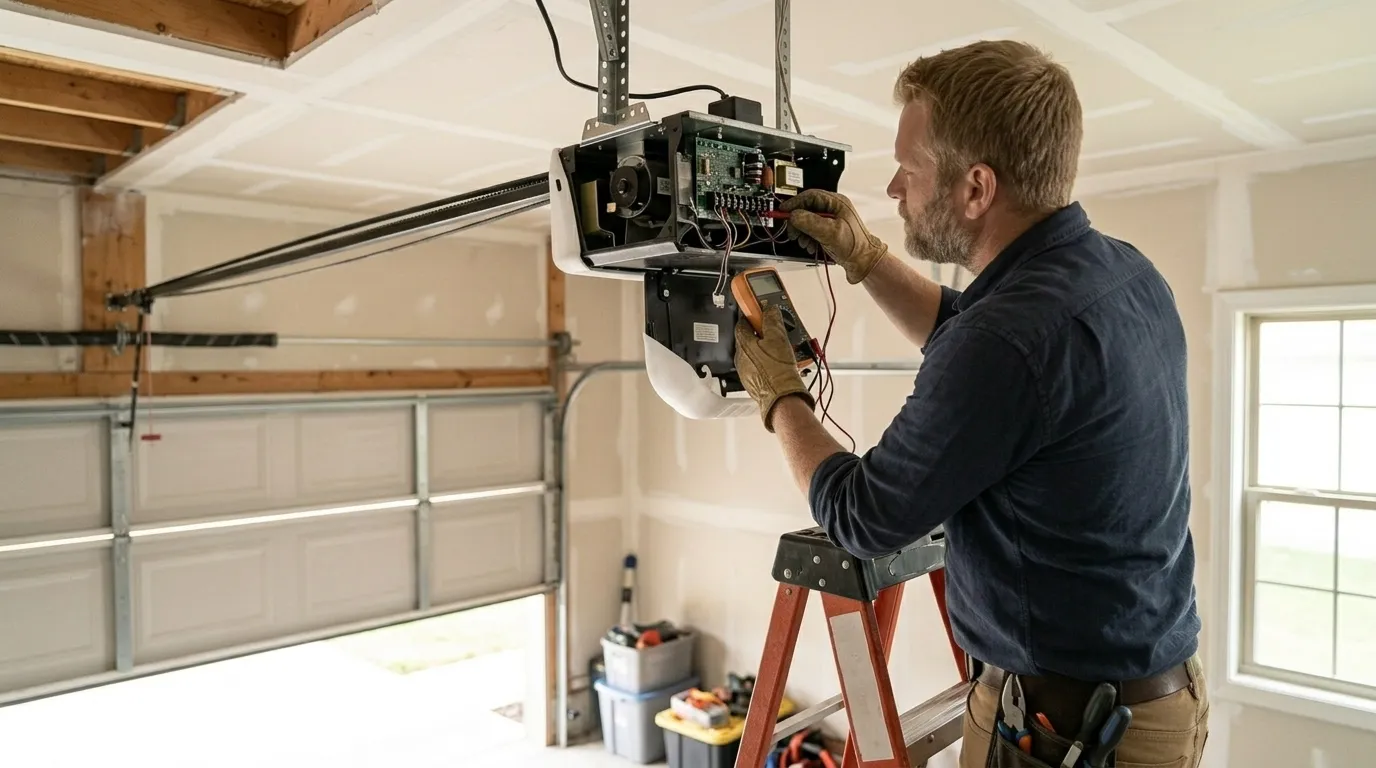
What we can tell you is how to think about the repair-versus-replace line at this income level. A torsion spring swap on a standard door is a repair. A cracked wood panel on a door that's otherwise sound is a repair. A door where the track is bent, the opener is dead, and the panels are delaminating is three problems wearing one skin - and at that point, spending repair money on a door that's going to need the next thing fixed in six months is money that would go further toward a new door. We'll tell you straight which side of that line your door is on before we start work, not after.
Doing It Yourself
A torsion spring holds enough stored force to break a wrist or worse if it's released wrong, and that's true whether the door was installed in 1961 or last year. We don't recommend touching a spring, cable, or drum yourself, full stop.
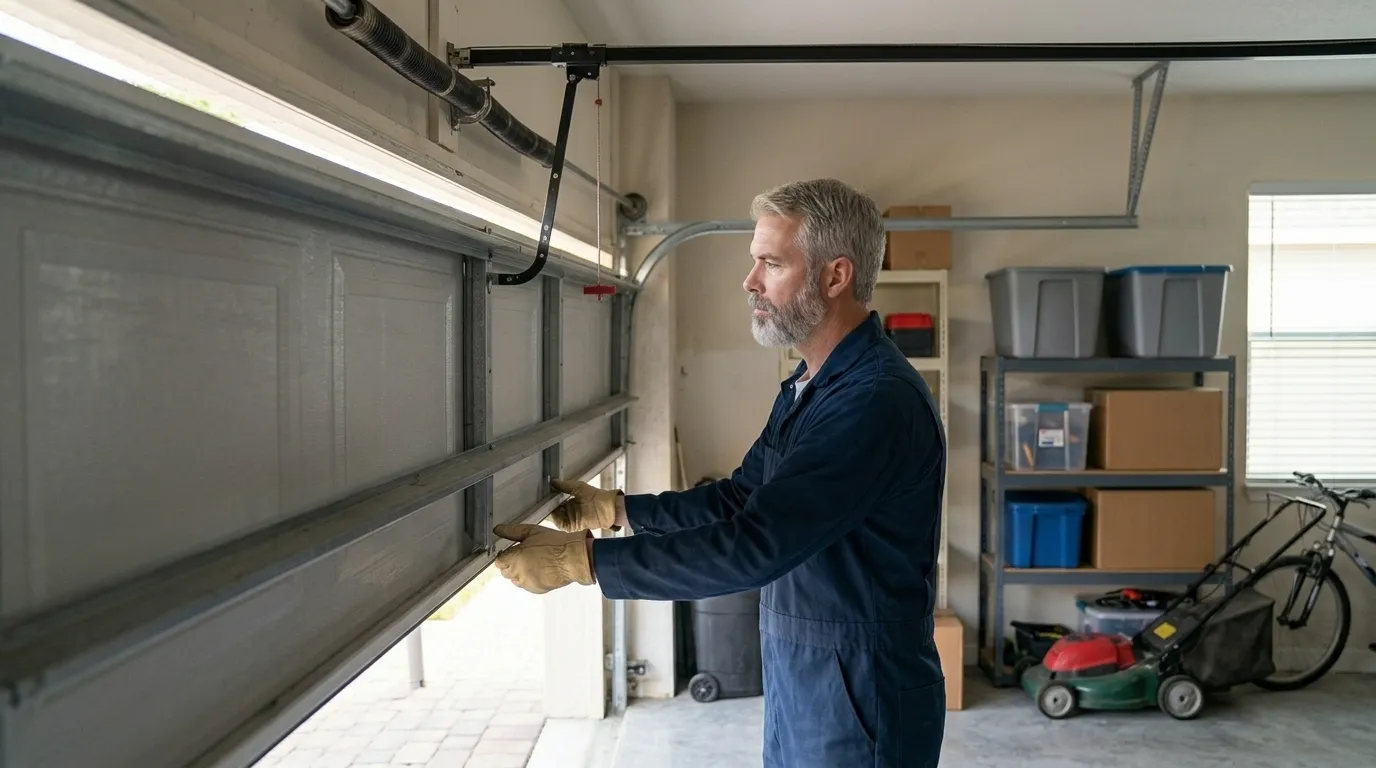
What you can safely check: whether the track is visibly bent, whether the rollers are cracked or missing, and whether the door is balanced - disconnect the opener, lift the door by hand halfway, and see if it holds position or drops. If it drops, the spring is going or gone. That's a useful thing to know before you call, because it tells you which of the two jobs above you're likely looking at.
Why It Happens Here
Brook Park sits about 5 miles from our shop in Parma, and the climate that hits both towns is the same cold-severe band that runs across this whole part of the region. Winter cold makes steel springs more brittle and lubricant thicker, which is part of why spring failures cluster in the coldest months regardless of a door's age - but on a door that's already 60-plus years past its build date, that seasonal stress finds the weak point faster.
The other factor is simple wear math. A house built around 1961 has had roughly six decades of daily door cycles. Original hardware on a door that age isn't a maintenance problem, it's a hardware age problem, and no amount of lubricant fixes a spring that's outlived its rated cycle count.