How It Shows Up
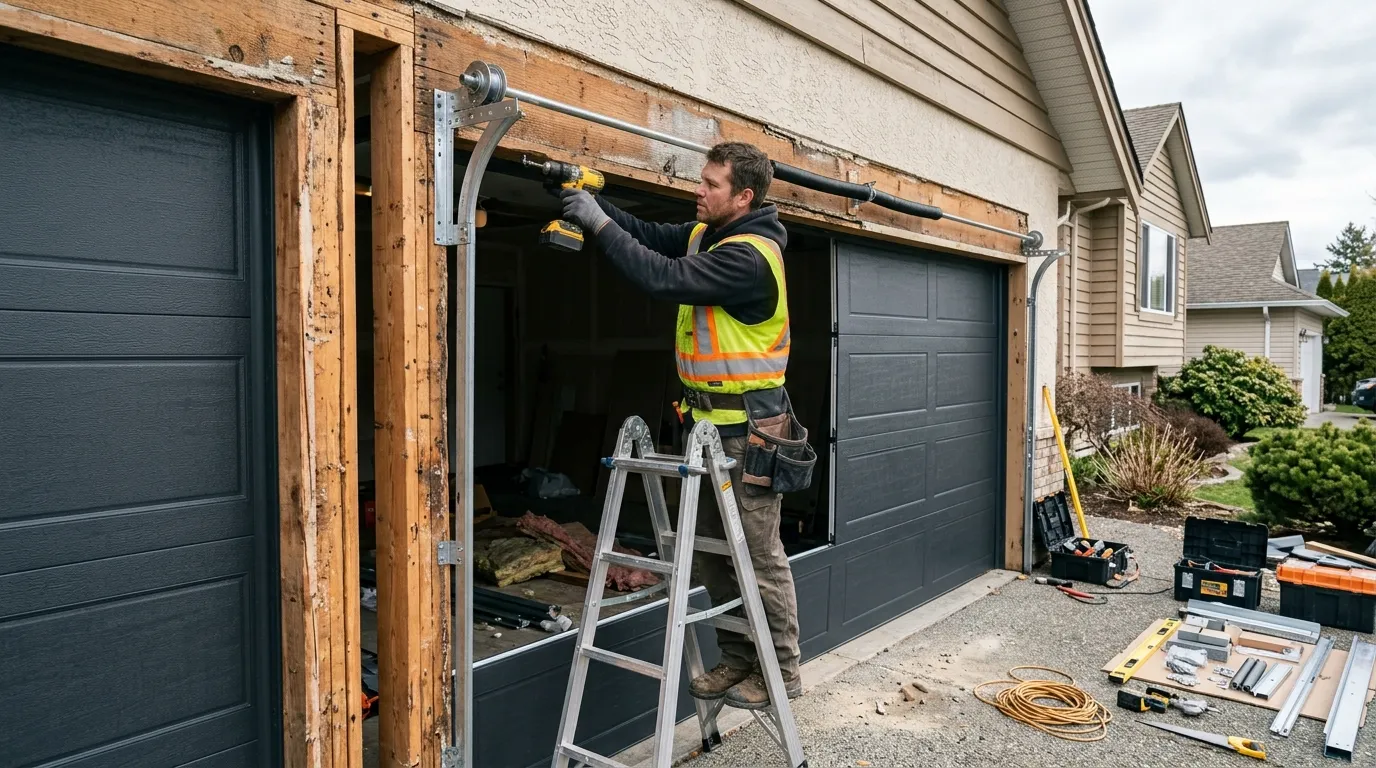
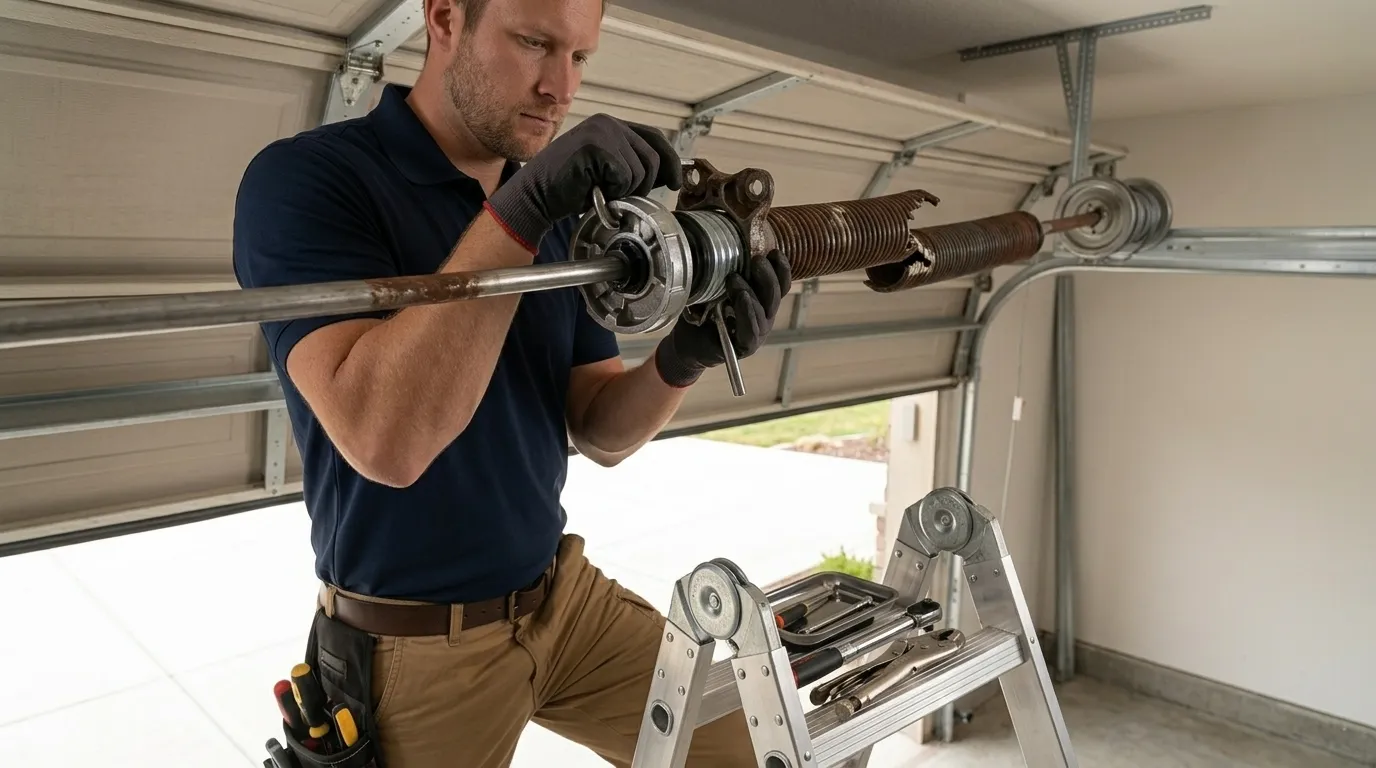
Brook Park's housing stock has a median build year of 1961, a few years ahead of the 1966 median across the rest of the service area. That gap matters more than it sounds. A door hung in 1961 and never touched since is carrying original hinges, original end bearings, and often the original torsion spring - all of it now past 60 years old. On a lot of these houses, nobody has ever swapped the hardware, because nothing failed loudly enough to force it.
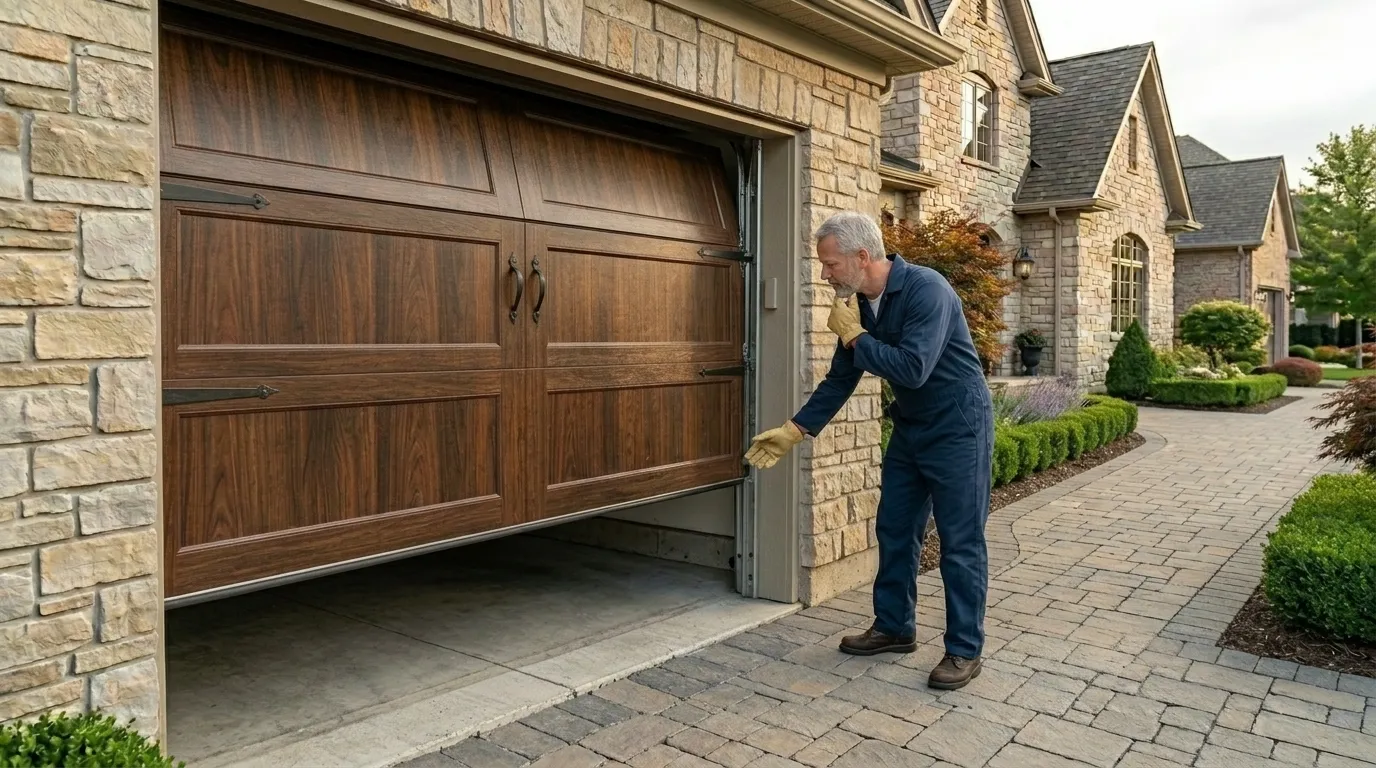
What you actually see is quieter than failure: a door that used to lift with one smooth pull now catching partway up, a spring that groans instead of turning silently, rollers that have worn oval instead of round. None of it stops the door outright. It just makes the opener work harder every single cycle, which is usually the point where the opener - not the door - gets blamed and replaced first.
With 7,991 households in Brook Park, a fair number of them are working with the same era of hardware, which means the same failure pattern shows up house after house on the same streets, just at slightly different points in its life.
The Cost of This Job
Brook Park's median household income sits at $67,178, noticeably below the $95,313 median across the broader service area of 409,611 households. That difference shapes how this job should be approached here: maintenance that catches wear before it becomes a broken spring or a bent track is the cheaper path by a wide margin, and it matters more in a budget that has less room to absorb a surprise repair bill.
We don't price this page - that's a conversation for your specific door - but the logic holds regardless of the number: a lubrication and adjustment visit costs less than a spring replacement, and a spring replacement costs less than a full door swap after the spring takes out a panel or a track on its way down. On original 1961-era hardware, deferring the smaller job usually just guarantees the bigger one.
Doing It Yourself
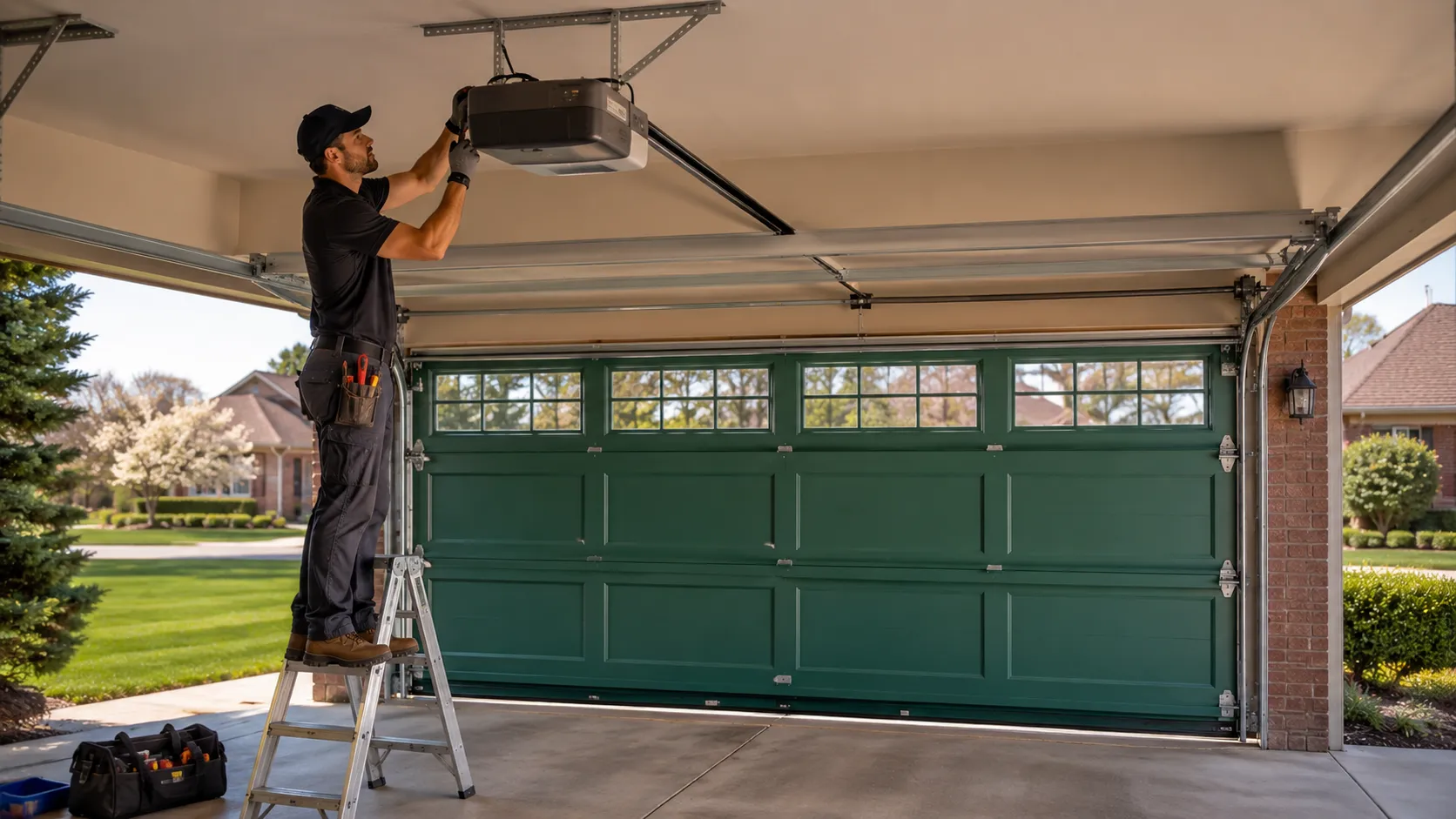
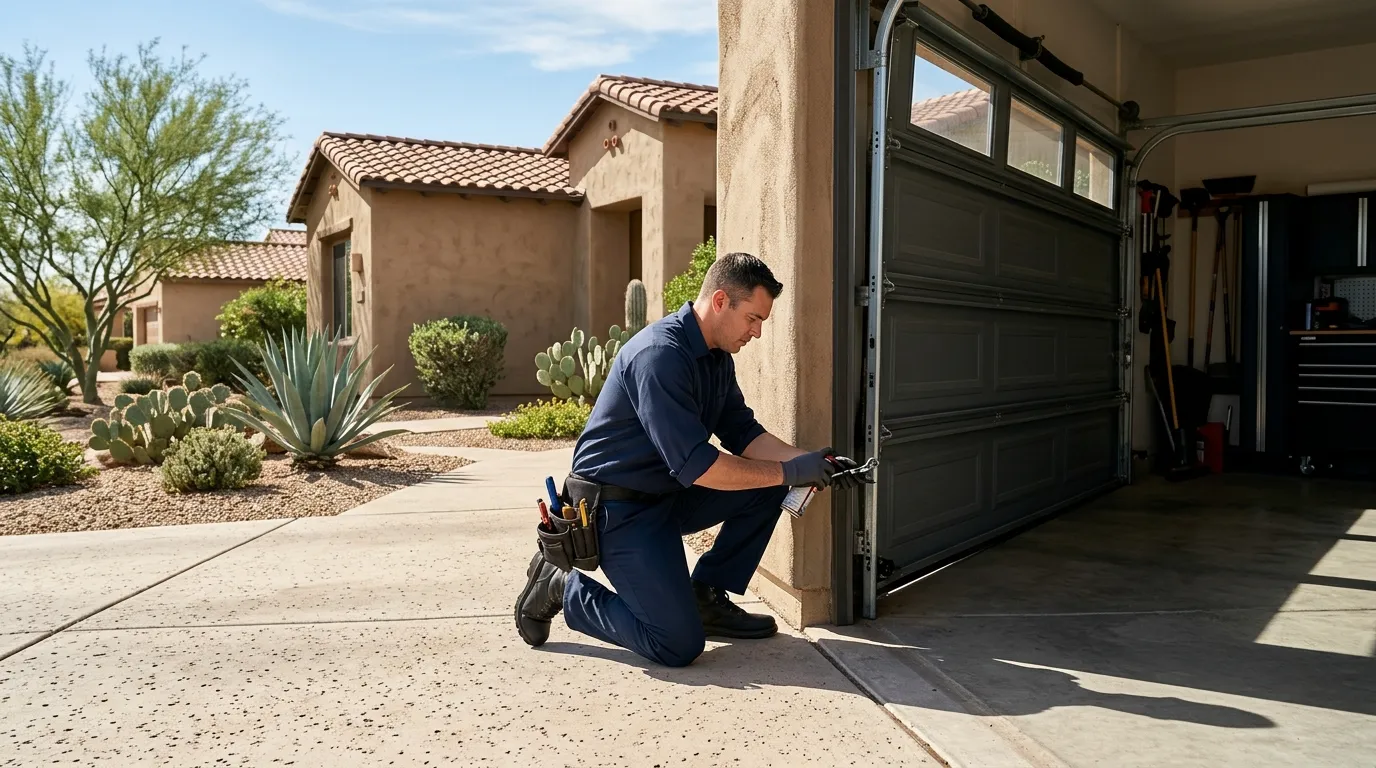
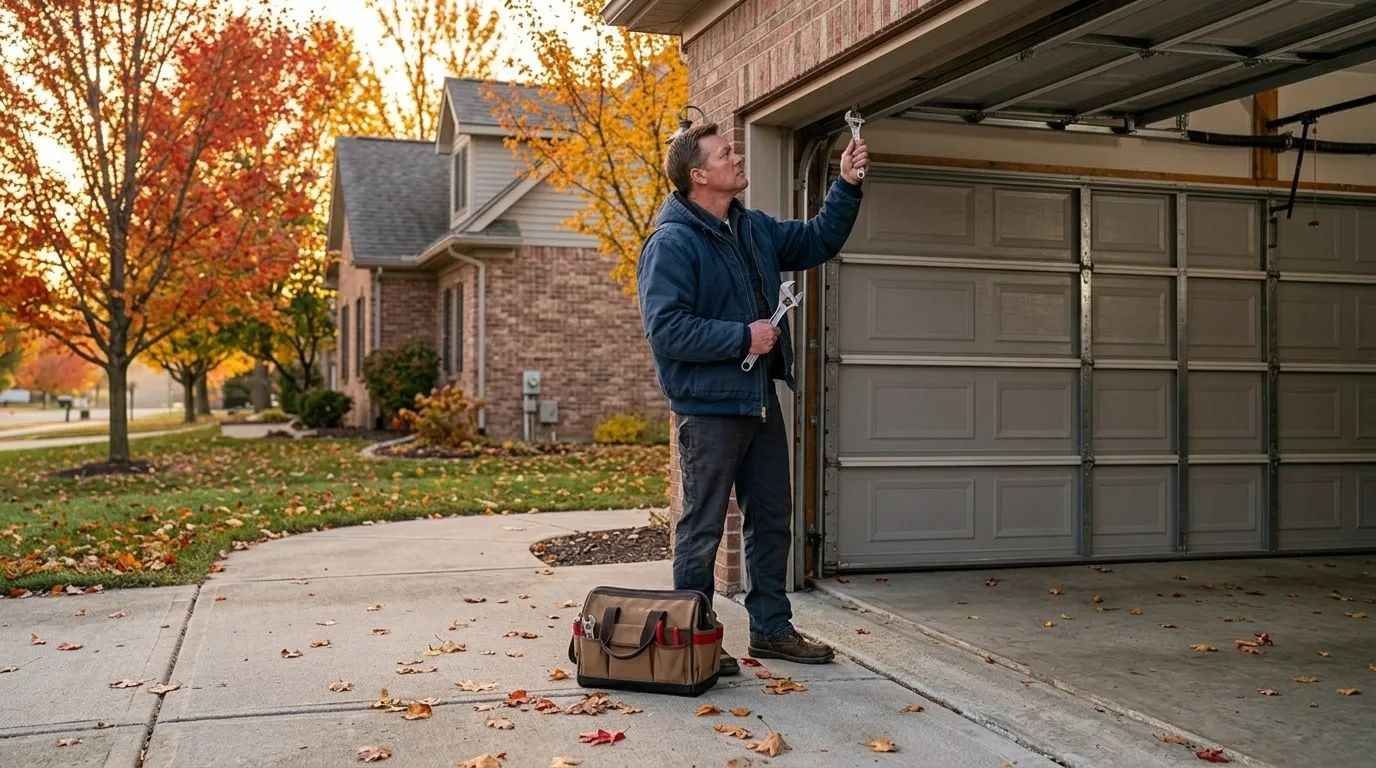
Some of this is reasonable to handle on your own. Wiping down and lubricating the tracks, checking that the photo-eye sensors are aligned, listening for new grinding sounds - none of that needs a truck. Keep it off the spring, though. A torsion spring on a door this age is holding decades of accumulated wear under tension, and if it lets go while you're near it, it lets go hard. That one's not a homeowner job, ever, regardless of how confident you feel with a wrench.
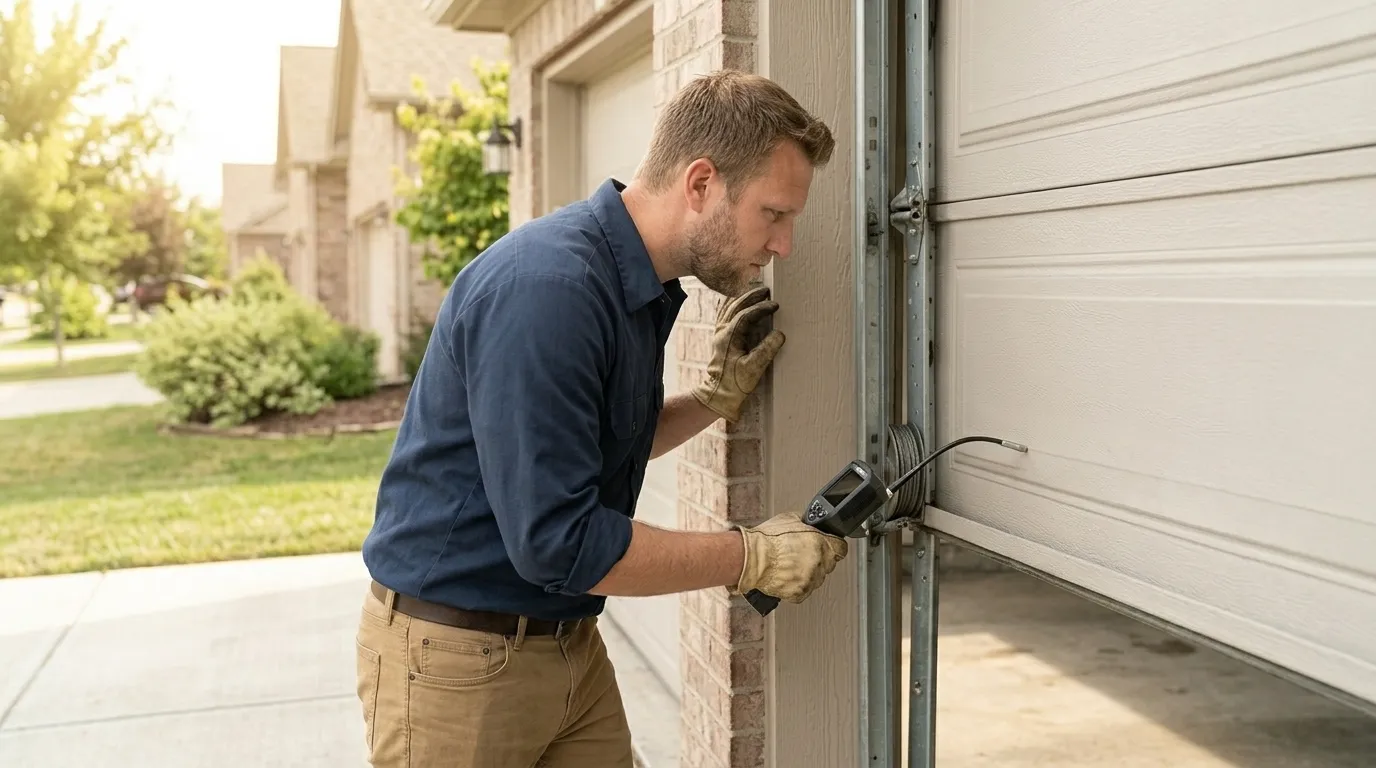
A reasonable middle ground for a Brook Park house built around 1961: do the visual and lubrication checks yourself every few months, and get someone out to actually put a torque wrench on the spring and inspect the bearing plates every year or two. That's the split that catches problems while keeping the parts that can hurt you off your own plate.
Why It Happens Here
This isn't a generic wear-and-tear story - it's specific to when Brook Park was built. A median build year of 1961 means the bulk of this town's garage doors and their hardware predate a lot of the design changes that made later doors easier to service: sealed bearings, standardized spring sizing, opener safety reversal built in from the factory instead of retrofitted. Working on a 1961 door means working with whatever was standard then, which isn't always what's stocked on a truck today.
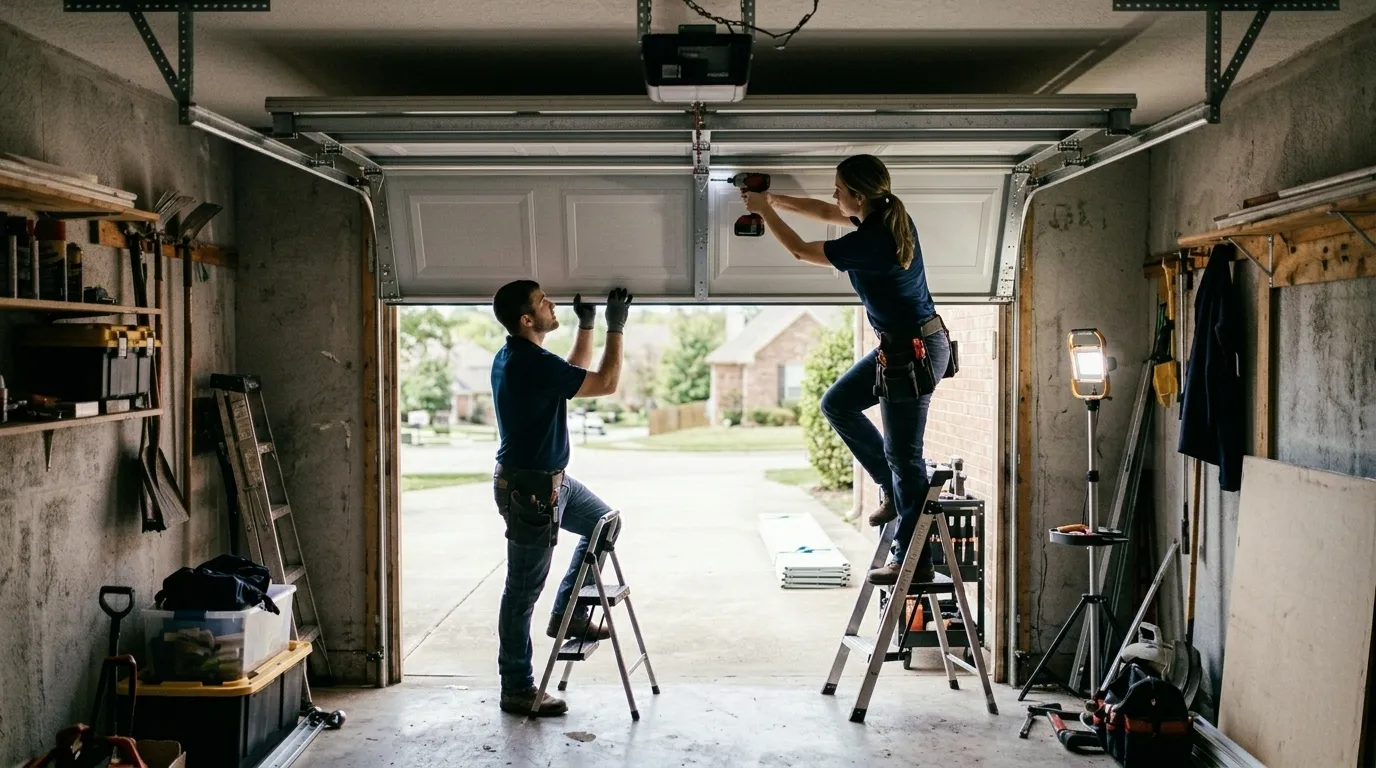
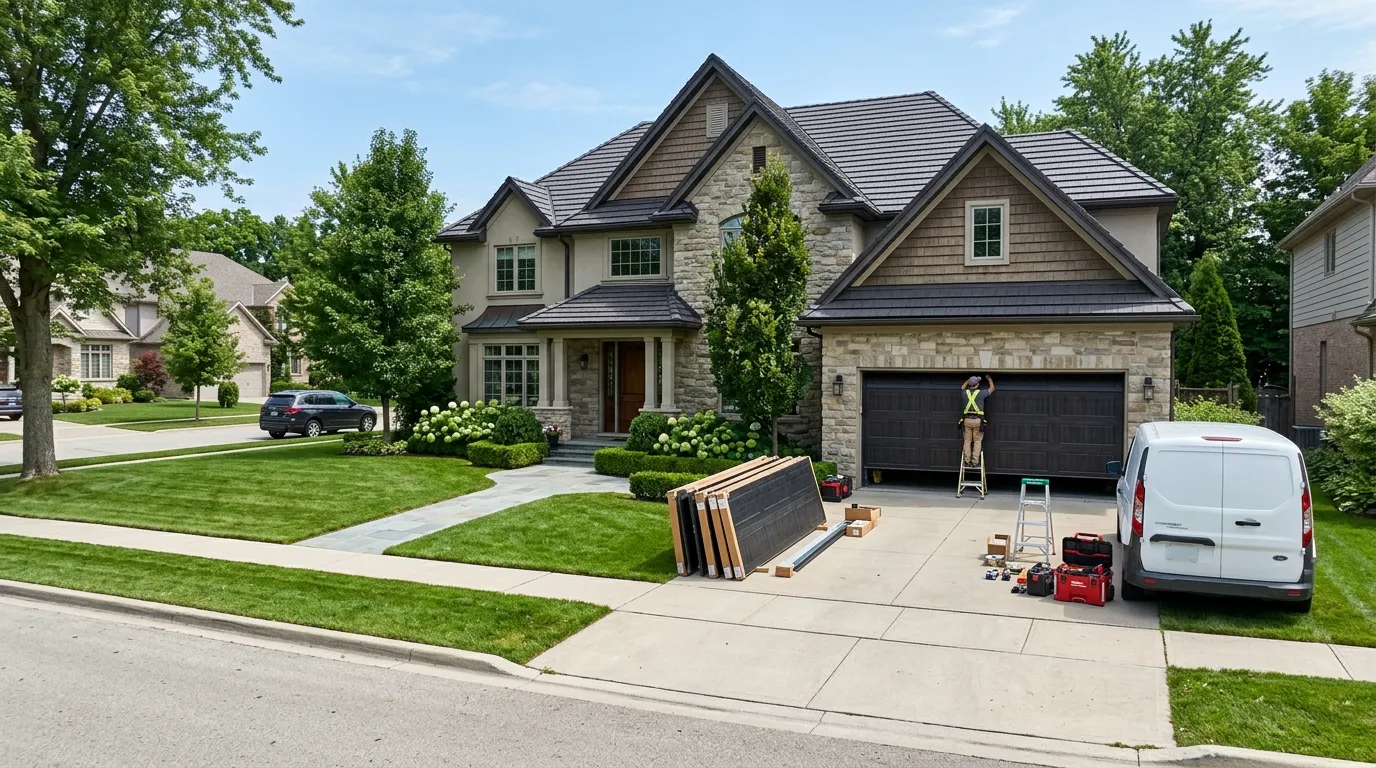
We cover Brook Park from our base in Parma, five miles out, so we're not sitting on a job site here every day - but the pattern across this stretch of the service area is consistent enough that we know what we're going to find before we open the panel. Original torsion hardware, worn end bearings, and a spring that's outlived its expected number of cycles by a wide margin. That's the job here, and it's the job we plan for.